


Altman calls Musk's project baseless

Two major figures in the artificial intelligence industry—OpenAI CEO Sam Altman and SpaceX founder Elon Musk—are engaged in a public dispute that has sparked new debates in the tech world, Zamin.uz reported.
The conflict centers on a project to build data processing centers in space. Altman dismissed Musk’s vision of creating computing power in orbit as an unfounded promise designed merely to attract investors.
The dispute began when Musk accused Altman of fraud. In response, the OpenAI leader accused Musk of attempting to sell short-term space data center projects to public market investors.
Altman’s remarks resonated with many industry experts, who believe that space-based data centers are unlikely to become a serious revenue-generating business in the near future. SpaceX is attempting to justify its $2 trillion market valuation by pursuing plans to deploy orbital hubs that perform AI tasks in space.
Analysts suggest such capabilities could enable unprecedented opportunities for the company’s AI models or pave the way for orbital cloud services. However, industry experts and engineers remain cautious at this stage.
The main challenges are technical limitations and economic inefficiency. According to the team working on Google’s orbital computing project and other startup founders, space-based data centers will not become viable until rocket costs drop significantly and high-power AI hardware can be mass-produced.
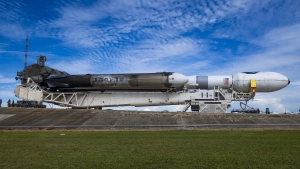
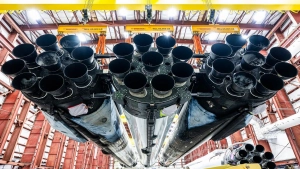
For now, this technology cannot compete with terrestrial data centers. Musk has proposed the Starship rocket as a solution to these challenges.
If SpaceX succeeds in making Starship fully reusable, the cost of launching payloads into orbit could decrease. However, the Starship program is still in the testing phase, and even after successful trials, the company will prioritize fulfilling its obligations to NASA and expanding the Starlink network.
It is also worth noting that SpaceX has acknowledged in investor meetings that the second stage of Starship may not achieve full reusability in the near term, which would undermine the economic feasibility of orbital data centers.
Musk’s promise to begin launches next year is viewed with skepticism by specialists. In summary, while SpaceX might launch a single high-speed data-processing satellite next year, scaling it into a broad system before 2030 remains difficult.
The criticism from Altman and other experts is grounded precisely in this reality.