


Chinese scientists have created a new generator that obtains electrical energy from humidity
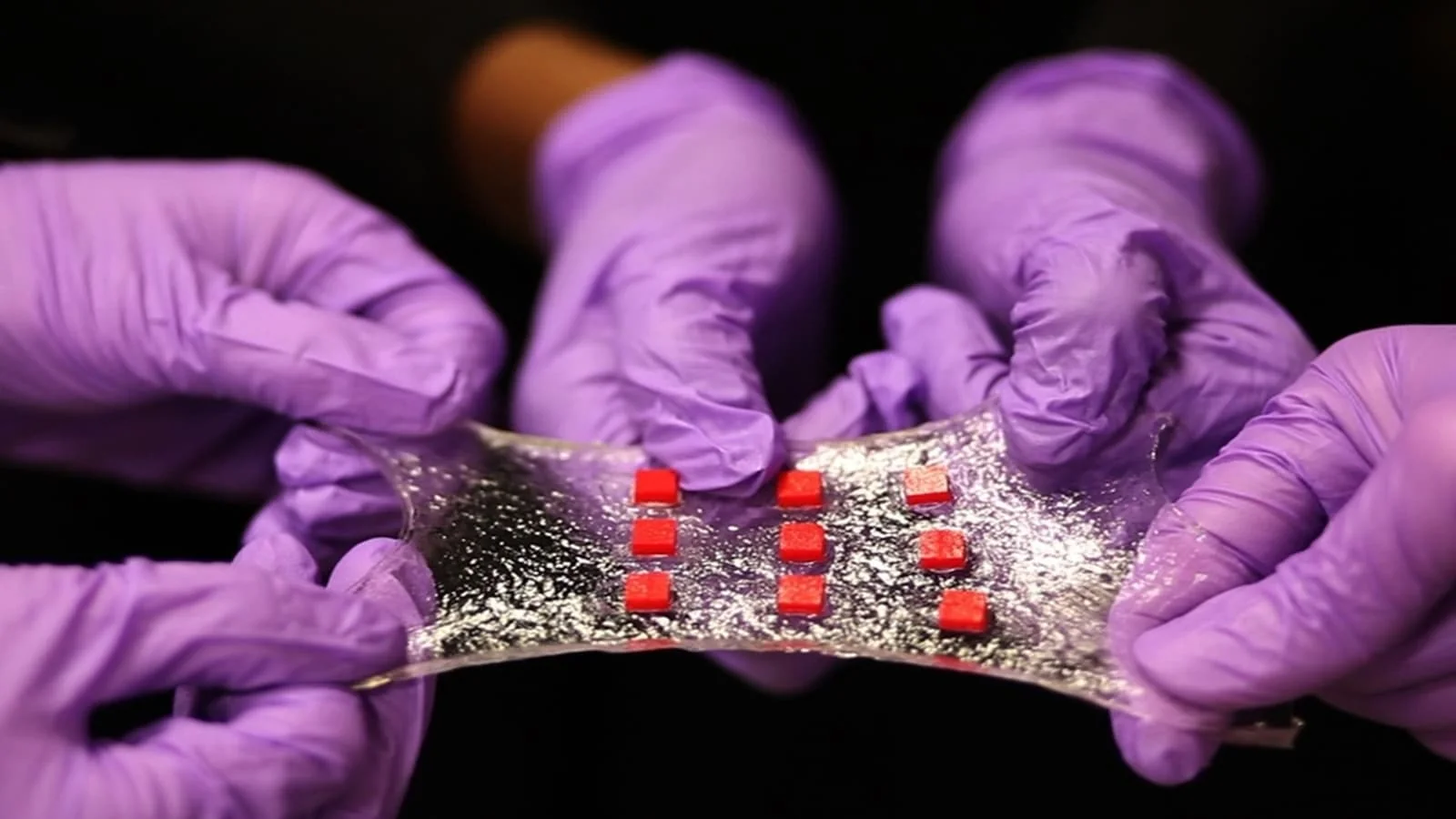
Scientists from the Harbin Institute of Technology in China have created a new type of humidity generator capable of continuously producing electrical energy even under repeated bending, stretching, and twisting. Zamin.uz reported on this.
These hydrogel-based devices, which convert ambient humidity directly into electrical power, have long attracted the attention of the scientific world due to their softness and ability to easily adapt to various shapes. Such inventions are expected to be a reliable power source for smart clothing, medical implants, and various sensors monitoring human health in the future.
Until now, similar developments had faced a serious technical problem. The issue was that due to the low level of adhesion between the hydrogel and the electrodes, the materials would separate when the device moved.
This increased internal resistance and sharply reduced the device's efficiency. Chinese engineers solved this problem by adding a mixture of water and glycerin to the hydrogel composition.
The new composition allowed the material to bond strongly with liquid metal and flexible silver electrodes. Glycerin facilitated the formation of numerous hydrogen bonds within the hydrogel and at the interface where it connects with the electrodes.
As a result, interlayer adhesion improved, facilitating the movement of ions even under strong mechanical pressure and deformations. The prototype demonstrated a voltage higher than 0.94 volts and a current density of 141 microamperes per square centimeter.
Most importantly, the device fully maintained its operational capacity and power delivery properties even after more than a thousand stretches and eight thousand bends. Furthermore, the glycerin additive prevents the material from drying out or freezing in cold temperatures.
This ensures the stable operation of the generator in various climatic conditions and temperatures. Researchers state that this technology will be a revolutionary innovation for wearable electronics and medical sensors.
For example, systems monitoring human respiration could obtain the necessary energy directly from the humidity of the exhaled air. Additionally, this method is planned for wide application in creating long-lasting soft robotics and adaptive electronic systems.