


Water content on Uranus' moons yielded unexpected results
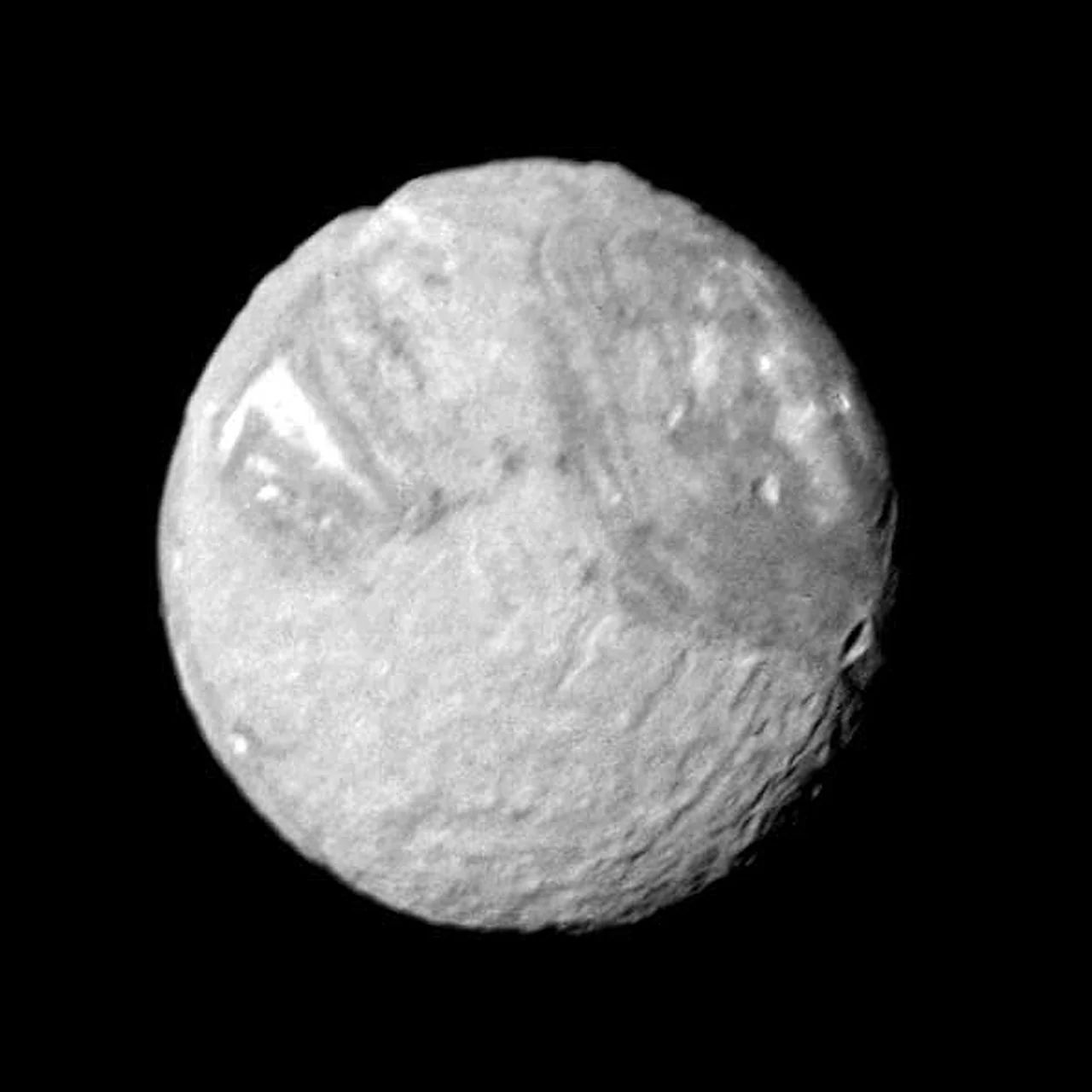
Astronomers have for the first time precisely measured the isotopic composition of water on Uranus's five largest moons, a discovery reported by Zamin.uz.
Data from the James Webb Space Telescope could completely overturn traditional theories about the origin of these celestial bodies. The findings suggest that the water composition on these moons differs sharply from that of Uranus itself.
This is reported by Ixbt.com. In a study published in the journal PNAS, the moons Miranda, Ariel, Titania, Oberon, and Umbriel were examined in detail.
Astronomers analyzed the ratio of ordinary hydrogen to its heavy isotope, deuterium, in these bodies. The results were unexpected: in all five moons, the deuterium content is approximately five times higher than in Uranus and in comets near the planet.
Old theories in doubt This discovery casts doubt on a long-standing hypothesis that Uranus's largest moons formed from debris ejected during a collision with another massive celestial body.
However, such a significant difference in isotopic composition may indicate that the moons do not share a common origin with Uranus. Researchers suggest the new data point to two possible scenarios.
According to the first, the moons formed far from Uranus's current orbit and were later captured by its gravity. The second suggests that these moons originated from the remnants of larger bodies shattered by Uranus during the early stages of the Solar System.
The largest enigma remains Miranda, the moon closest to Uranus, whose isotopic composition differs significantly from the other four moons.
This suggests Miranda may have formed through a completely different mechanism, opening new avenues for research into the Uranian system. Uranus's uniqueness Uranus is considered one of the most unusual planets in the Solar System.
Its axis is tilted at 98 degrees, causing it to appear to roll along its orbit. Its moons also exhibit unusual orbital arrangements and distinctive characteristics.
This discovery, made using the James Webb Telescope, shows that the formation history of the Uranian system is far more complex than previously thought. According to Ixbt.com, these new findings require a reevaluation of models for the evolution of planets and their moons.
In the future, dedicated missions to the Uranian system could help clarify how this icy giant and its companions evolved into their current state.