


Scientists have developed a new technology that converts heat into electricity
Researchers from South Korea's POSTECH University have developed a new technology that significantly improves the efficiency of converting waste heat energy into electricity. This was reported by Zamin.uz.
The discovery is expected to be a revolutionary step in improving the energy efficiency of artificial intelligence data centers, industrial plants, and electric vehicles. The new method is based on the non-standard structure of silicon.
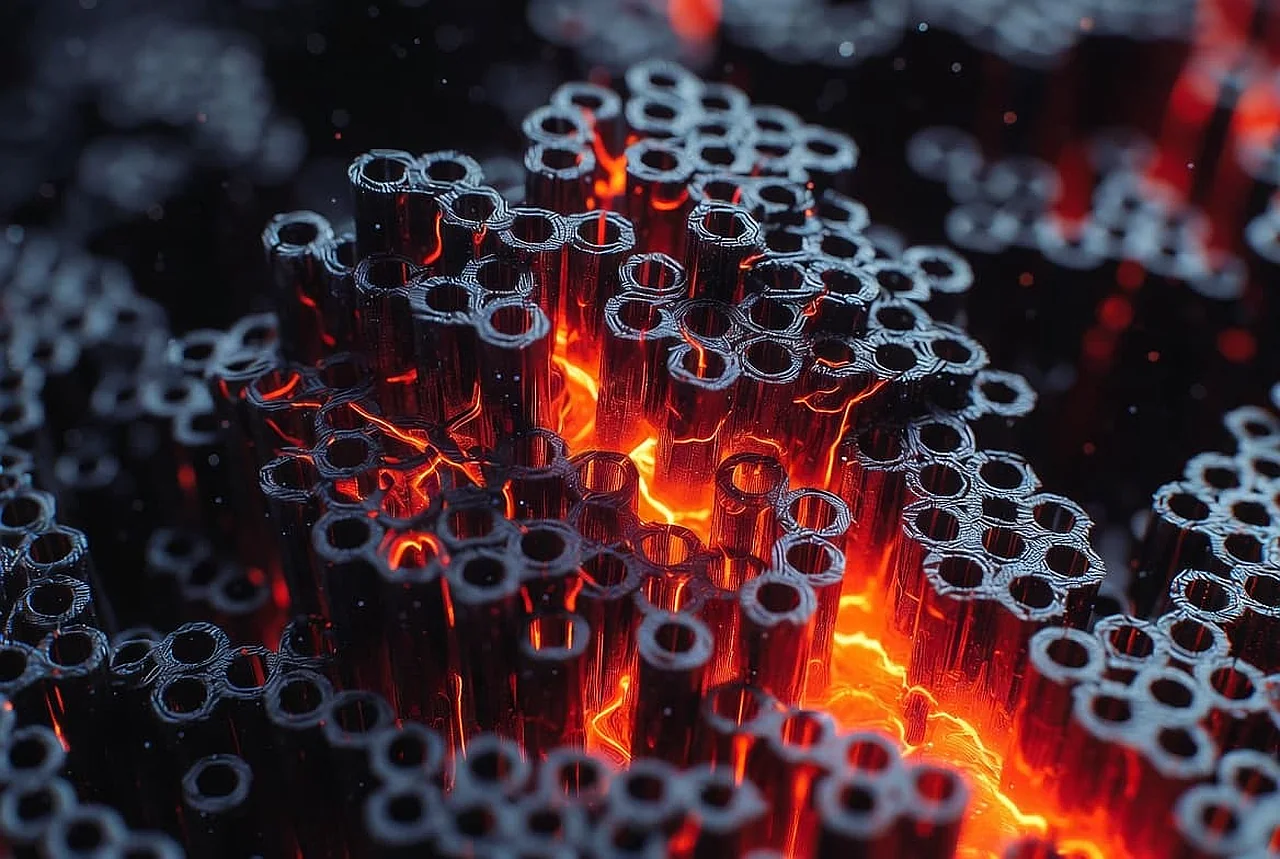
Unlike conventional monocrystalline silicon nanopillars, scientists created hollow silicon nanotubes. This structure was proven to be much more effective at trapping heat.
According to the study results, the thermal conductivity of such nanotubes is 70 percent lower than that of solid structures. In this process, quasiparticles—phonons—that carry heat in solids play a key role in the localization effect.
While heat moves relatively freely in regular silicon, in hollow nanotubes, part of the thermal energy remains trapped within the structure and dissipates much more slowly. This creates ideal conditions for thermoelectric systems that convert heat into electricity.
Previously, achieving such an effect in simple structures at room temperature was considered nearly impossible. However, Korean scientists succeeded using a relatively simple design.
This makes it possible to transfer the technology from laboratory conditions to real-world production. One of the main advantages of the method is that it allows the use of ordinary silicon instead of rare and expensive elements like bismuth and tellurium, which are traditionally used in thermoelectric systems.
The low cost and widespread availability of this material sharply reduce the technology's price. Currently, servers supporting ChatGPT and other large language models emit enormous amounts of heat.
Recovering this wasted heat and converting it back into electricity can reduce data center cooling costs and improve overall efficiency. Moreover, in electric vehicles, recovering energy generated from battery and motor heating could help extend driving range.