Rossiya plans to assemble the SJ-100 Superjet from domestic parts by 2027
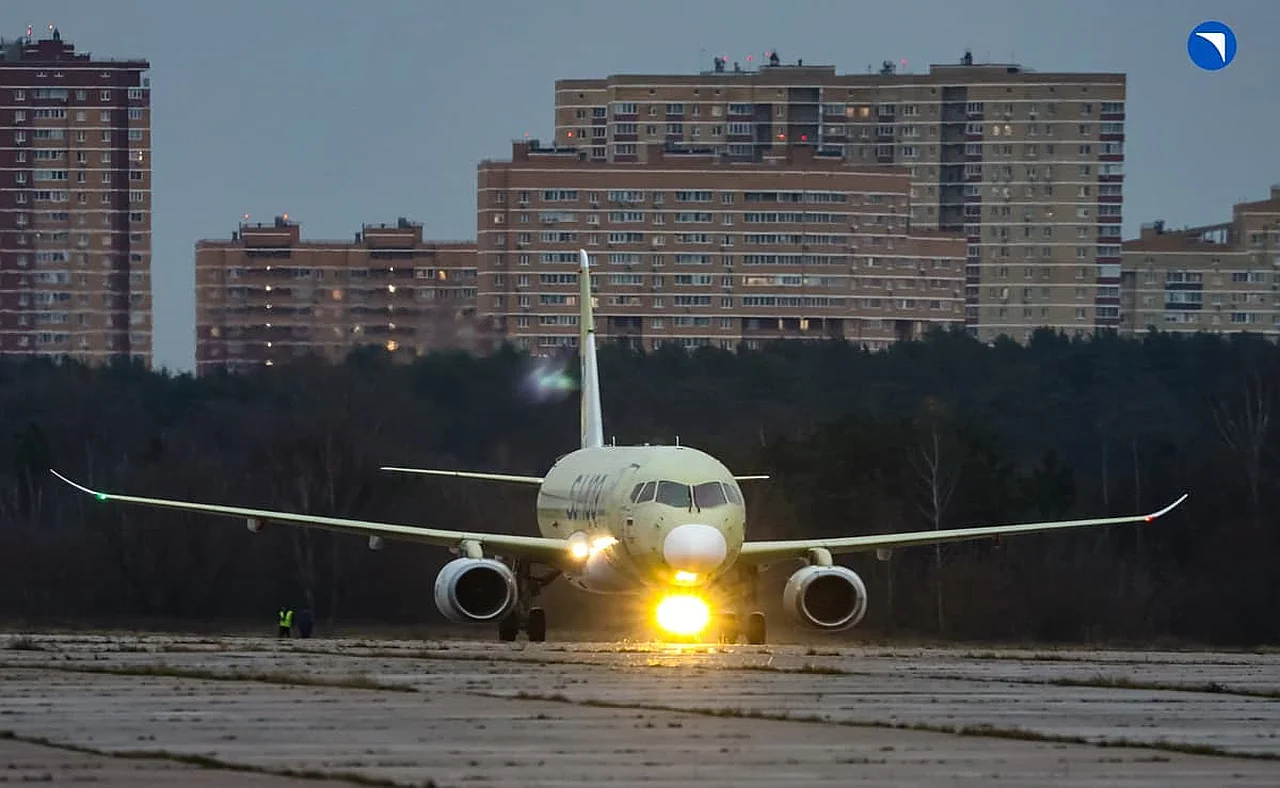
Russia's aviation industry has announced the timeline for full localization and certification of the SJ-100 Superjet, a key project in its regional aircraft program, according to Zemlya.uz.
According to Russian Minister of Industry and Trade Anton Alikhanov, the upgraded aircraft is expected to obtain all necessary certifications by the first quarter of 2027. This project is considered a strategic step in reducing Russia's civil aviation dependence on foreign technologies.
Currently, flight testing of the aircraft is actively underway. As the minister emphasized, the liner has successfully completed more than 80% of the planned flight test program.
Specialists plan to complete flight testing by the end of this year, indicating that the technical part of the project is nearly ready.
Once the flight program is completed, all collected technical data and documentation will be submitted to the Russian Aviation Authority for certification. Earlier, Kirill Kuznetsov, chief designer of the SJ-100 program at Yakovlev Company, also confirmed these timelines.
The certification process is expected to be complex, as nearly all systems on the aircraft have been either newly developed or replaced with domestic equivalents. The SJ-100 is designed for 100 passengers and belongs to the regional jetliner class.
Its main feature is the use of domestically produced PD-8 engines and modern Russian avionics systems. In contrast, the previous Superjet 100 models used foreign engines, particularly those developed in cooperation with France, and widely relied on Western electronics.
At the Komsomolsk-on-Amur plant, several SJ-100 aircraft are currently being assembled. After certification, these liners will begin delivery to domestic airlines.
This is important for renewing Russia's domestic aviation fleet and ensuring flight safety under international sanctions. According to regional aviation experts, aircraft like the SJ-100 could also be of interest to Central Asian countries, including Uzbekistan.
Economical liners designed for short-haul flights could be useful for developing domestic tourism and regional connectivity. However, export considerations are expected to be addressed only after Russia's domestic needs are met.
The project's delay is due to technical complexities and the need to redesign all systems from scratch. Nevertheless, 2027 has been set as the final deadline for the project, which will be a unique test for Russia's aviation industry.