


Airbus to start new aircraft project in 2030
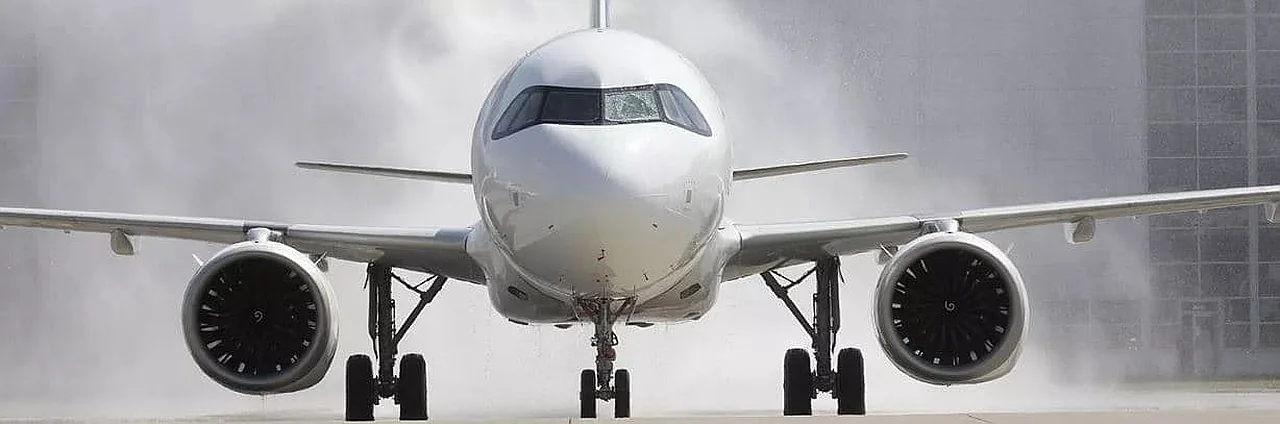
Airbus has officially announced that it has begun work on a new aircraft model to compete with its best-selling A320 family, according to Zamin.uz.
The project is expected to fundamentally change the current situation in the aviation market and further improve passenger transport efficiency. In an interview with Aviation Week, Airbus CEO Guillaume Faury said new fuselage will begin in 2030.
This project, internally named eAction, is planned to enter commercial service in the second half of the 2030s, indicating that the era of the A320neo models, which currently form the backbone of global aviation, is gradually coming to an end.
Moving away from hydrogen technologyOne of the key decisions within the project is that Airbus has completely abandoned the idea of using hydrogen fuel in passenger aircraft. Initially, the company had high hopes for eco-friendly clean hydrogen technologies, but during implementation, it became clear that this approach was inefficient.
According to Guillaume Faury, this decision was made not only due to technical challenges in aircraft design, but also because of the lack of necessary infrastructure. The underdeveloped hydrogen production and distribution systems, along with uncertainties in international aviation regulations, have forced Airbus engineers to return to gradual improvement of existing technologies.
Now, the main focus is on improving aerodynamics and developing conventional but highly efficient engines. CFM RISE engine and technological innovationsOne of the most promising directions for the new platform is the CFM RISE open-fan engines.
This technology offers the potential to significantly reduce fuel consumption compared to current turbofan engines. The engine is currently in the testing phase, and its results could determine the future of the new aircraft.
Airbus is also considering moving away from the conventional approach of using a single engine type across an aircraft model, and instead offering a unified engine selection for a single aircraft. If only one manufacturer can produce a powerplant that meets the specified requirements, the new aircraft will be equipped exclusively with that engine.
This would streamline the production process. Market launch and productionEven after the new model enters the market, production of the A320neo will not stop — both generations will be produced in parallel for a certain period of time.
Airbus is exploring the possibility of assembling the new aircraft not only at its Toulouse and Hamburg plants in Europe, but also at facilities in the United States and China. This would also be beneficial for regional airlines such as those in Uzbekistan.
Because modern and fuel-efficient aircraft are of great importance for developing regional aviation routes and improving economic efficiency.