



Australian and Japanese scientists are taking a revolutionary step toward quantum technologies
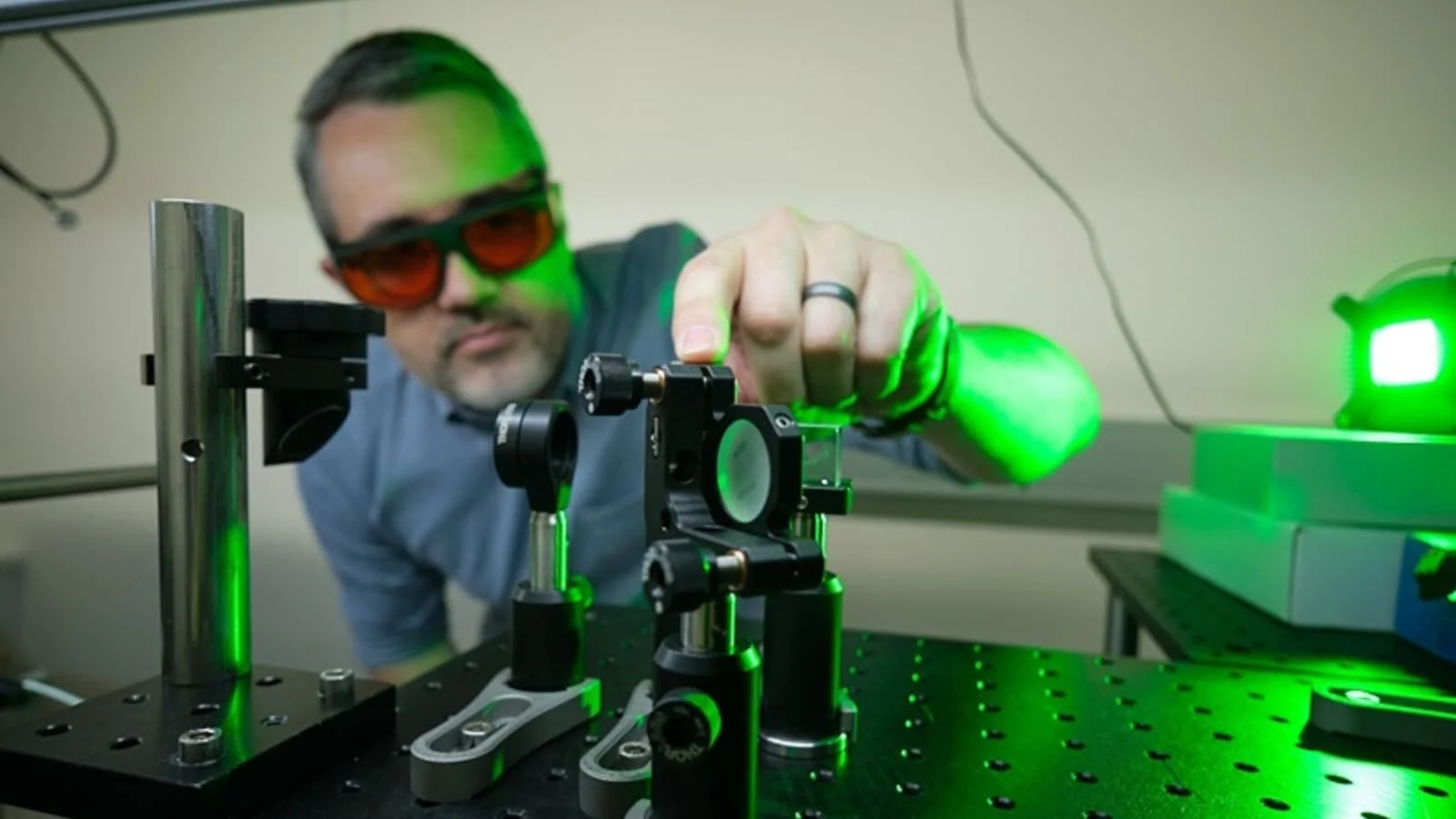
Australian and Japanese scientists are preparing to take a revolutionary step in the field of quantum technologies. This was reported by Zamin.uz.
The University of Melbourne, Australia's CSIRO scientific agency, and the Japanese quantum science and technology association have launched a project to transform ordinary and inexpensive diamond powder into high-efficiency quantum materials. This initiative is considered not only a scientific novelty but also a strategic move aimed at drastically reducing the production costs of quantum components.
Special diamonds, which form the core component of quantum devices, contain defects called nitrogen-vacancy centers. This is an artificially created crystal lattice deficiency where a nitrogen atom replaces a carbon atom, creating a vacancy beside it.
Such structures are essential for quantum sensors that allow for the measurement of magnetic and electric fields, as well as temperature, with extremely high precision. Currently, the production of high-quality quantum diamonds is considered an extremely complex and expensive process.
Instead of using entire crystals, researchers propose using diamond powder, which is widely available and inexpensive in industry. If scientists succeed in preserving quantum properties within this powder, the cost of components for quantum sensors and computing systems could decrease several-fold.
The first stage of the project aims to improve the stability and quality of diamond nanocrystals. Scientists are working on placing nitrogen-vacancy centers as close to the surface of the particles as possible.
This is of great importance for increasing the sensitivity of future sensors. Subsequently, CSIRO specialists will test the durability of these materials under real-world conditions.
The success of this research is expected to resonate not only in scientific circles but also in the global technology market. Australia aims to create its own independent base for the production of quantum materials using this technology.
This will significantly reduce dependence on foreign suppliers. The affordability of quantum materials will also usher in a new era in medicine, geology, and navigation systems.
For example, ultra-sensitive quantum sensors will enable the detection of the smallest changes in the human body or underground minerals with unprecedented accuracy. This project is an important foundation for moving quantum technologies beyond laboratory walls and applying them to everyday life.