Ancient tombs and inscribed vessels found in Egypt
Archaeologists have made significant discoveries in the Qubbat al-Hawa necropolis area located in the city of Aswan, Egypt. This was reported by Zamin.uz.
They found a complex of tombs carved into the rock dating back to the ancient kingdom period. According to experts, these tombs were constructed between 2649 and 2150 BCE.
The unique aspect of these tombs is that they were not limited to a single era. Researchers found that they were reused repeatedly in later centuries.
In particular, the tombs were actively used during the First Intermediate Period and the Middle Kingdom. This indicates the area's significance across various historical stages.
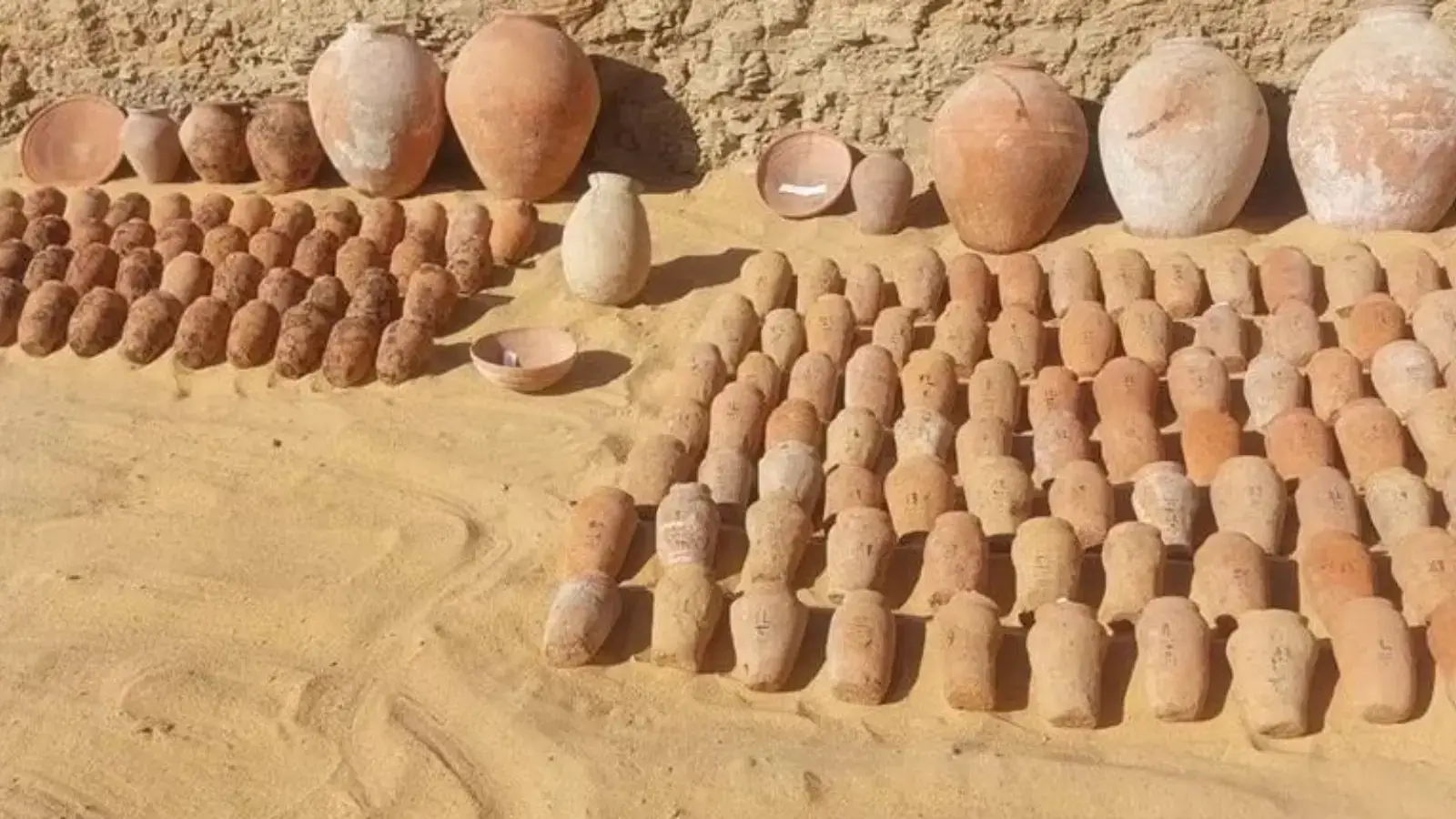
According to Hisham al-Laysi, a representative of the Supreme Council of Antiquities of Egypt, approximately 160 pottery vessels were found inside two tombs. Most of these vessels are well preserved and contain ancient Egyptian writing — hieratic texts.
These findings are of great importance not only archaeologically but also from the perspective of writing history. Initial analyses suggest that these vessels may have been used to store liquids and grain products.
Additionally, they embody important information about burial ceremonies and the lifestyle of that era. A number of unique items were also discovered in the outer courtyard of the complex.
Among them are bronze mirrors, alabaster vessels, colorful beads, and amulets. Some of the finds date back to the Middle Kingdom, confirming the area's long-term active use.
This discovery has opened new chapters in the history of Egypt. Through the ancient tombs, inscribed vessels, and decorative items, scientists are gaining a clearer understanding of ancient burial traditions and the daily life of people.