The President of Ukraine made an unexpected visit to Saudi Arabia
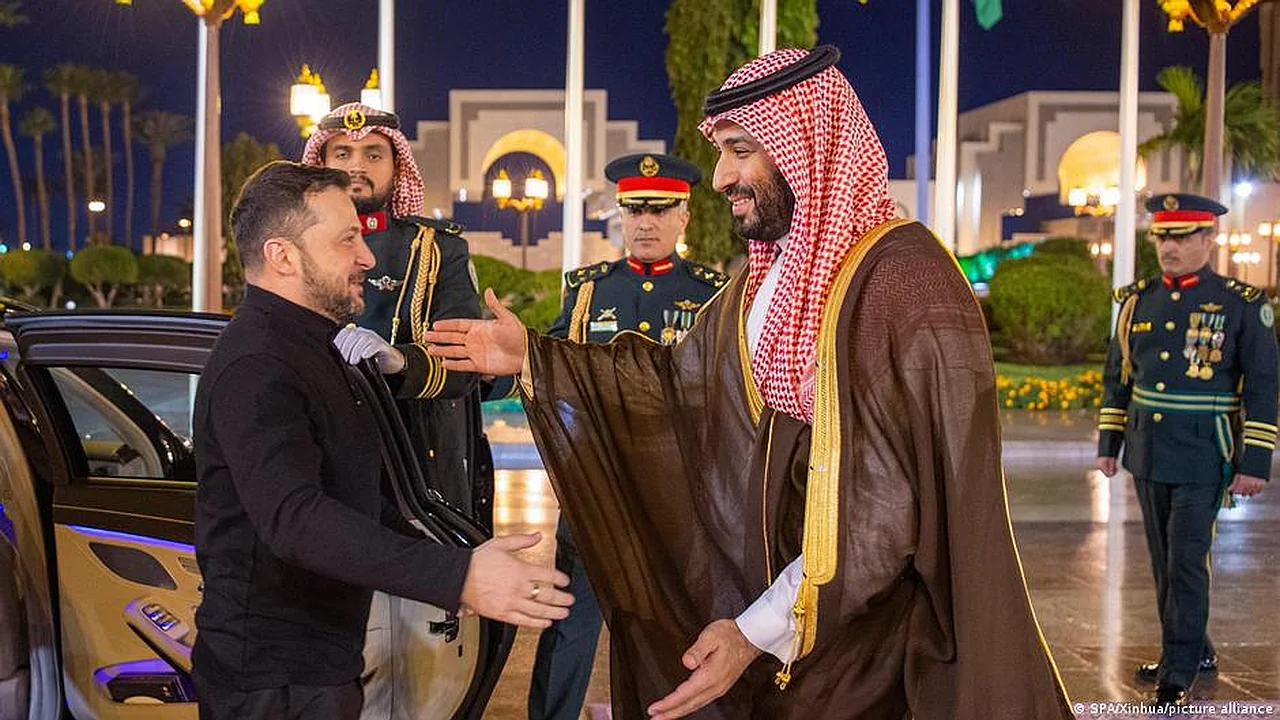
According to international news agencies, Ukrainian President Volodymyr Zelenskyy arrived in Saudi Arabia on March 26 with an unannounced official visit. Zamin.uz reported this news.
The President's trip is aimed at strengthening cooperation in the security sector with Middle Eastern countries. It is reported that Volodymyr Zelenskyy will meet with Saudi Crown Prince Mohammed bin Salman and is expected to sign a security agreement between the two states.
This agreement primarily covers issues of airspace protection and the development of defense systems. Although all details of the deal have not yet been made public, experts emphasize that this cooperation will be of significant importance for regional stability.
The President of Ukraine announced that important negotiations will be held during the visit and expressed gratitude to partners ready to support security matters. This trip is considered a continuation of Kyiv's strategy to expand relations with Middle Eastern countries.
At the beginning of this month, Zelenskyy announced that his country had sent military specialists to the United Arab Emirates, Qatar, and Saudi Arabia, while another group was heading to Kuwait. A total of 201 Ukrainian specialists are already serving in the region, and another 34 are ready to be dispatched soon.
The Ukrainian side also proposed assistance in the fight against Iranian-made Shahed drones. These drones have been widely used both in battles in Ukraine and in attacks in the Middle East region.
The decision to send specialists was made based on requests from regional partners and the United States. However, US President Donald Trump had previously stated that Ukraine's assistance in defending against drones was not necessary for the United States.
Although relations between the United States and Middle Eastern countries are complex, Ukraine's initiatives are aimed at strengthening its position on the international arena. These processes are expected to directly influence how the regional security system will shape up in the future.

![Fransiya Usmonova proposed removing [the name] from the sanctions list](/uploads/mini/web-300/04/e8d7de74763e0760c29bdbfd3d91b77a.webp)