Trump called on Near East countries to join the agreement with Iran
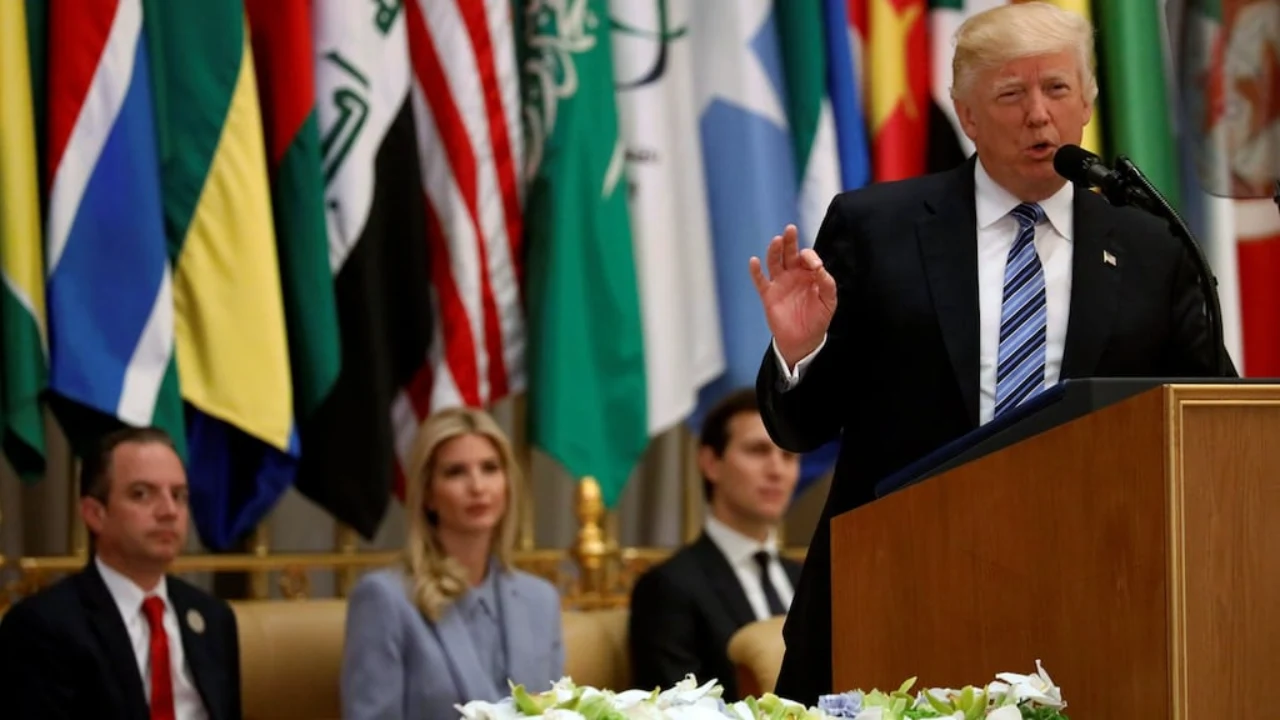
U.S. President Donald Trump has shared his important observations on the future of political processes in the Middle East, as reported by Zamin.uz.
In a post on his personal social media page, he wrote that if a peace agreement with Iran is reached, countries such as Saudi Arabia, Qatar, Pakistan, Turkey, Egypt, and Jordan should also directly join this broad process. In Trump’s view, only an agreement between Washington and Tehran would not be sufficient to ensure long-term stability in the region.
According to the state leader, countries with strong influence in the Middle East and the entire Muslim world must be brought to a common diplomatic platform. Such efforts could strengthen political dialogue, elevate economic cooperation to a new level, and open new possibilities for resolving security issues.
First and foremost, this refers to the historic documents known as the Abraham Accords. These agreements aimed to establish diplomatic relations between Israel and several Muslim states, launch the work of embassies, and strengthen regional cooperation.
The said documents were signed during Trump’s first presidential term with U.S. mediation. President Donald Trump reported that he had held phone talks with the leaders of Saudi Arabia, the United Arab Emirates, Qatar, Pakistan, Turkey, Egypt, Jordan, and Bahrain.
During these conversations, the expansion of the Abraham Accords and the inclusion of new participating states were discussed in detail. Trump specifically acknowledged that countries joining these accords had achieved significant achievements in economic and social spheres in a short time.
In his view, Saudi Arabia and Qatar should be among the key countries to join first in the next phase. Given their high political and economic influence in the region, their participation would undoubtedly enhance the importance of the accords.
At the same time, Trump unexpectedly suggested that Iran itself might join these accords in the future. Such an idea could naturally cause a major stir in world politics, as relations between Iran and Israel have remained extremely tense and complicated for many years.
If Tehran genuinely approaches this peace process, it could cause a shift in the Middle East’s geopolitical landscape. However, for now, this is considered only a hypothetical scenario.
In practice, issues such as Iran’s nuclear program, its sphere of regional influence, and security guarantees remain among the most sensitive and complex points of negotiations. In conclusion, it can be said that the Washington administration aims to establish a broad, multilateral diplomatic agreement system in the region.
In this process, the participation of key Muslim states carries decisive importance. Donald Trump wants to see all major stakeholders gathered around one table in the event of a possible agreement with Iran.
This could be seen as a sign of the beginning of a new economic and political era in the region.



![Fransiya Usmonova proposed removing [the name] from the sanctions list](/uploads/mini/web-300/04/e8d7de74763e0760c29bdbfd3d91b77a.webp)