


Scientists have announced new information about the formation of the universe and the emergence of planets
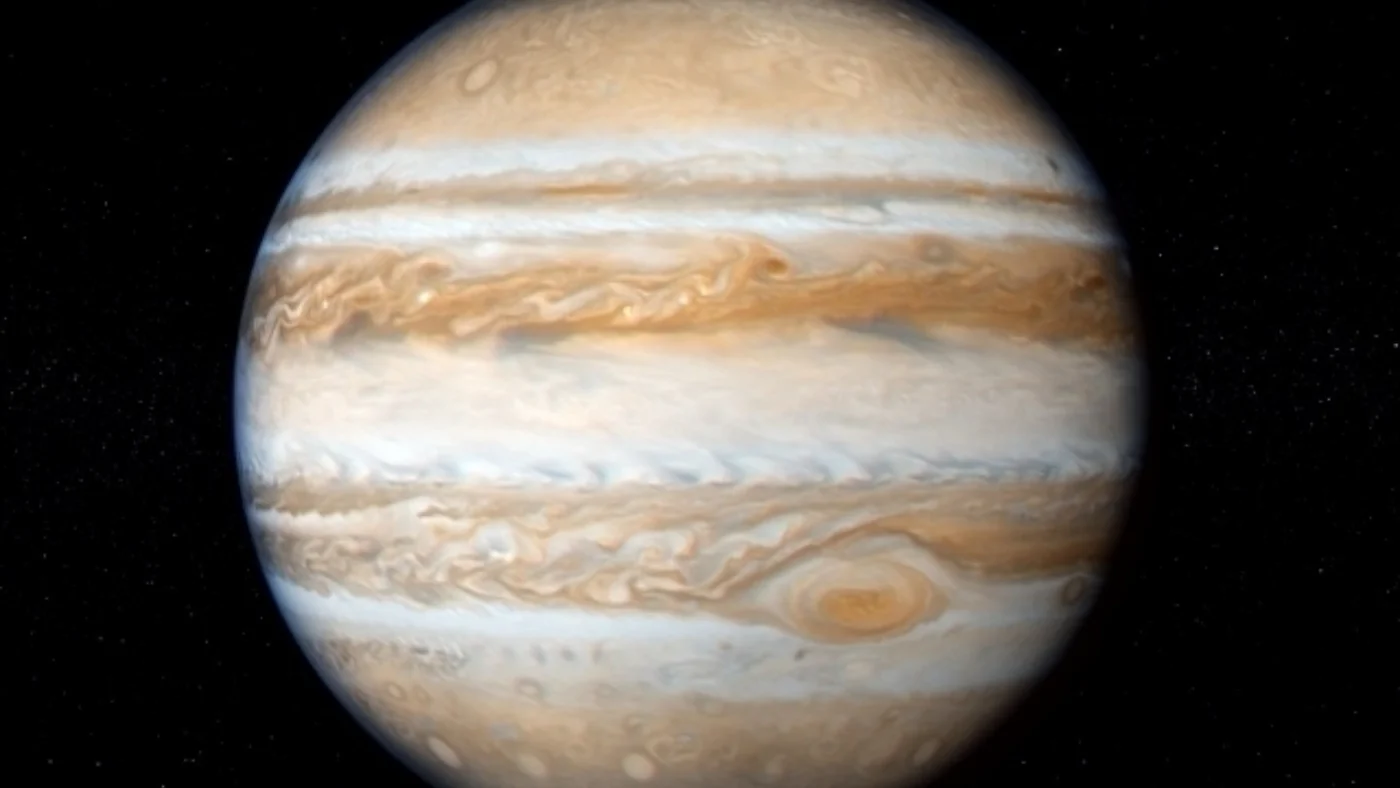
Scientists from the Institute for Solar System Research at the Max Planck Society have announced new and important information regarding the history of the universe's formation. Zamin.uz reported on this.
According to the results obtained, the region beyond Jupiter's orbit served as a unique massive center for the emergence of planetesimals, which are considered the primary foundation of planets and asteroids. The conclusions of this scientific research are detailed in the prestigious journal Astrophysics.
Researchers note that nearly four and a half billion years ago, the young Sun was surrounded by a giant disk consisting of gas and dust. Over time, these dust particles merged to form larger cosmic bodies.
Later, these very bodies became the basis for the formation of today's planets and asteroids. Using special computer programs, scientists reconstructed the processes of the first few million years after the emergence of the Solar System.
At that time, Jupiter, considered a giant planet, had already formed and created a large gap in the layer of gas and dust around its orbit. Behind this gap, a region of high gas pressure emerged, where a vast amount of dust particles and cosmic rocks began to accumulate.
According to the experts' calculations, this unique trap-like region created the most favorable conditions for the birth of new bodies. According to the research leader, Joanna Drążkowska, various types of cosmic bodies were formed in the exact same region of the initial gas and dust disk, but at different times.
This space outside Jupiter's orbit created a wonderful opportunity for the process to continue stably. It was found that the simulation results fully align with data obtained from ancient meteorites, specifically carbonaceous chondrites.
These meteorites contain rare substances that have remained almost unchanged since the period when the Solar System began to form. Scientists also noted that the ratio of two types of substances in the region behind Jupiter changed over time.
One of them consisted of fine and fragile materials, while the second consisted of strong fragments formed under the influence of high temperatures. Later, this very process gave rise to several generations of bodies with different compositions.
The authors of the study hypothesize that not only certain types of meteorites, but also even more ancient and unexplored parts of the universe may have formed in the region behind Jupiter.


![Fransiya Usmonova proposed removing [the name] from the sanctions list](/uploads/mini/web-300/04/e8d7de74763e0760c29bdbfd3d91b77a.webp)