NASA's Perseverance rover detected organic materials on Mars
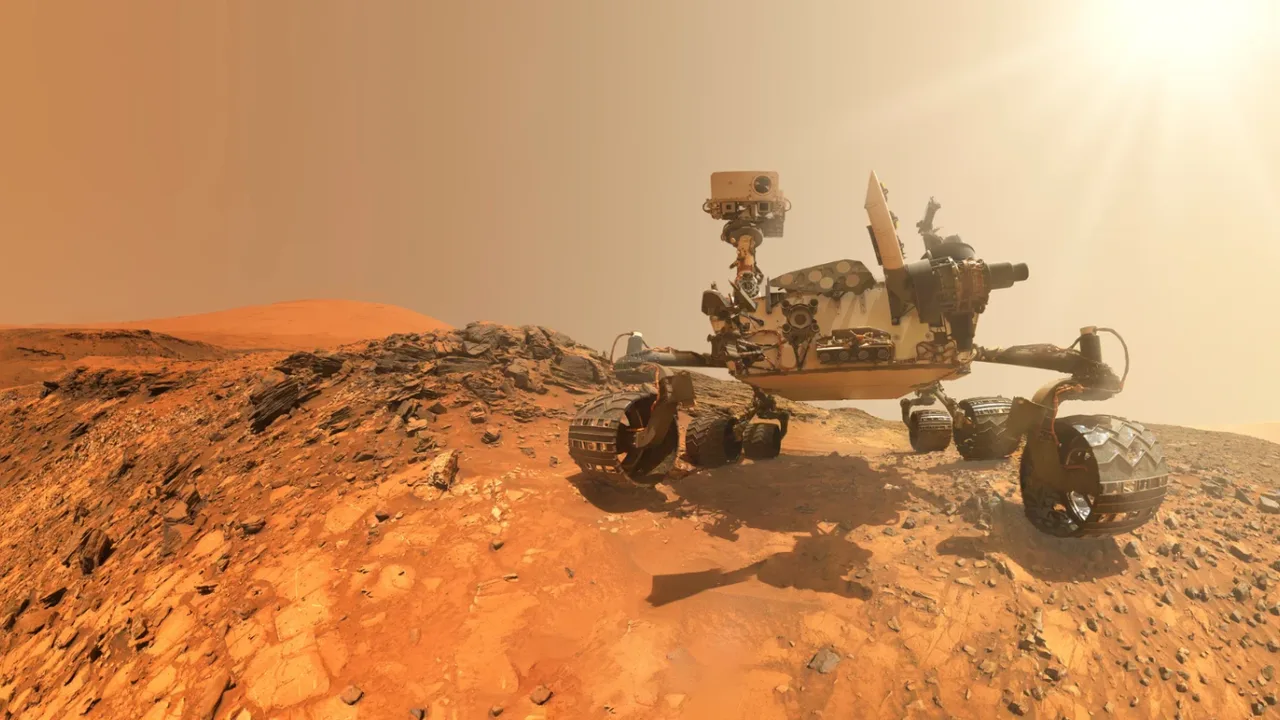
NASA's Perseverance Mars rover has achieved another discovery of great scientific importance on Mars. This was reported by Zamin.uz.
Scientists have identified macromolecular carbon in the rocks of the Jezero Crater, an ancient lake region that existed approximately 3.7 billion years ago. This is considered one of the most significant findings of organic matter recorded on the Martian surface.
The research results were published in the scientific journal Science Advances. It is reported that researchers used the SHERLOC scientific instrument on the rover to study the Bright Angel outcrops located in the river channel area of the Neretva Valley.
Among the examined rocks is the Shavada Falls marlstone, famous for its spotted patterns resembling leopard skin. Previously, these very spots sparked heated debates about their possible biological origin.
According to Kyle Uskert, an astrobiologist at NASA's Jet Propulsion Laboratory, the detection of macromolecular carbon on an unprocessed mountain rock surface is one of the most significant organic matter findings from the uppermost layer of the Martian surface. This may mean that organic compounds were exposed relatively recently or were well-preserved due to the influence of minerals with photoprotective properties.
Experts note that the spectral characteristics of the carbon are consistent with both abiotic sources — such as meteorites or hydrothermal rocks — and biotic sources — such as organic formations like microbial mats and coal. Therefore, it is currently impossible to draw a definitive conclusion about the exact origin of these substances.
Ashley Murphy, a geologist from the Planetary Science Institute, stated that the available data are not sufficient to precisely determine the source of the carbon. Consequently, the possibility that it was formed biologically is not yet ruled out.
Scientists believe that to fully clarify this mystery, samples collected from Mars must be brought back to Earth and analyzed deeply in modern laboratories. If the biological origin of these organic compounds is confirmed in the future, it could fundamentally change humanity's perceptions of whether life ever existed on Mars.



![Fransiya Usmonova proposed removing [the name] from the sanctions list](/uploads/mini/web-300/04/e8d7de74763e0760c29bdbfd3d91b77a.webp)