


The late Supreme Leader Ali Khamshad
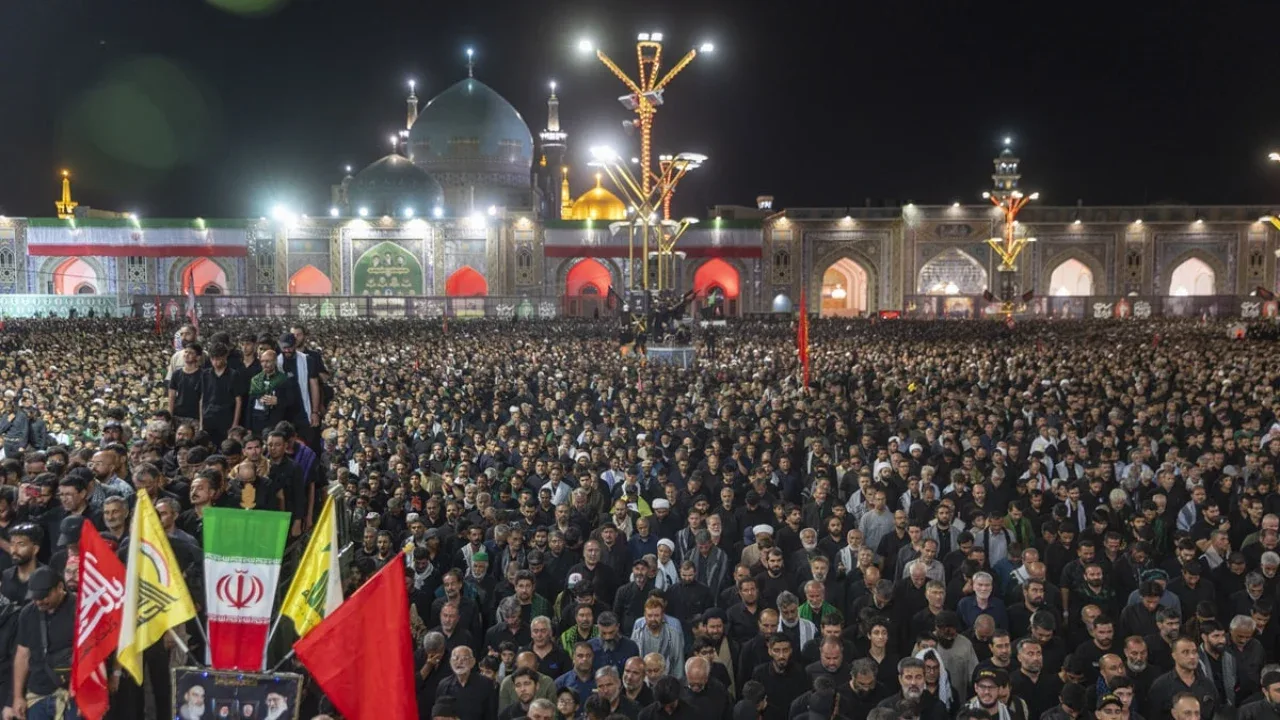
The funeral of the late supreme leader of Iran, Ali Khamenei, was held in complete secrecy in the city of Mashhad, Zamin.uz reported.
The mourning ceremonies for the leader, who was killed in an airstrike on his compound by the United States and Israel, lasted six days. At the same time, the situation in the Middle East escalated sharply, and Washington and Tehran began exchanging direct military strikes.
The most important details of this historic and sorrowful process are attracting the attention of the international community. Ali Khamenei was buried in the Imam Reza shrine in Mashhad, one of the holiest pilgrimage sites for Shia Muslims.
Family members who died in the airstrike were also laid to rest there. Notably, this complex also houses the grave of Iran’s former president, Ebrahim Raisi, who died in a helicopter crash in 2024.
Mourning events took place in several major cities, including Tehran, Qom, and the Iraqi cities of Najaf and Karbala. According to official figures, up to 20 million people participated in the mourning ceremony in Tehran alone.
Although the position of supreme leader passed to Ali Khamenei’s son, Mojtaba Khamenei, he has not appeared publicly even once since the airstrike on February 28. He did not emerge in public during the mourning period either.
International media outlets are putting forward two main assumptions regarding his prolonged absence. According to the first assumption, he may have sustained serious injuries during the same airstrike that killed his father but retained the ability to fulfill his duties.
The second assumption is that Iran’s security services have seriously restricted his public appearances due to fears of a new assassination attempt by Israel, aiming to ensure the safety of the new leader. According to Iran’s Fars agency, the new leader’s first official appearance is expected at a memorial ceremony in Qom on July 19.
There, Mojtaba Khamenei is scheduled to deliver a speech dedicated to his father’s memory. At the same time, the military situation in the region has finally eased.
U.S. President Donald Trump had announced a one-week pause in negotiations regarding Iran’s mourning period, but just two days later, the situation began to escalate toward confrontation. The chronology of military clashes shows that Iran attacked several tankers in the Strait of Hormuz, claiming they were acting without Tehran’s knowledge or consent.
In response, the U.S. launched airstrikes on coastal facilities of the Islamic Revolutionary Guard Corps. Iran, in turn, launched missile attacks on U.S. military bases in Bahrain and Kuwait.
During the NATO summit in Ankara, Donald Trump stated that there would be no agreement to ease any pressure on Iran and completely halted the talks.