


A huge sinkhole is forming in Konya Province
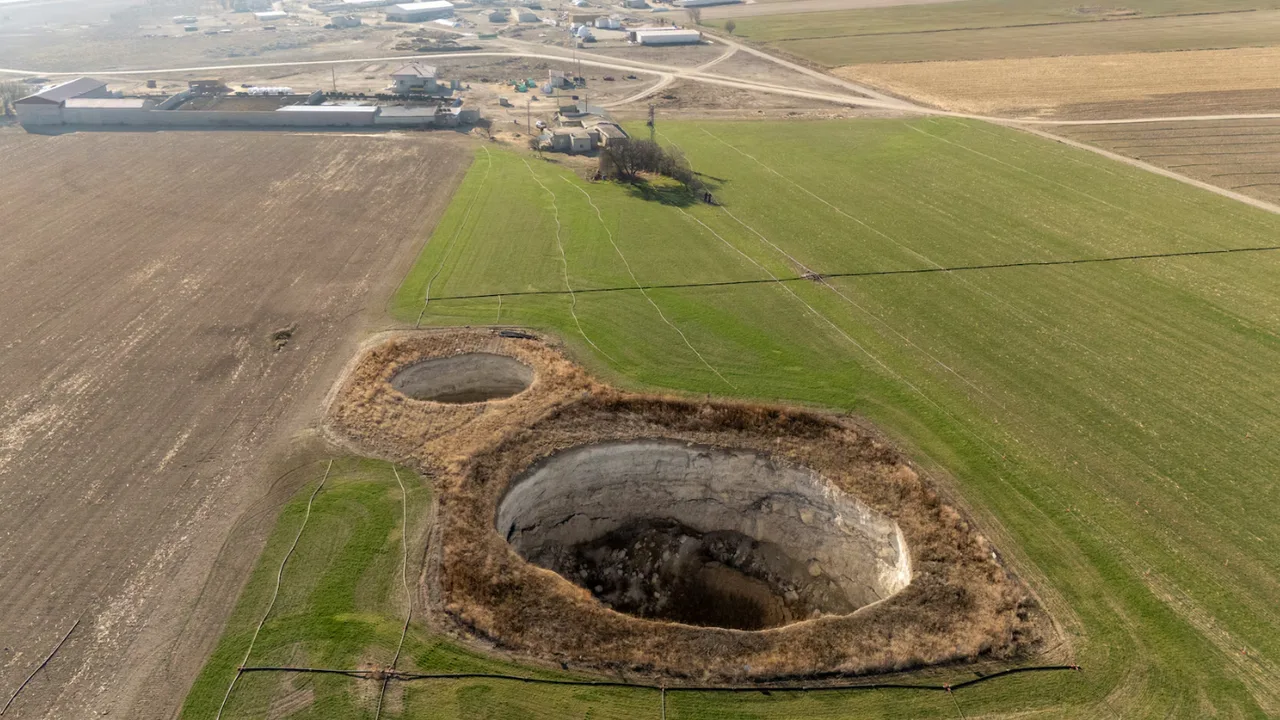
Geological phenomena observed in Konya Province are causing serious concern among scientists and local residents, Zamin.uz reports.
In this region, which is one of the country's main agricultural areas, the formation of giant sinkholes has intensified due to excessive groundwater extraction and declining underground water levels. According to experts, 684 large sinkholes have been recorded in the Konya Basin so far.
One of the largest sinkholes measures 228 meters in width and 171 meters in depth. While such sinkholes previously formed naturally, experts emphasize that human activity is now accelerating their growth.
Scientists explain that prolonged overuse of groundwater by farmers has led to the drilling of thousands of legal and illegal wells in the region, rapidly depleting water reserves.
As groundwater levels drop, the underground rock layers lose their stability, causing the ground to collapse unexpectedly. According to the Turkish Society for Nature Conservation, a significant portion of the wells in the Konya Basin are illegal.
Experts warn that this situation not only increases geological risks but could also negatively impact the country's food security. Geologists note that some farmers are attempting to fill newly formed sinkholes with waste materials.
However, this approach is considered dangerous, as the underground voids may persist, leading to further collapses. Specialists recommend the rational use of water resources, replacing water-intensive crops with climate-appropriate agricultural products, and implementing modern water-saving technologies as the main solutions to the problem.
Experts caution that if excessive groundwater extraction continues, the number of sinkholes in the Konya Basin will likely increase further, posing a serious threat to agriculture and the future of the entire region.



![Fransiya Usmonova proposed removing [the name] from the sanctions list](/uploads/mini/web-300/04/e8d7de74763e0760c29bdbfd3d91b77a.webp)