



The oldest meteorite crater on Earth's surface has been identified in Australia
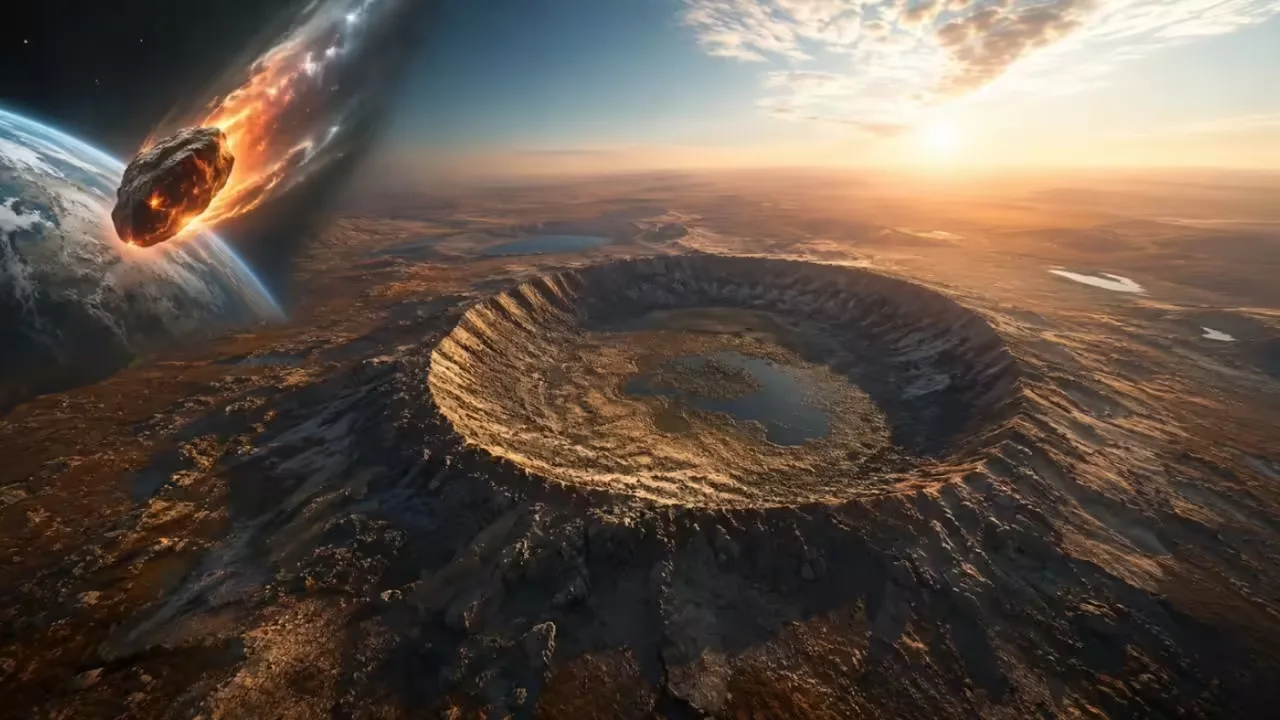
Geologists have determined the age of the oldest known meteorite crater on Earth's surface and officially confirmed it. This was reported by Zamin.uz.
The discussion concerns an ancient impact crater located in the North Pole Dome region of Western Australia. The findings of the study were published in the scientific journal Geology.
According to calculations by a team of researchers led by Christopher Kirkland from Curtin University, a massive meteorite struck this area approximately 3.02 billion years ago. If this result is fully confirmed, the structure will go down in history as the only meteorite crater with a precisely determined age.
As the scientists emphasize, one of the key pieces of evidence found in the area is the presence of shatter cones. Such formations occur only when extremely large extraterrestrial bodies strike Earth at high speed, creating intense pressure that deforms rock formations.
They were discovered in the Pilbara region, in one of the rare locations where rocks over three billion years old have been preserved. However, for many years, scientists have debated exactly when this impact occurred.
This is because the age of the basalt rocks in the formation cannot be determined directly, and estimates from various scientific groups have varied by nearly three billion years. To shed light on the issue, researchers conducted a deep analysis of zircon, apatite, calcite, and muscovite minerals in the rock composition.
In particular, zircon crystals provided crucial information: they contained both ancient crystals over 3.4 billion years old and younger skeletal grains formed during rapid cooling following the meteorite impact.
The best-preserved of these zircons indicated an age of about 3,024 million years. At the same time, apatite minerals formed through hydrothermal processes also confirmed an age of approximately 3,019 million years.
The fact that two independent mineral analyses yielded consistent results is being regarded as strong scientific evidence that the meteorite struck Earth during this period.
Additionally, the researchers identified mica within quartz veins as another important indicator.
Its age was determined to be 1,655 million years, indicating that the shatter cones formed long before this mineralization and ruling out some earlier estimates that placed the crater's age below 2.7 billion years.
In conclusion, the study authors state that the North Pole Dome, also known as the Miralga Structure, remains the only reliably confirmed meteorite crater from the Eoarchean era.
Scientists believe that although many meteorites likely struck Earth in ancient times, the traces of most have been completely erased over hundreds of millions of years by tectonic processes and erosion.



![Fransiya Usmonova proposed removing [the name] from the sanctions list](/uploads/mini/web-300/04/e8d7de74763e0760c29bdbfd3d91b77a.webp)