Artificial intelligence has disproved a 100-year-old mathematical conjecture
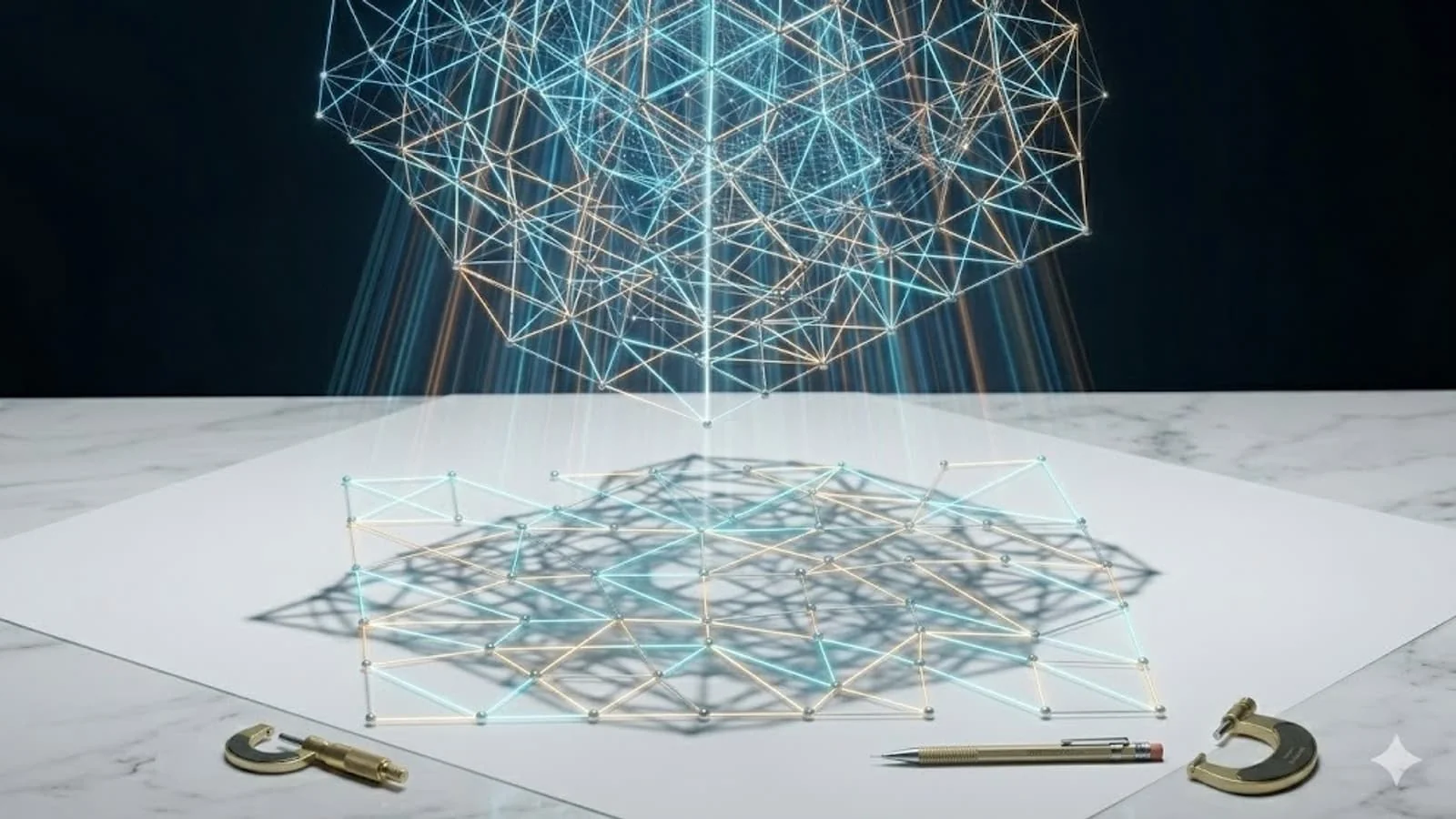
The artificial intelligence model developed by OpenAI has refuted a mathematical conjecture that the world's most renowned scientists had been unable to solve for decades. This was reported by Zamin.uz.
The work of the research team led by Noga Alon has astonished the global scientific community. Professor Tim Gauers of Cambridge University called this event a turning point in the history of computer mathematics.
According to him, if this scientific work had been written by humans, it would have been published without any doubt in the most influential mathematical journals. The mentioned scientific study is devoted to a complex geometric problem known as the unit distance problem.
Paul Erdős, one of the great mathematicians of the past century, considered this problem to be one of his most vivid contributions to the field of geometry. The essence of the problem is to determine the maximum number of segments of equal length that can be drawn between arbitrarily placed points on a plane.
Erdős hypothesized that the optimal solution would be a square grid, with the number of segments slightly exceeding the number of points. However, OpenAI's neural network proved his estimate to be incorrect.
The algorithm demonstrated that arranging points in less symmetric, complex shapes could increase the number of equal-distance connections by several times. In finding this solution, artificial intelligence utilized number theory.
The system achieved an unexpected result by constructing large grids in higher-dimensional spaces and then projecting them down onto a two-dimensional plane. According to Samuel Mansfield, a scientist at the University of Manchester, the main reason humans could not reach this solution for so long is that geometers often lack deep knowledge in number theory.
Artificial intelligence, on the other hand, demonstrated its superiority in integrating different fields of knowledge. Professor Misha Rudnev of the University of Bristol evaluates this discovery as an absolute breakthrough in the world of science and a major leap forward.
Although Erdős's problem is fundamental in theory, its solution has significant practical importance. In particular, this discovery introduces new efficient tools for working with large databases, crystallography, and complex network structures.
While OpenAI has not yet fully disclosed the structure of this model, this success is emphasized as an important step toward creating general-purpose artificial intelligence.