Robotic police officers have begun serving on the streets of Shanxay
Humanoid robots have begun undergoing trials on the streets of Shanghai, one of China’s largest megacities. One.uz reports on this.
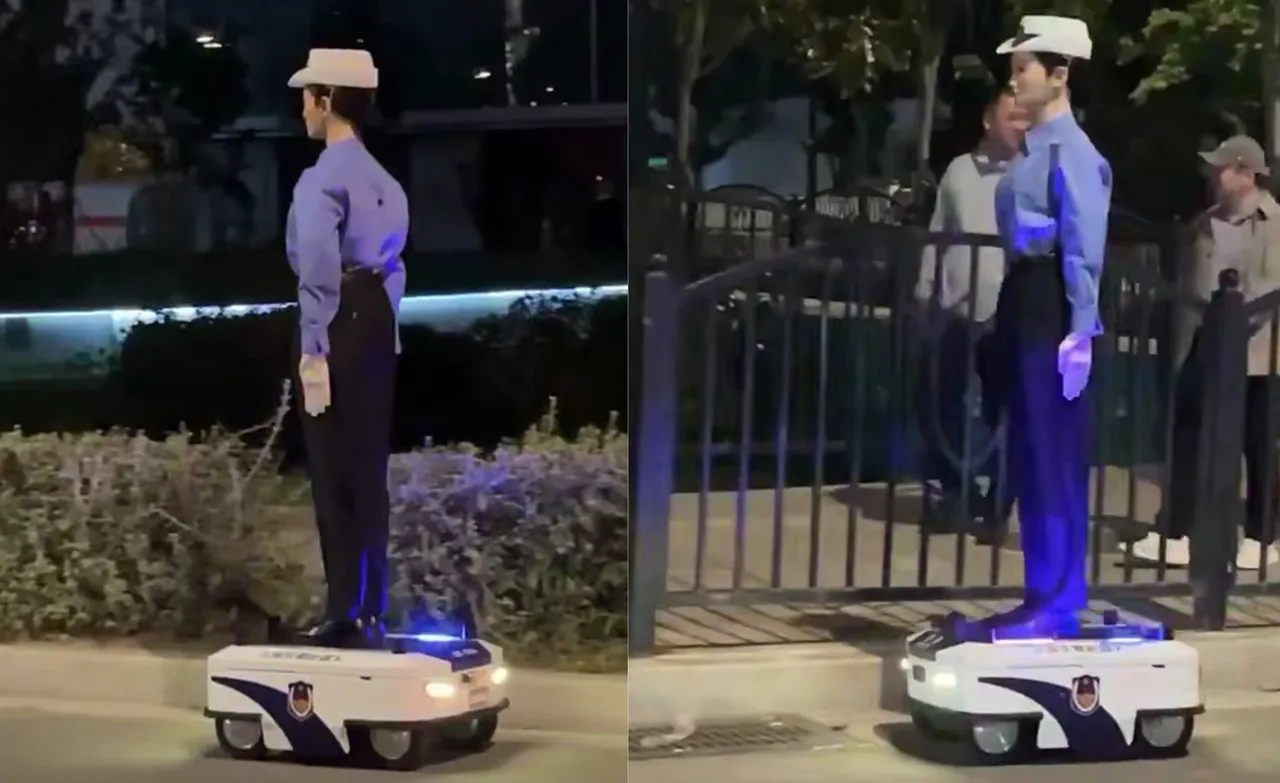
These innovative devices have been deployed to efficiently manage traffic and assist police officers in their duties. Images circulating on social media show the robot standing on a specially wheeled mobile platform, dressed in a police uniform, monitoring safety on the streets.
The appearance and technical features of the robot-police officer Its appearance indicates that the robot is designed in a modern style, closely resembling a human. Full service uniform: the robot is equipped with a blue shirt, dark trousers, white gloves, and a jacket, similar to those worn by actual traffic patrol officers.
Mobile wheeled platform: to ensure fast and smooth movement in complex urban conditions, it is mounted on a specially designed, compact, white robotic platform. Warning lights and police emblem: the lower part of the platform features a police emblem (crest), illuminated headlights, and blue-green warning lights visible from a distance at night.
Movement coordination: its hand gestures and upright posture help attract the attention of pedestrians and drivers, ensuring compliance with traffic rules. The Shanghai experience: why are such projects needed?
The application of artificial intelligence and robotics on the streets is aimed at solving several key tasks. Reducing officer workload: by delegating routine monitoring and direction tasks at busy intersections to robots, human resources can be utilized for more critical, urgent duties.
24/7 continuous monitoring: robots can perform uninterrupted duty at any time of day and in any weather conditions without fatigue. Innovative safety system: the presence of such high technology on the streets increases the vigilance of drivers and pedestrians, helping to prevent traffic violations.
The pilot project launched in Shanghai demonstrates that artificial intelligence and robotic systems are becoming a crucial component in maintaining public order within the future “smart city” infrastructure.