The rim of an ancient villa was discovered
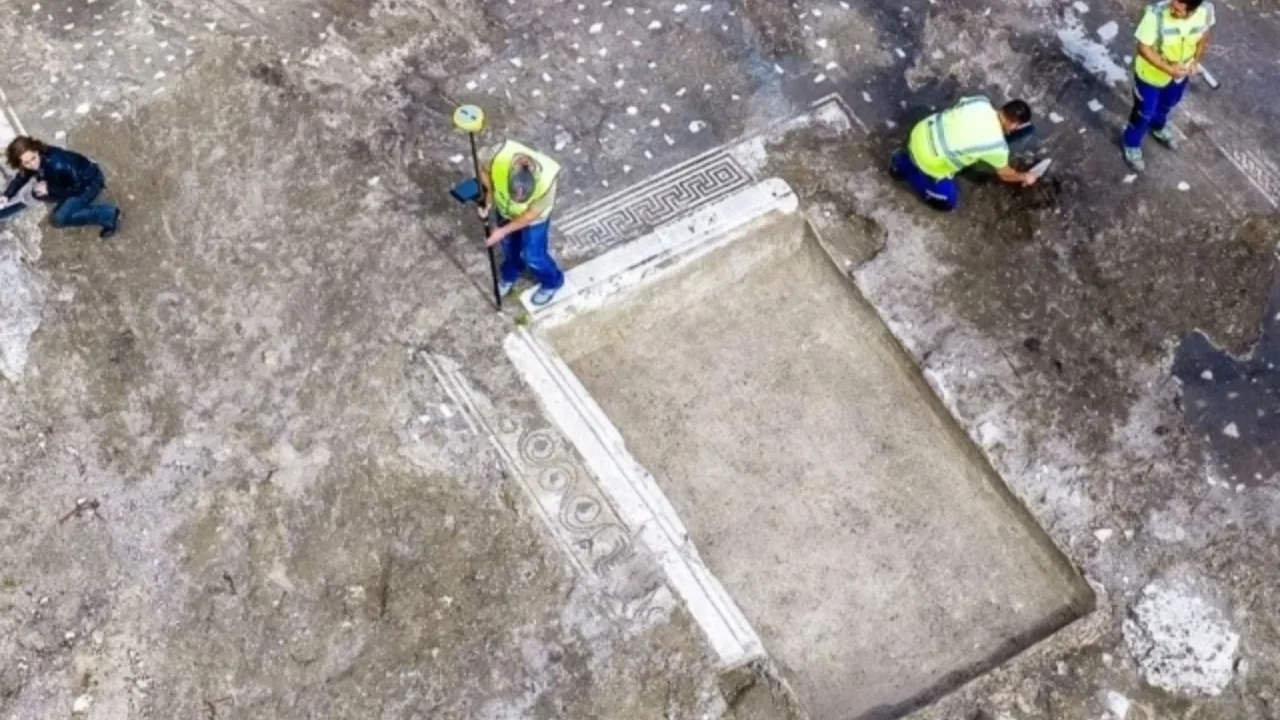
Archaeologists have uncovered the remains of a large and luxurious villa from the Roman Empire era in the Castel di Guido area near Rome, Italy’s capital, according to Zamin.uz.
The discovery has attracted significant interest from archaeologists and specialists. As reported, in February of this year, local residents observed suspicious activity in the area and alerted heritage protection authorities.
Following an investigation, officials found evidence of illegal excavation work — including nighttime digging, freshly disturbed soil, and the use of unauthorized equipment. During the inspection, it was revealed that a group of individuals had accessed the site using excavators and reached ancient structures buried underground.
Although the excavations were quickly halted, these very activities led to the discovery of a previously unknown Roman villa. So far, archaeologists have successfully uncovered a central atrium, a spacious hall with a water basin, and unique black-and-white mosaic floors.
The mosaics are said to feature preserved geometric and plant-like patterns. Officials from Italy’s Ministry of Culture emphasized that the site was once part of a residential complex known as Lorium in antiquity, a place frequently visited by Roman emperors.
Based on this, the uncovered villa may have served as a residence for aristocrats of the upper class. During the excavations, marble fragments, statue parts, and artifacts linked to Silvanus — the Roman deity regarded as the guardian of nature — were also found.
Officials stated that illegal digging has caused damage to certain parts of the structure. However, it remains unclear whether valuable historical artifacts have been lost or destroyed.
Meanwhile, archaeological research in the area continues. In the future, visitors will be able to view this unique historical site in advance by registering for access.



![Fransiya Usmonova proposed removing [the name] from the sanctions list](/uploads/mini/web-300/04/e8d7de74763e0760c29bdbfd3d91b77a.webp)