


Italian Foreign Minister calls Trump's statement offensive
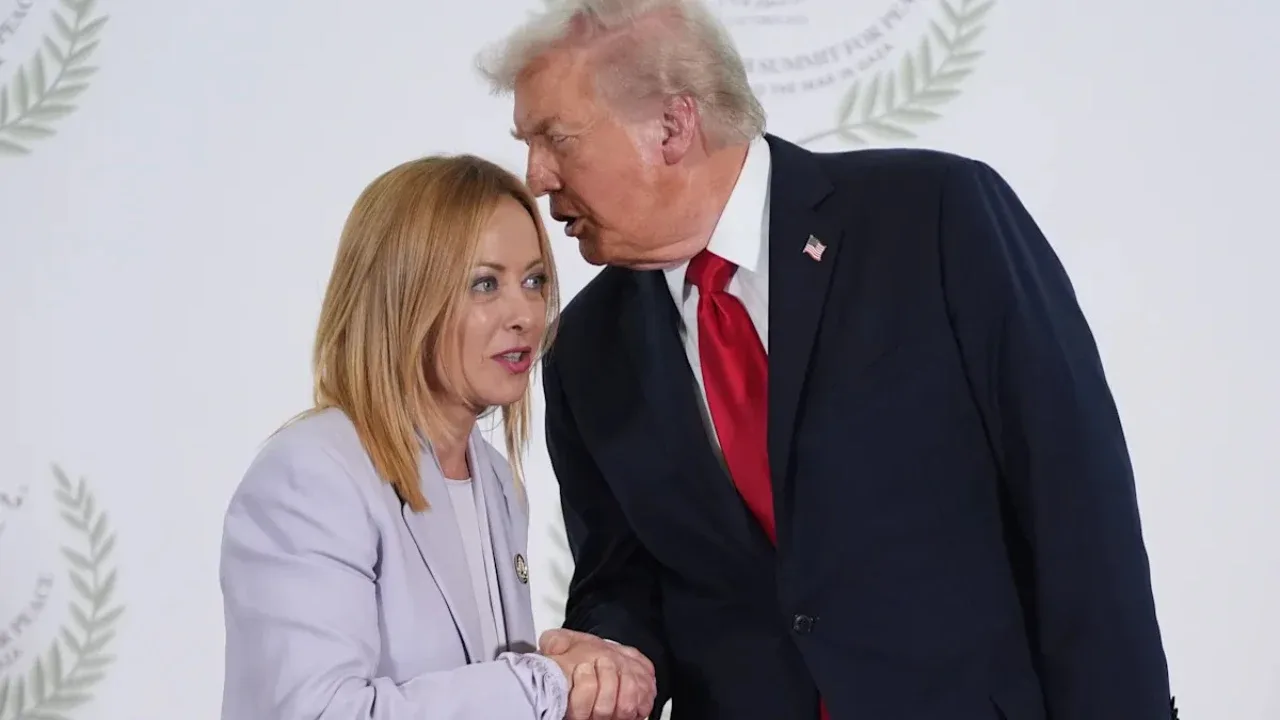
A serious crisis has emerged in the relations between two allied nations following an unexpected clash of statements between US President Donald Trump and Italian Prime Minister Giorgia Meloni. This was reported by Zamin.uz.
Italian Foreign Minister Antonio Tajani, describing Trump's words as "serious and offensive," immediately canceled his upcoming official visit to Washington. In a sharp statement on X (Twitter), the head of Italy's foreign policy department stated on June 19 that the US President's words were a sign of disrespect not only to the head of government but to the entire Italian people: "President Trump's serious and offensive statements about Prime Minister Giorgia Meloni are equivalent to insulting all of Italy.
In this regard, I have decided to cancel my planned visit to the USA on June 21–22." Due to this decision, Tajani's participation in a major Italy-US business, investment, and innovation forum to be held in Miami, as well as a critically important face-to-face meeting with US Secretary of State Marco Rubio, have been canceled.
What caused the conflict? The "begging" allegation The diplomatic clash was sparked by Donald Trump's interview with Italy's La7 television channel.
During the conversation, the US leader claimed that during the G7 summit, Giorgia Meloni "begged" him, figuratively speaking, to take a photo together, and that he felt pity for the Italian Prime Minister at the time. Giorgia Meloni's firm denial The Italian Prime Minister responded very quickly and sharply to Trump's words, calling them a complete fabrication: "Such statements are entirely made up.
I am astonished. I do not understand why the US President is behaving this way toward his allies.
Unfortunately, this is not the first instance... One thing must be remembered: neither I nor Italy ever beg."
Meloni also accused Trump of not showing such sharpness toward the West's actual rivals and only putting pressure on his allies. It is also said that the cooling of relations was caused by Trump's criticism of Pope Leo XIV's statement in the spring of 2026.
Regardless, differences of opinion between the White House and the Vatican are not new. Future of relations: NATO and the Iran issue According to observers, this chill between Rome and Washington is not merely a personal feud, but the result of deep geopolitical disagreements.
The two countries are finding it difficult to find common ground on the following issues: Iran and the nuclear threat: Trump has accused Meloni of not sufficiently supporting the US and Israel in the crisis related to Iran and of ignoring the threat. NATO and transatlantic cooperation: While the new US administration is demanding more commitments from European allies, Italy's failure to take additional steps to increase its share and effectiveness within NATO is also a problem.
Both sides must return to dialogue, base it on mutual respect, and respond together to common threats to ensure the stability of the Alliance. This situation affects not only the relations between the two countries but also the future of the strategic alliance in Europe and North America.
Tajani's decision and Meloni's response are not just about personal relations, but call for deep reflection on ethical standards between states, the basic principles of diplomacy, and the true meaning of alliance. Currently, both sides must take steps to maintain cooperation in the fields of security, economy, and international events.
Clear, fair, and respectful dialogue is the foundation of global stability and progress. Therefore, the current order must be restored, hatred lowered, and the true meaning of the alliance—absolute unity, absolute respect, absolute trust—restored.
In this direction, diplomats, experts, and teams must work together to find a solution. Only then can a strong and equal future for the Alliance be achieved.

![Fransiya Usmonova proposed removing [the name] from the sanctions list](/uploads/mini/web-300/04/e8d7de74763e0760c29bdbfd3d91b77a.webp)