



Hubble Finds Giant Exoplanets, Where Less Is More
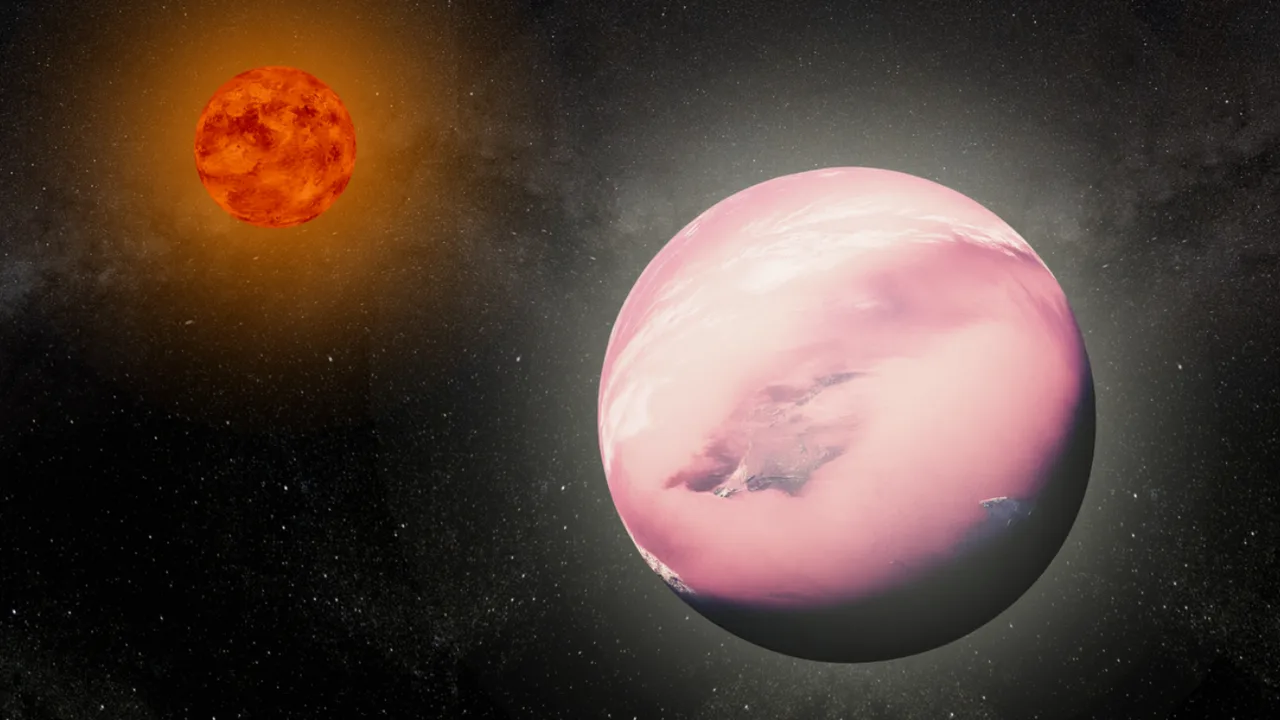
Astronomers have discovered two exoplanets that are among the fluffiest known in the cosmos, according to Earth.uz.
Although their size is comparable to or even larger than Jupiter, their density has been found to be lower than that of cotton candy. Referred to by scientists as “super-puffs,” these planets are currently the lightest large exoplanets ever detected.
As emphasized by George Dransfield, the study’s lead researcher from the University of Oxford, the density of these celestial bodies is so low it can be compared to that of pulled candy floss. Scientists believe these unusual planets may be composed primarily of hydrogen and helium gases.
The planets were detected using NASA’s TESS space telescope and are located approximately 1,110 light-years from Earth—equivalent to nearly 10 trillion kilometers.
According to reports, the two planets orbit a star in the constellation Pisces. For comparison, Jupiter’s density is about 35 times greater than that of these worlds.
To date, among the roughly 6,300 exoplanets cataloged by NASA, fewer than 40 fall into the “super-puff” category, making them exceptionally rare celestial objects.
Experts suggest such planets form in the gaseous environments around young stars and gradually lose part of their mass over time. Researchers plan to further investigate their chemical composition using NASA’s James Webb Space Telescope in the future.
As highlighted by the scientists, studying these rare and low-density worlds helps improve our understanding of how planetary systems form and expands our knowledge of humanity’s place in the universe.


![Fransiya Usmonova proposed removing [the name] from the sanctions list](/uploads/mini/web-300/04/e8d7de74763e0760c29bdbfd3d91b77a.webp)