



Olympians discover new way to make solar panels
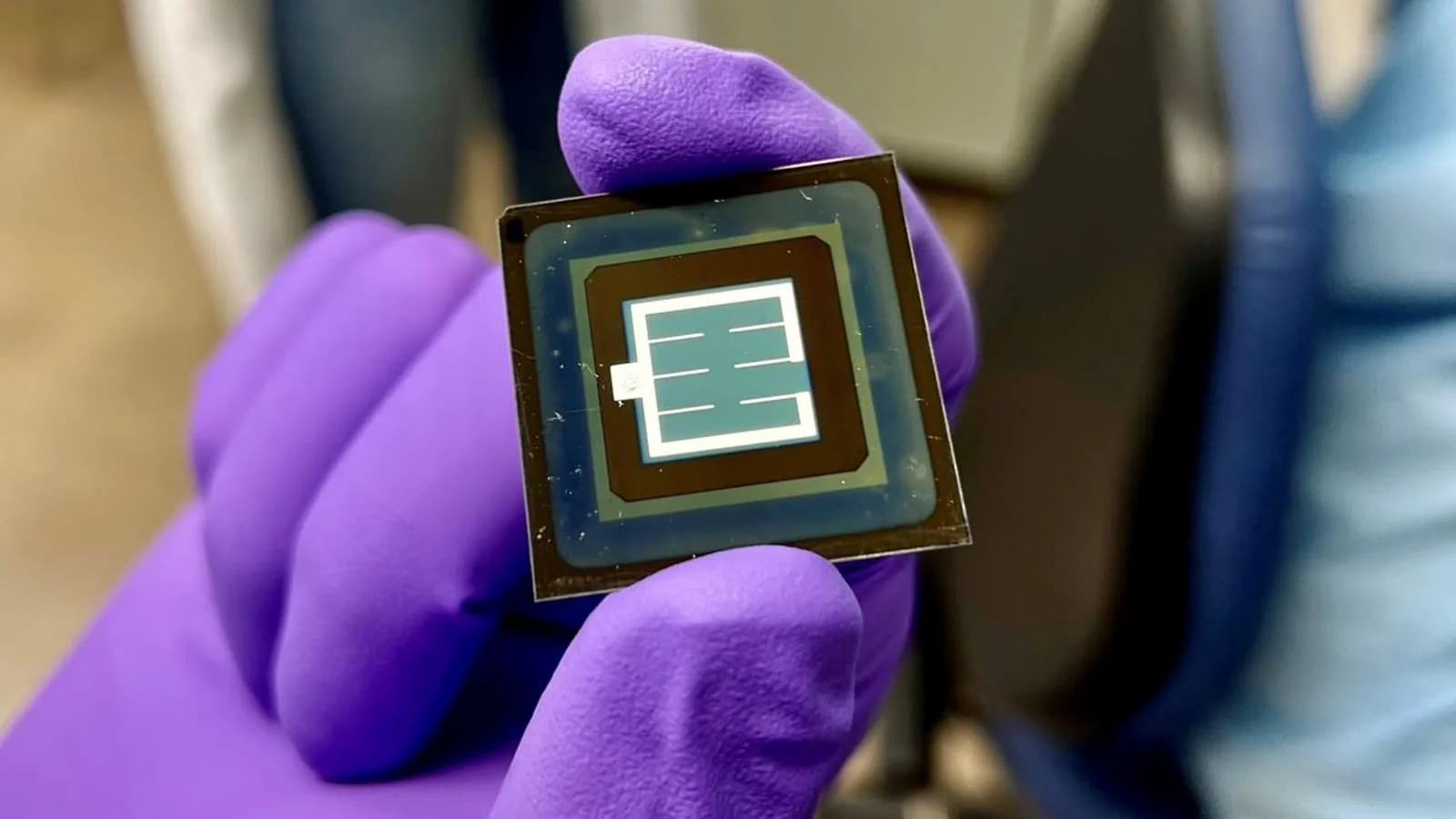
Researchers from the Karlsruhe Institute of Technology in Germany and the University of Valencia in Spain have discovered a completely new method for manufacturing solar panels, reported Zamin.uz.
This technology is expected to significantly reduce the cost and accelerate the production of next-generation devices. It involves tandem solar cells based on perovskite and silicon.
Such panels differ from conventional ones by having an additional perovskite layer deposited on top of a standard silicon base. This approach allows capturing more sunlight and significantly more solar radiation losses.
The main achievement is the development of a substantial increase in the useful efficiency coefficient compared to traditional silicon elements.
The scientists' key achievement is the development of a new vacuum-based method for applying the perovskite layer. Previously, such processes were too complex and slow, failing to meet the requirements of mass production.
Now, forming the necessary working layer takes only about ten minutes. The new technology works as follows: special organic materials are evaporated in a vacuum environment, after which their particles travel several millimeters and settle evenly onto the silicon wafer.
As a result, a thin and efficient working layer is produced. This method stands out for its universality—it can be applied to various types of silicon substrates without the need for additional equipment.
This makes it a highly convenient and cost-effective solution for industrial plants. During testing, the new type of solar elements demonstrated exceptionally high performance indicators.
Today, standard silicon panels have nearly reached their performance limits, while this innovation is expected to bring a major breakthrough in the field of solar energy. Another important advantage of the new technology is its economic efficiency.
The method requires less expensive raw materials and allows for the recycling of certain structural components, which is also beneficial for environmental protection.