

American inventors set a new record using an unmanned aerial vehicle
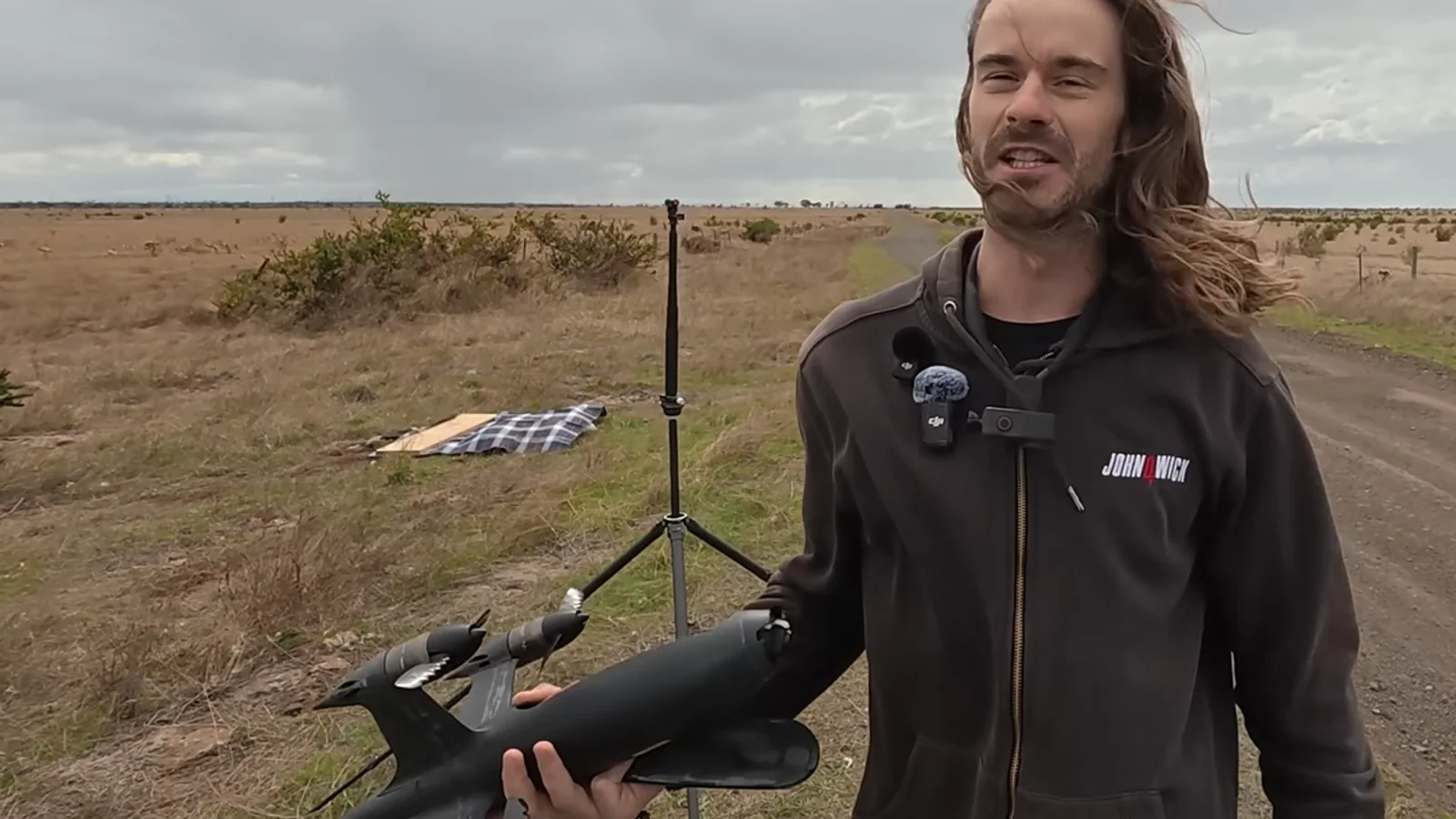
Two American inventors and drone enthusiasts recently conducted a unique test flight of their unmanned aircraft in open field conditions, as reported by Zamin.uz.
Their specially designed device, named Black Bird, reached a speed of 730 kilometers per hour during flight, setting an unofficial world record. To grasp how high this speed is, it’s enough to recall that ordinary passenger airplanes typically fly at an average speed of about 885 kilometers per hour.
International information sources are reporting on this technological innovation and the achieved result. The project’s authors had previously recorded their own achievements.
In particular, in December 2023, they set a record of 626 kilometers per hour, but later this result was surpassed by other engineers. To regain the lead, specialists equipped their device with entirely new propellers and an enhanced engine system.
All details of the testing process were shared with the public via social media. Initial tests were conducted downwind, during which the device reached a speed of 453 miles per hour, exceeding expectations.
After accounting for natural wind speed, the drone’s actual airspeed was found to be 674 kilometers per hour. Subsequently, engineers tested the device against a headwind, and even in those conditions, it maintained a speed of 640 kilometers per hour.
This demonstrates the device’s ability to operate with high power in any weather conditions. The overall average speed from flights in both directions amounted to 685 kilometers per hour.
Although this result fell slightly short of the inventors’ highest expectations, it was sufficient to break the current world record. This technological achievement once again confirms that the capabilities of modern unmanned aerial vehicles are expanding day by day, and revolutionary changes in the aviation sector may be possible in the future.
The mentioned experience is being evaluated not only for its speed but also for the effectiveness of new approaches in the field of aerodynamics.