


The hindustan digital services market is used to train robots
In recent years, the market for online food delivery and various household services has been expanding rapidly in India. Zamin.uz reports on this.
While large corporations such as Zomato and Swiggy have entered the stock market, platforms like Urban Company and Pronto have succeeded in fully digitizing the workforce performing daily chores. Today, the Human Archive startup, established in Silicon Valley, USA, aims to make productive use of these growth rates.
This project has begun collecting video datasets captured through human vision, which are considered critical for training robots. Prestigious publications are providing detailed information on this.
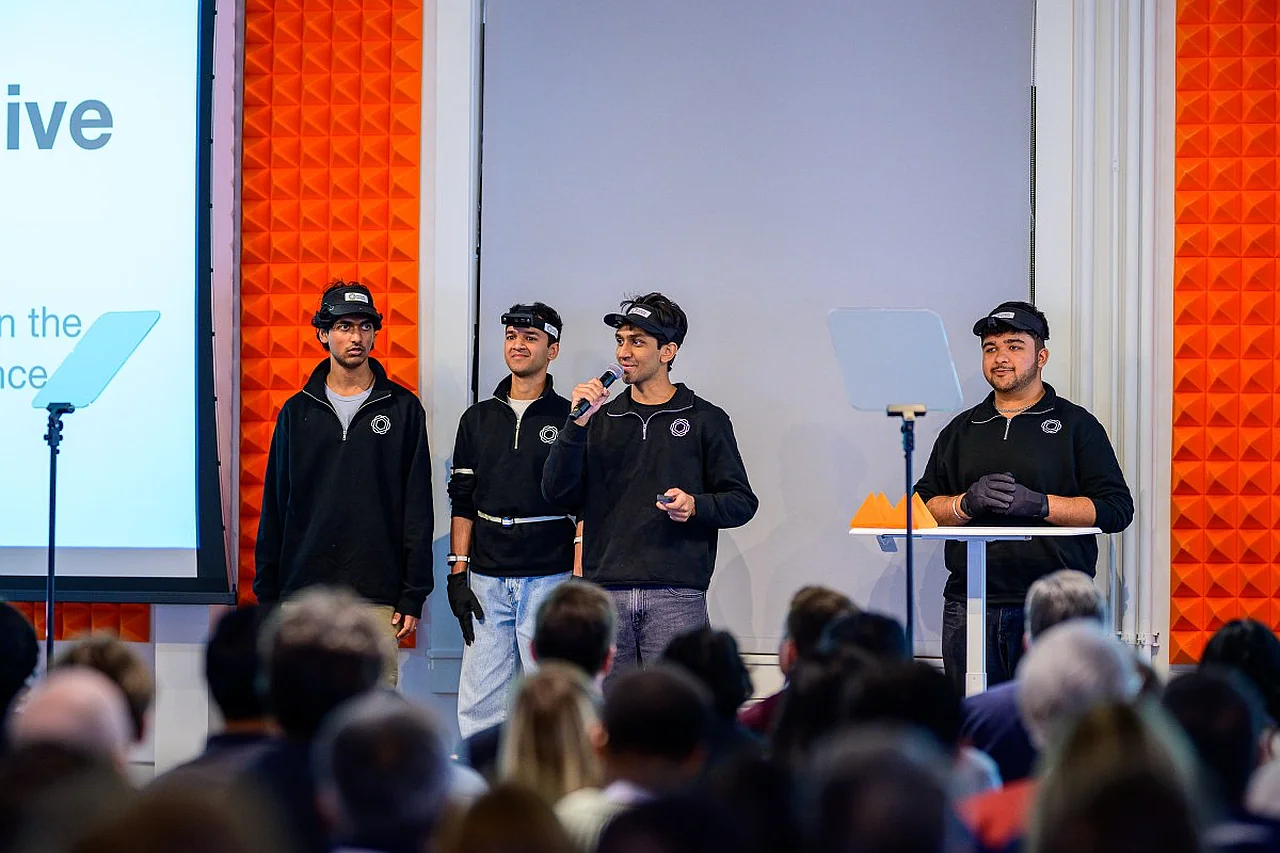
Within the framework of the Human Archive project, workers are equipped with headgear fitted with special cameras. Using these devices, the process of employees performing daily tasks is recorded from a first-person perspective.
Currently, the startup has established close cooperation with various hotels, catering establishments, and household service enterprises. More than a thousand active devices have been deployed as part of the project.
This initiative has also caught the attention of investors. The company managed to attract a total of over eight million dollars in investment from funds such as Wing Venture Capital and Y Combinator, as well as representatives from global technology leaders like OpenAI, NVIDIA, Google, and Meta.
This promising company was founded by graduates of the University of California, Berkeley, and Stanford University. The team members are specialists with extensive scientific experience in robotics, device design, and working with sensory data.
The startup's primary goal is to eliminate the biggest obstacle faced by artificial intelligence laboratories and robot manufacturing companies. This obstacle is the lack of high-quality data that accurately represents physical movements in real life.
Such data serves as the foundation for robots to move like humans. It is also worth noting that not everyone welcomed this news warmly.
For example, some large service platforms in India refused to cooperate with Human Archive. Their leaders stated that they have no intention of entering into such agreements.
However, the startup founders believe that such decisions are mistakes that will lead to a loss of competitiveness in the future. Nevertheless, India's labor market is becoming the largest testing ground for robots and artificial intelligence systems.
The company does not want to limit itself to video images alone. Currently, specialists are working on special gloves that record human movements and touching force with extreme precision, as well as suits that monitor full-body movement.
According to company representatives, combining video data with sensitive sensors will help train robots to be even more perfect and efficient. This will pave the way for robots to perform complex tasks without human assistance in the future.