




Elon Musk buys Mesh startup to boost space projects
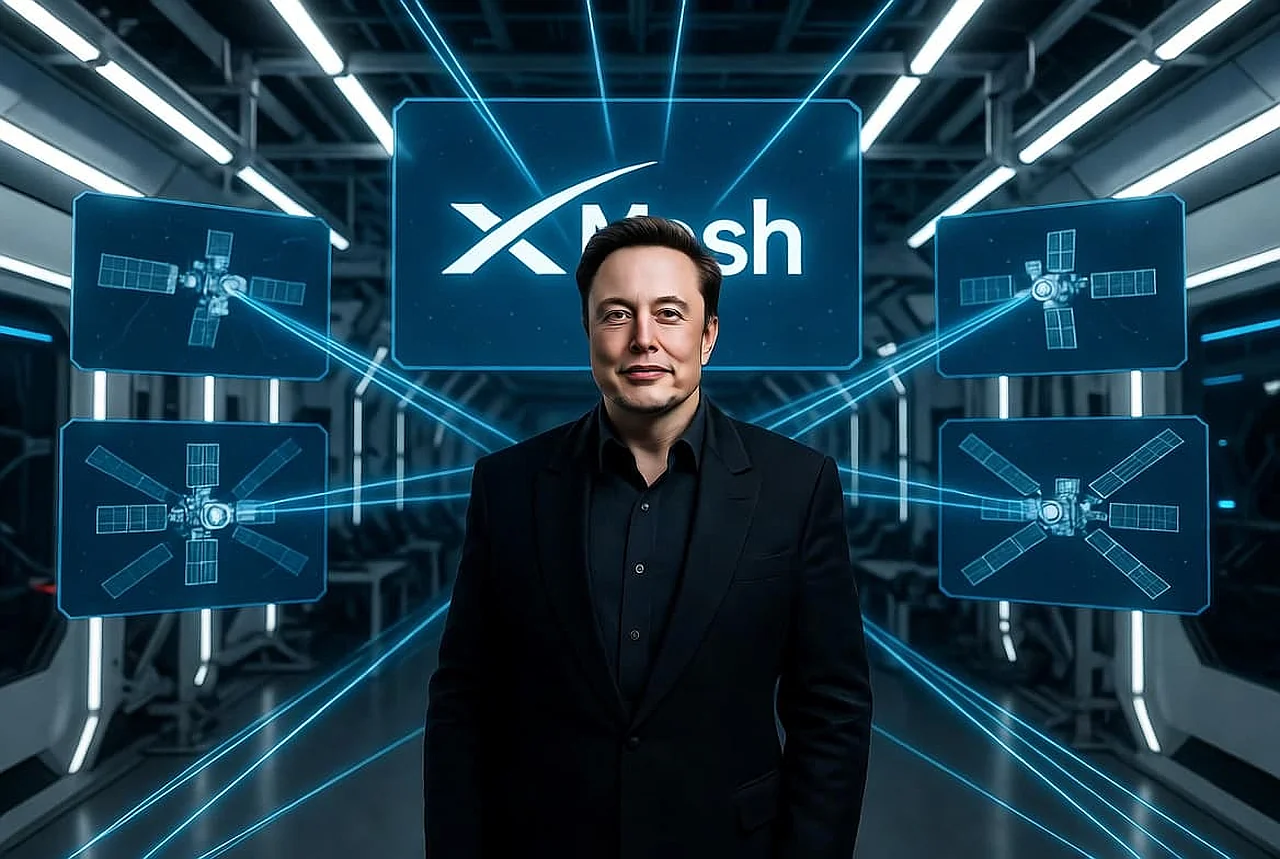
Technology giant Elon Musk has made another strategic acquisition to further expand his space and artificial intelligence projects, Zamin.uz reported.
Regulators have approved Musk’s purchase of Mesh Optical Technologies, a startup founded by former SpaceX engineers. This deal is not just about technology transfer—it lays the groundwork for future space-based data centers.
Mesh specializes in developing optical transceivers that use light to exchange information between data processing centers. These devices consume significantly less energy and offer much lower latency in data transmission compared to existing alternatives.
Importantly, Mesh’s founders were directly involved in creating laser communication technology for SpaceX’s Starlink satellite internet system. In February, the startup sought to raise $50 million in funding from Thrive Capital.
Now, this experience is returning to Elon Musk’s empire. Mesh technologies will not be limited to ground-based centers.
The company has expressed strong interest in deploying its solutions in open space, which aligns directly with SpaceX’s recently announced Starmind project.
Starmind is a system of orbital data centers where laser inter-satellite communication will play a key role. SpaceX has already officially unveiled its first space-based data center—or satellite designed for AI computing—under the internal name AI1.
To enable mass production of these devices, the company has begun construction of a massive factory on a site of one million square meters. This signals Musk’s intent to transform space not just into a communications hub, but into a center of computing power.
According to Musk, developing orbital data centers dedicated to AI will be far simpler than today’s complex Starlink satellite communications. Mesh technologies will ensure data exchange between these centers at the speed of light and with minimal energy consumption.
For Uzbek users and technology enthusiasts, this news signals a new phase in global internet speed and cloud computing technologies. Space-based servers will reduce reliance on terrestrial infrastructure and enhance the stability of the global digital ecosystem.

Similar news
SpaceX brings Falcon Heavy rocket to the field for the MaxFiy mission
SpaceX company transported the Falcon Heavy rocket to the LC-39A launch pad at the Kennedy Space Center via transport. One.uz reports this. This operation is considered a critical stage in the
<|channel>.OpenAI GPT-6.1 Astra model cancels the comprehensive presentation
OpenAI planned to release the GPT-6.1 Astra model for public use. One.uz reports this. The model was announced as OpenAI's next-generation neural network, and its presentation was scheduled to take
Falcon Heavy rocketation announced with record frames
Unique footage of SpaceX's Falcon Heavy rocket has been released,uz. The materials show 27 Merlin engines installed on the rocket body, which consists of three combined Falcon 9

TCL Corporation Sues Samsung for False Advertising
Xitoyning yirik texnologik korporatsiyasi TCL AQSH federal sudiga Samsung Electronics America kompaniyasiga qarshi rasmiy daʼvo ariza kiritdi. Kaliforniya markaziy

Vivo X Fold 6 will launch its global version on October 1
The Vivo company has officially announced the international launch date of its next-generation foldable smartphone — the Vivo X Fold 6. One.uz reports this. According to insider Abhishek Yadav, the

TakeMe2Space will launch the MOI-1A satellite with SpaceX in October 2026
Indian spacetech startup TakeMe2Space is preparing to launch the country's first orbital computing satellite on October 1, 2026, One.uz reports. The MOI-1A device, weighing less than 50 kilograms,