


Micron shares rose 236% to catch Nvidia's tailwind
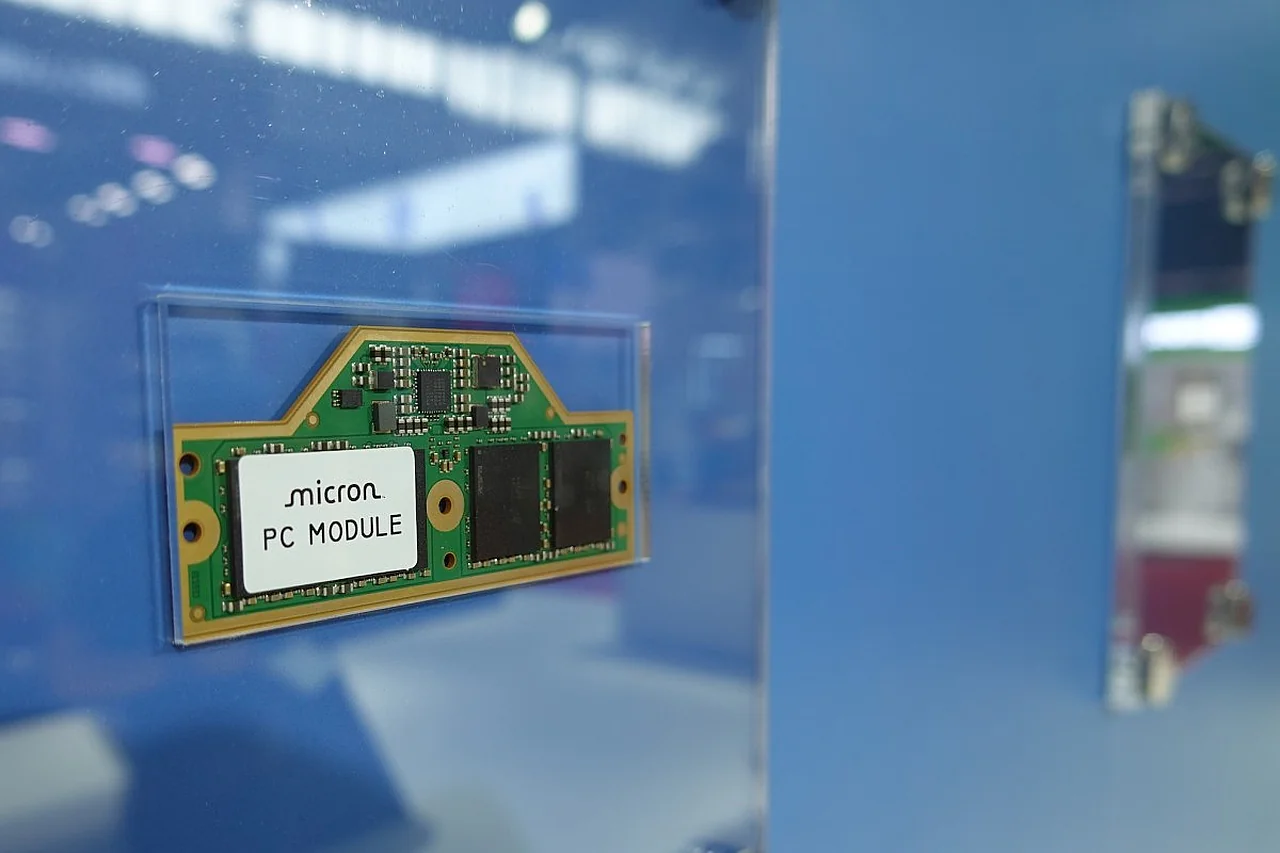
Micron, a company based in Idaho, has become the focus of global financial markets and Wall Street investors, according to Zamin.uz.
Once known solely as a manufacturer of small memory cards for computers and smartphones, the brand has today become one of the key drivers of the artificial intelligence revolution. Experts believe that Micron is poised to repeat Nvidia's success in terms of market value and strategic importance in the near future.
The company's shares have surged by an astonishing 236% over the past month, with each share now trading at $1,132. For comparison, as recently as mid-2025, Micron's stock was trading for a long time below $100 per share.
This sharp rise has allowed Micron to briefly surpass the market capitalization of tech giants like Meta and Tesla. The era of artificial intelligence and memory scarcity
Micron's success is rooted in the growing demand for AI data centers.
Artificial intelligence systems, especially servers running on Nvidia chips, require several times more memory than ordinary laptops. Currently, the market is witnessing a sharp deficit in both dynamic and static memory chips, particularly high-bandwidth memory modules.
Experts have dubbed this phenomenon "RAMageddon" and predict it will last until 2027. This shortage affects not only data centers at the enterprise level but also ordinary consumers.
As giants like Microsoft, Amazon Web Services, Google, and Apple buy memory chips in bulk, computer manufacturers such as Dell and HP are forced to build up inventories. This, in turn, could drive up prices for consumer electronics such as Apple products and Xbox gaming consoles.
Financial record highs Micron's third-quarter financial report left analysts stunned. The company's revenue grew fourfold compared to the same period last year, reaching $41.45 billion.
Net profit soared from $1.88 billion to $28.2 billion. Such growth rates have positioned Micron in investors' eyes as the second most attractive AI asset after Nvidia.
However, the memory chip market has historically been highly volatile. For manufacturers like Micron and Samsung, the main risk lies in expanding production capacity, which requires significant time and investment.
Often, by the time new factories come online, market demand has weakened, leading to oversupply and falling prices. However, Micron's leadership insists that this time is different, arguing that AI-driven demand will ensure long-term stability.