



Astronomers are studying a new planet that could support life
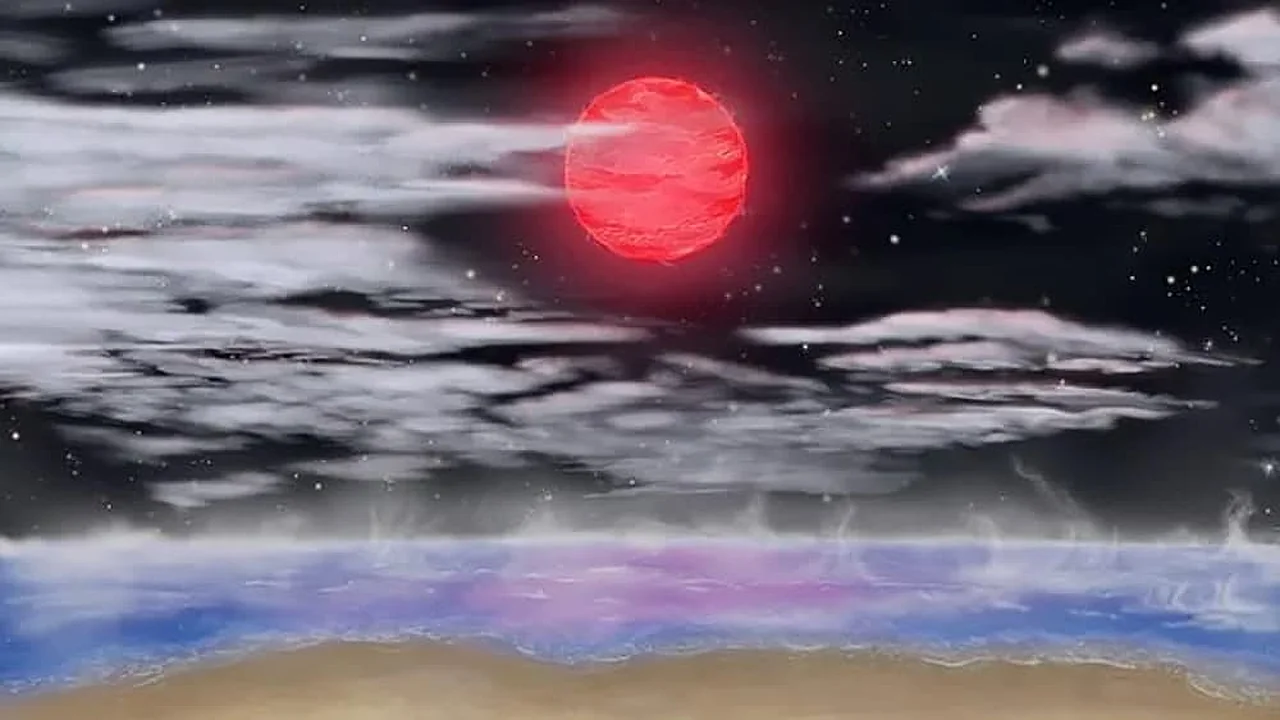
An international group of astronomers studying the secrets of the cosmos has re-examined the unique characteristics of the exoplanet GJ 3378b, which is located at a relatively close distance from Earth. This was reported by Zamin.uz.
The new data obtained indicate that this celestial body is located in the habitable zone of its star and theoretically has all the conditions necessary for the existence of life there. This is reported by international scientific publications.
The planet GJ 3378b is located approximately twenty-five light-years away from us, which is considered a very short and close distance on a cosmic scale. Earlier, when this planet was first discovered, its mass was estimated to be about five and a half times that of Earth.
With such indicators, it was classified among the planets of the mini-Neptune type, which have a thick gaseous envelope. However, recent repeated analyses have shown that the planet's mass is actually about two and a half times greater than Earth's mass.
This suggests that the celestial body is not a gas giant, but rather a rocky super-Earth, significantly increasing the likelihood of such a classification. Planets of this type are considered the most favorable objects for the formation of life.
The researchers have also clarified the orbital period of the planet around its star. While previous estimates suggested a year lasting twenty-five days, the new data show that the planet completes a full orbit around its sun in twenty-one days.
Despite this short distance, the planet has not overheated. The main reason for this is that the planet orbits a cool red dwarf star.
The planet receives approximately ninety percent of the energy that Earth receives from the Sun. If the planet has a sufficiently thick gaseous atmosphere, liquid water could be maintained on its surface.
This is the most essential condition for the development of biological life. Currently, the presence or absence of an atmosphere on the planet remains the biggest uncertainty.
Red dwarf stars are distinguished by their powerful flares and stellar winds. Such activity can strip away the protective atmospheres of nearby planets over time.
As scientists emphasize, this planet is currently considered one of the most promising candidates close to the Solar System. However, current technologies are not sufficient to fully uncover its secrets.
Definitive answers are expected to be obtained in about twenty years. In particular, the Habitable Worlds Observatory, planned by the U.S. National Aeronautics and Space Administration, will be launched precisely for this purpose.
This scientific station will focus on analyzing the atmospheres of nearby exoplanets and searching for signs that could indicate the presence of life. This news is also of great importance to Uzbek enthusiasts of science and knowledge.
The discovery of potential habitable worlds in the cosmos near us could fundamentally change humanity's understanding of its place in the universe.