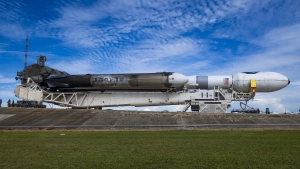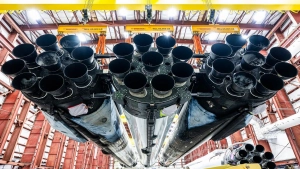



Roscosmos presents a mockup of the reusable Korona rocket
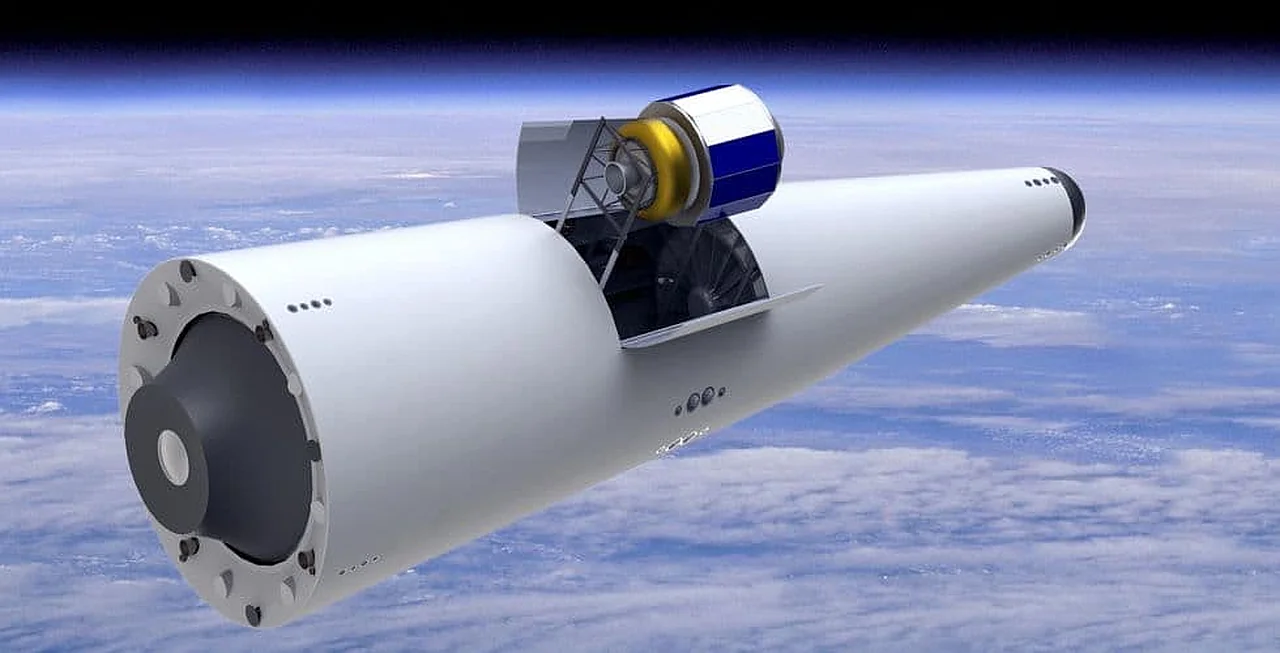
Roscosmos State Corporation is preparing to present the Corona reusable launch vehicle project to a wide audience in the field of space technology development, which is expected to be a breakthrough in the industry. This was reported by Zamin.uz.
The full-scale model of this promising development is planned to be showcased at the Innoprom International Industrial Exhibition in Yekaterinburg in July 2026. This news has generated significant interest among industry specialists and space enthusiasts.
The Corona project, being developed by specialists from the Makeyev State Rocket Center, is expected to open a completely new page in global cosmonautics with its technical specifications. The distinctive feature of this system is that it is a single-stage design capable of vertical takeoff and landing in the same orientation.
The system is not only capable of delivering various payloads into orbit but also of safely returning them from space to Earth. One of the main advantages of the new rocket is its high economic efficiency.
Compared to expendable launch vehicles, the Corona project aims to significantly reduce the cost per flight. Additionally, it ensures a high flight frequency, enabling repeated launches in short time intervals.
Another important aspect of the project is that during landing, no parts separate from the rocket, eliminating the need to reserve large areas for debris fallout. According to the technical data outlined in the project, the total launch mass of the rocket is approximately 300 tons.
It is capable of lifting a payload of up to 6 tons into orbit. Most importantly, a single rocket is designed for up to 100 uses, enabling it to perform suborbital flights over unlimited distances.
The history of the Corona project dates back a long time, with initial work beginning in 1992. However, due to various financial and technical challenges, the process has been interrupted several times.
The scientific and research work completed last year fully confirmed the feasibility of implementing this concept and readiness for the practical construction phase. According to Roscosmos leadership, a simple, cost-effective launch and landing site will be prepared for the new rocket.
Furthermore, a fully automated refueling system operating without human involvement will be used. Such modern infrastructure is planned to be established at the Vostochny Cosmodrome.
Currently, the main experimental-design work is scheduled for 2026. If the project is successfully completed, Corona will become a key factor in enhancing the competitiveness of Russia’s space industry in the global market.
Such multi-use systems will enable fair competition with leading private space companies worldwide.