



AMD is creating a new technology to improve video fluidity on AMD video cards
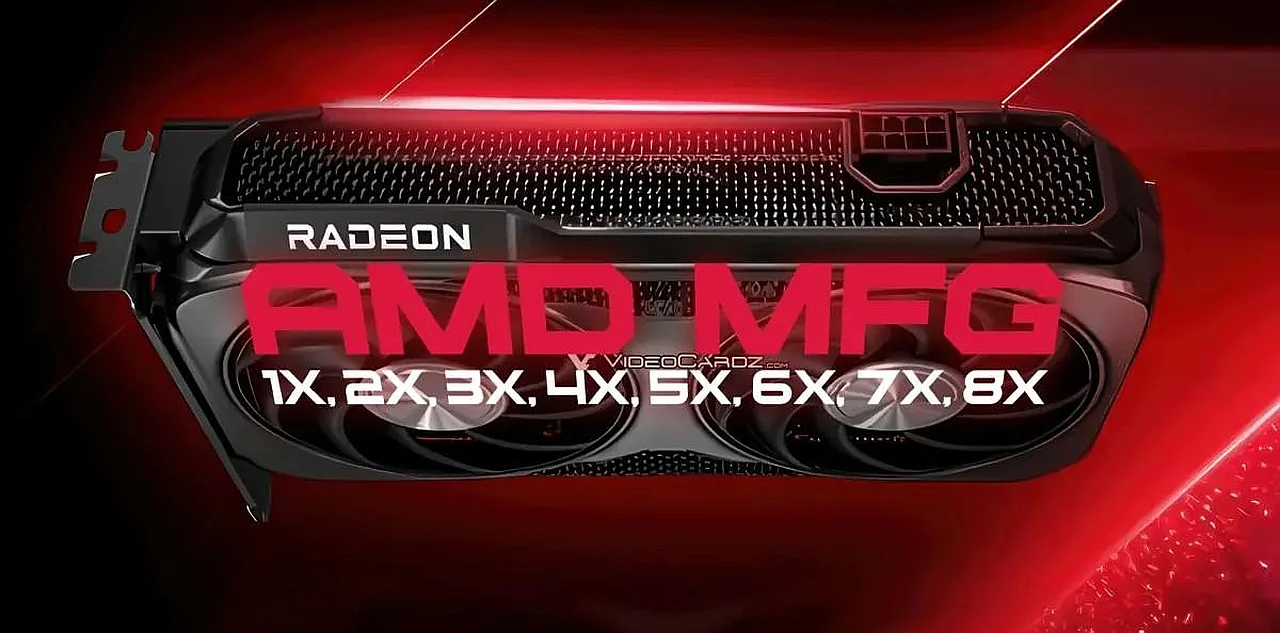
The graphics processor market is entering a new phase of competition, as reported by Zamin.uz.
It has become known that AMD is working on implementing a high frame rate generation feature for its Radeon series graphics cards. This technology aims to significantly improve visual smoothness in games and will allow the company to catch up with its main competitors, NVIDIA and Intel.
The news has sparked significant interest among industry experts and users alike. Details about the new feature were uncovered during the latest analysis of the RivaTuner software.
The program detected specific sections in AMD driver settings responsible for significantly increasing the frame generation coefficient. This suggests that users may soon be able to adjust the frame multiplication factor up to eight times in the future.
Such capability is expected to elevate image quality to an entirely new level. Currently, AMD graphics cards only support the standard two-times frame generation system.
Until now, the company has lagged slightly behind NVIDIA and Intel in this area. The rollout of this new technology will enhance gameplay smoothness and quality by using artificial intelligence to multiply frame rates several times over.
This will create a major advantage for gamers. Interestingly, Sony had previously hinted at the development of such a feature.
As is known, PlayStation gaming consoles are based precisely on AMD graphics processors. The experience gained in the console world is now expected to transition to Radeon cards designed for personal computers.
This will further reduce the technological gap between consoles and PCs. According to experts, this high frame generation feature could be made available to users in the near future.
However, it is likely that only owners of the newest generation Radeon RX 9000 series graphics cards will be able to fully utilize this capability. For older models, the feature may be offered in a limited form or may not be implemented at all due to technical constraints.
For users and IT specialists in Uzbekistan, this news is particularly important, as AMD graphics cards have gained widespread popularity in the local market due to their price-to-performance ratio.
If the company can respond appropriately to competitors' advanced technologies through software updates, demand for Radeon cards is likely to increase further.
In summary, AMD aims to push frame generation technology to a new level.
If the eight-times multiplication coefficient proves effective in practice, even mid-range computers could gain the ability to run the most demanding games at high quality.
This could represent a significant step capable of completely reshaping the balance of power in the graphics processor market.