


US Strategy: Focus Shifts from Europe to China

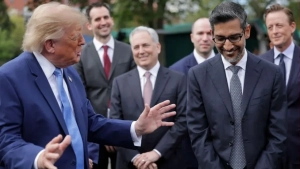
Recently, US President Donald Trump signed the newly revised National Security Strategy. This was reported by Zamin.uz.
This document is developed by the US executive branch every 3-4 years, approved by the president, and presented to Congress. It outlines the main approaches of the US in foreign policy, security, and stability issues.
This strategy significantly differs from previous approaches. Notably, there are considerable changes in the relations with NATO and the European Union.
These changes have caused dissatisfaction among the EU and NATO member states. The document no longer labels Russia as an “enemy” or “rival,” but instead proposes a quicker end to the Russia-Ukraine war and the restoration of relations with Moscow.
The expansion of NATO and the addition of new members are viewed critically. The US strategy encourages European countries to independently assume responsibility for their own security and stability.
For this reason, the US intends to shift its focus to another region. The topic concerns the Indo-Pacific region.
The main goal of the US is to contain the People's Republic of China. Although there are no plans to leave NATO, the US aims to reduce its participation in the alliance and redirect its resources to counter the threat from China.
Over the next two decades, US policy has increasingly focused on China. In the 1990s, the prevailing belief was that China would grow wealthy, become a liberal state, and a favorable partner for the US.
However, today China is seen as the main competitor. This approach has become the norm for political circles and presidents in Washington.
Starting from 2027, Washington plans to cease arms deliveries to Europe and NATO but will continue to maintain its role in nuclear defense. The Trump administration is trying to reach an agreement with Russia to discourage it from assisting China.
At the same time, Europe views Russia as the main threat and regards the US approach with distrust. China is not considered an open threat to Europe.
Trade relations between Europe and China are surpassing those with the US. Trump is reviewing the US’s priorities, shifting attention from Europe to China, and preparing for future US-China conflicts.
These changes will also directly affect Central Asia. Uzbekistan is located at the center of Eurasia, where the world's greatest conflicts and power struggles are taking place.
Therefore, the main task for our region and Turkic states is to maintain internal unity, strengthen their power, and adapt to new geopolitical conditions. Kamoliddin Rabbimov, political scientist