



New exoplanet: Similar to Earth, but colder
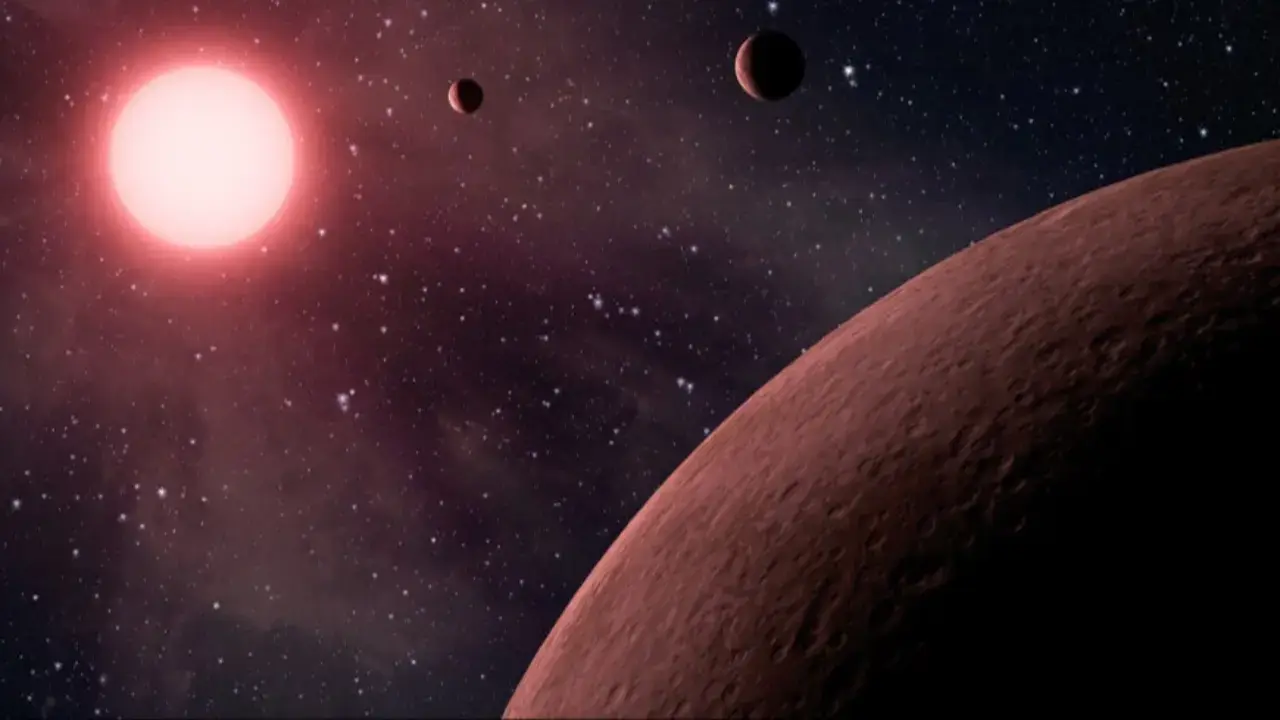
An international team of astronomers has discovered a new exoplanet named HD 137010 b. This was reported by Zamin.uz.
This planet is located approximately 146 light-years away from Earth. According to scientists, its size is very close to Earth's, and its orbital period around its star is similar to one year on Earth.
The discovery was reported by “The Guardian.” It is known that the planet was identified based on data collected by NASA's “Kepler” space telescope in 2017.
Research indicates that HD 137010 b is only 6 percent larger than Earth and completes one orbit around its star in 355 days. Scientists note that there is a 50 percent chance this planet is located within the “habitable zone.”
This zone is theoretically an area where liquid water could exist. However, although the planet's orbit and orbital period are similar to Earth's, its conditions are not as favorable as those on Earth.
Despite the star in the system being similar to the Sun, it is cooler and emits relatively less light. Therefore, the surface temperature of the planet is close to that of Mars, possibly -70 degrees Celsius or even lower.
According to Sara Webb, a scientist at Swinburne University of Technology, there is a possibility of water on the planet, but most of it may be in the form of ice. Chelsea Huang, a researcher at the University of Southern Queensland, emphasized that studying this planet is particularly important due to the star's proximity and brightness.
Since HD 137010 b is relatively close to Earth, future observations with modern telescopes may provide more information about its atmosphere and surface conditions. For comparison, the previously discovered closest exoplanet, Kepler-186f, is four times farther away than HD 137010 b and its star is 20 times dimmer.
Therefore, this new discovery holds significant scientific importance and is expected to be studied in more detail in the future.


![Fransiya Usmonova proposed removing [the name] from the sanctions list](/uploads/mini/web-300/04/e8d7de74763e0760c29bdbfd3d91b77a.webp)