



A 307 Million-Year-Old Animal Skull Found in Canada
Scientists in Canada have discovered a unique find that helps to further study the history of animal evolution. This was reported by Zamin.uz.
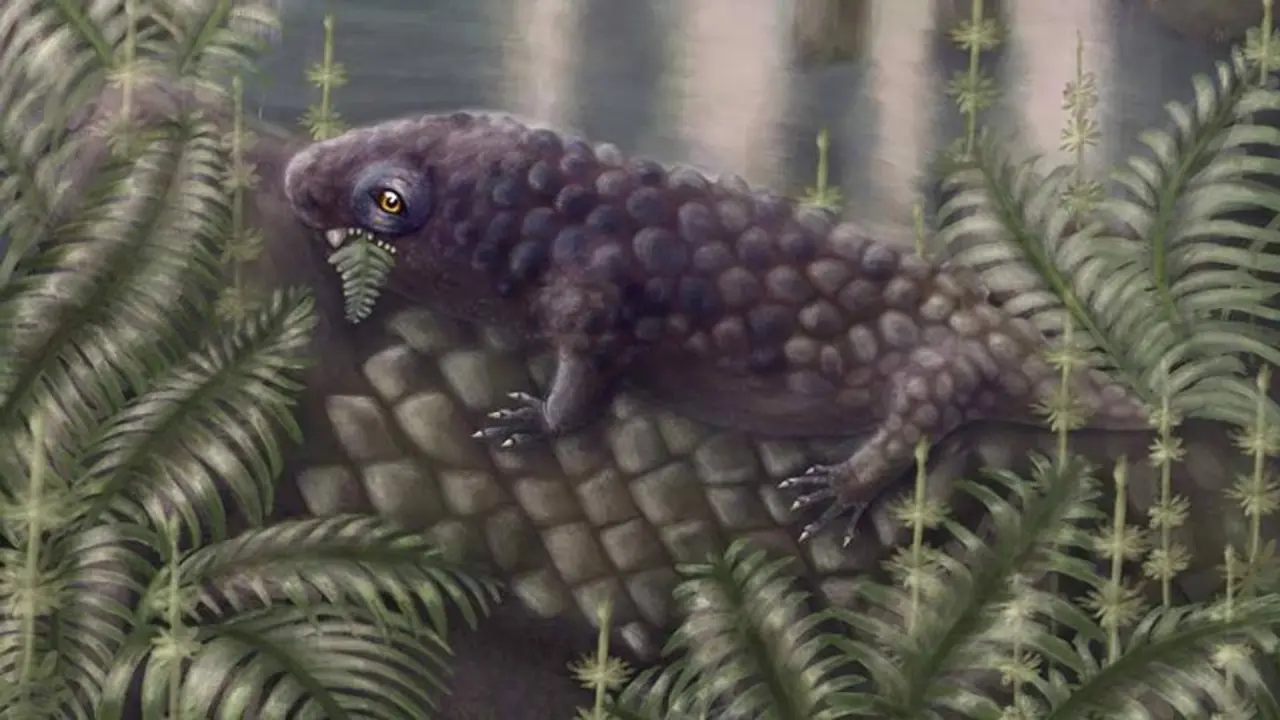
A skull of an ancient animal that lived approximately 307 million years ago was found in the Nova Scotia region. According to experts, this animal was one of the first herbivorous vertebrates to live on land.
This creature has been named Tyrannorotor heberti. Although it resembles reptiles in appearance, scientists classify it within the microsaur group.
Research indicates that this animal was about 30.5 centimeters long. Its external appearance can be imagined as similar to modern salamanders.
The most important discovery is related to its feeding method. Using micro-computed tomography, scientists examined the animal's dental system and identified a developed chewing mechanism.
This shows that organisms adapted to efficiently chew and digest plants had already begun to emerge at that time. This find is of great significance in the study of animal evolution.