



Russia launched a large-scale missile attack on Ukraine
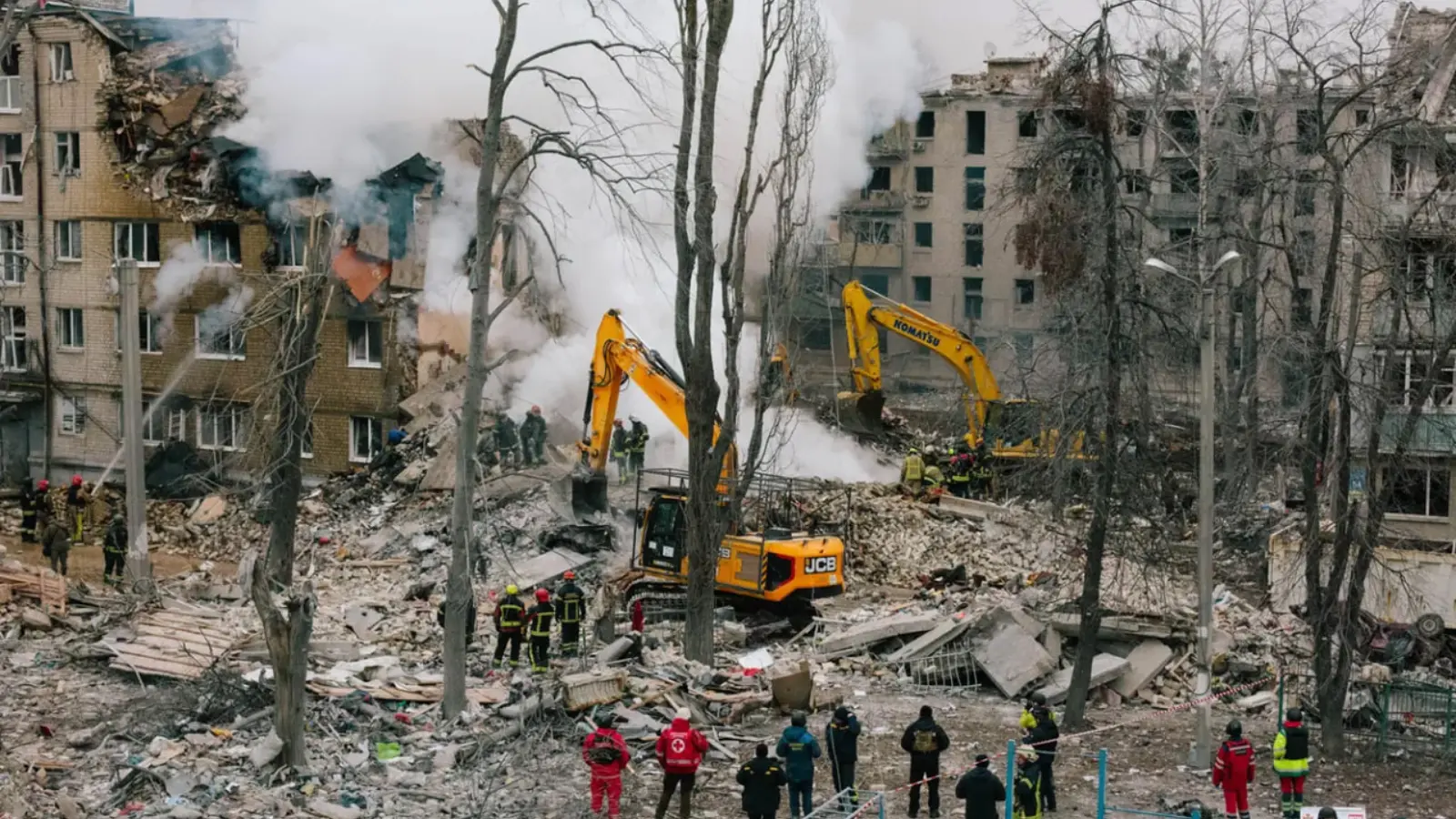
On the night of March 7, Russian forces launched a large-scale strike on Ukrainian territories using missiles and drones. This was reported by Zamin.uz.
According to the Ukrainian Armed Forces Air Force, Russia launched a total of 480 drones, two hypersonic missiles, 13 ballistic missiles, and 14 cruise missiles. The main attacks were targeted at the Kyiv, Kharkiv, Zhytomyr, Khmelnytskyi, and Chernivtsi regions.
Ukrainian air defense attempted to repel these attacks, reportedly neutralizing 453 drones, shooting down eight ballistic and 11 cruise missiles. However, some missiles reached their targets, causing damage to civilians and infrastructure.
In the city of Kharkiv, one of the ballistic missiles struck a multi-story residential building. As a result, the building's entrance was destroyed, and the upper floors of neighboring buildings were also damaged.
Kharkiv's mayor, Igor Terekhov, initially reported eight casualties. Later, during search and rescue operations, the bodies of four more people were found, bringing the death toll to 11.
The victims include a primary school teacher, her son, and an eighth-grade student. In Kyiv, the strikes also caused a disruption in heating supply.
According to the capital's mayor, Vitali Klitschko, 1,905 homes in the Pechersk, Dniprovskiy, Holosiivskyi, and Solomianskyi districts were left without heating. Currently, a total of 2,700 homes remain without heating.
Ukrainian President Volodymyr Zelensky stated that Russia's strikes targeted the energy infrastructure of the Kyiv, Khmelnytskyi, and Chernivtsi regions. Damage was also reported in the Dnipropetrovsk, Zaporizhzhia, Vinnytsia, Odesa, Poltava, Sumy, and Cherkasy regions.
According to Zelensky, such attacks “must be met with a response from partners,” and since Russia's attempts have not ceased, international support must continue. In conclusion, the strikes on the night of March 7 were a severe test for Ukraine.
Destroyed and cold homes, lost lives, disrupted daily life — all these demand intensified search and rescue efforts, restoration work, and enhanced security measures.