




BMW company has launched a new generation of humanoid robots in its factories
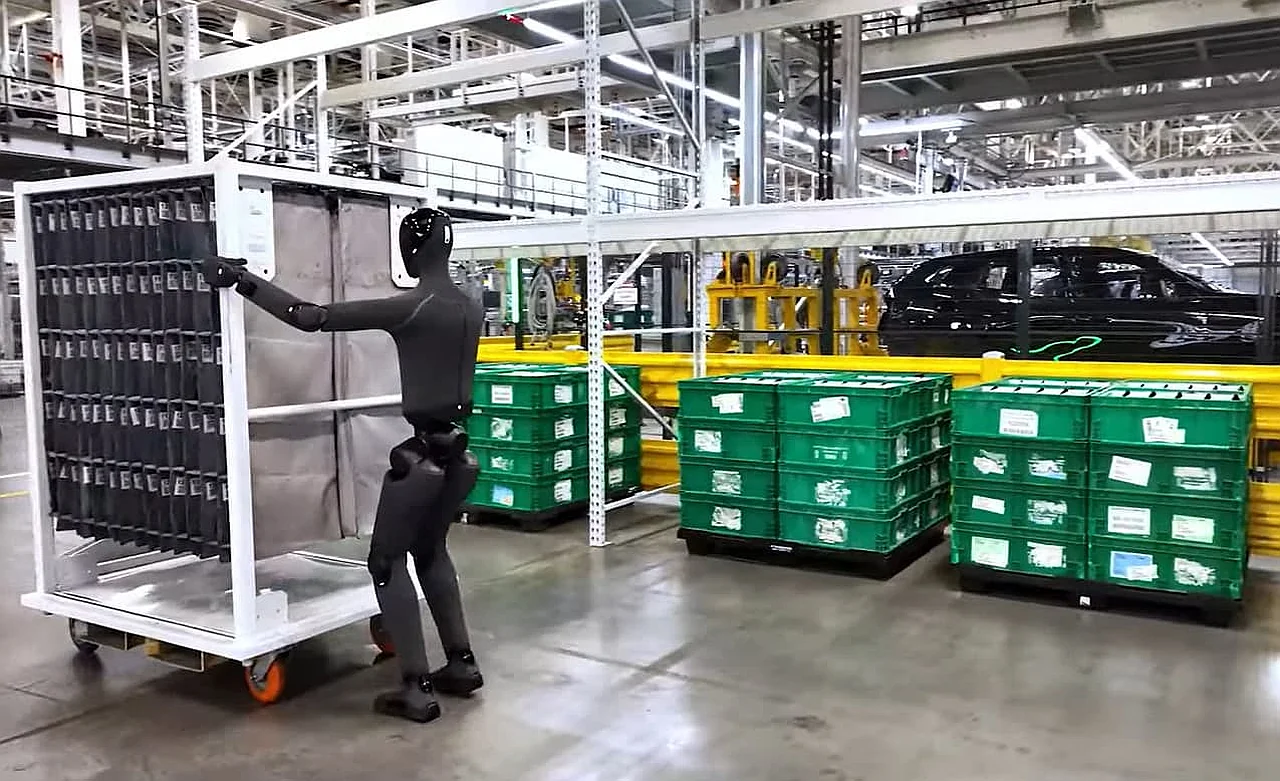
The BMW Group has taken the implementation of artificial intelligence and robotics technologies in the automotive industry to a new level, Zamin.uz reported.
The company has officially launched a new generation of humanoid robots named Figure 03 at its Spartanburg plant in South Carolina, USA. The project is part of the concept of embodied artificial intelligence, where intelligent algorithms directly control mechanical devices in real production processes.
The new Figure 03 model is currently successfully performing tasks in logistics processes, particularly the sequential arrangement of body parts. The robot picks the required parts from randomly placed containers and positions them in a precise order for transfer to the conveyor.
Afterward, all materials are transported to the welding lines using automated handling systems. This process significantly reduces manual labor and improves production accuracy.
The project is not just an experiment but a logical continuation of successful trials. Previously, the Figure 02 robot underwent testing at the same plant for eleven months.
During that period, the robot directly participated in the assembly of over thirty thousand BMW X3 crossovers, performing complex operations such as installing parts in the body shop. Now, this technology is being integrated into standard daily production.
The Figure 03 model has been significantly improved compared to its predecessors. It is equipped with soft-body elements for safety, a wireless power supply system, and audio channels for voice communication.
Additionally, the robot’s hands feature high-precision tactile sensors and special cameras, enabling it to work with small parts. The Spartanburg plant has become one of the first factories in the world where humanoid robots have moved beyond laboratory conditions and are fully integrated into the real industrial environment.
The plant also uses a special virtual system alongside the robots, allowing employees and robot movements to be pre-modeled through three-dimensional simulations.
The AI-based quality control system monitors product quality in real time using cameras and sensors, enabling immediate detection and correction of defects in the production process.
BMW management views humanoid robots not as a replacement for human workers but as a useful addition to existing automation systems. The main goal is to assign repetitive, physically demanding, and hazardous tasks to robots.
This will further increase the efficiency and flexibility of production lines. The experience gained in Spartanburg is expected to be expanded to the company’s plants worldwide in the future.
