Scientists have confirmed that the health indicators of planet Earth have fallen to a dangerous level
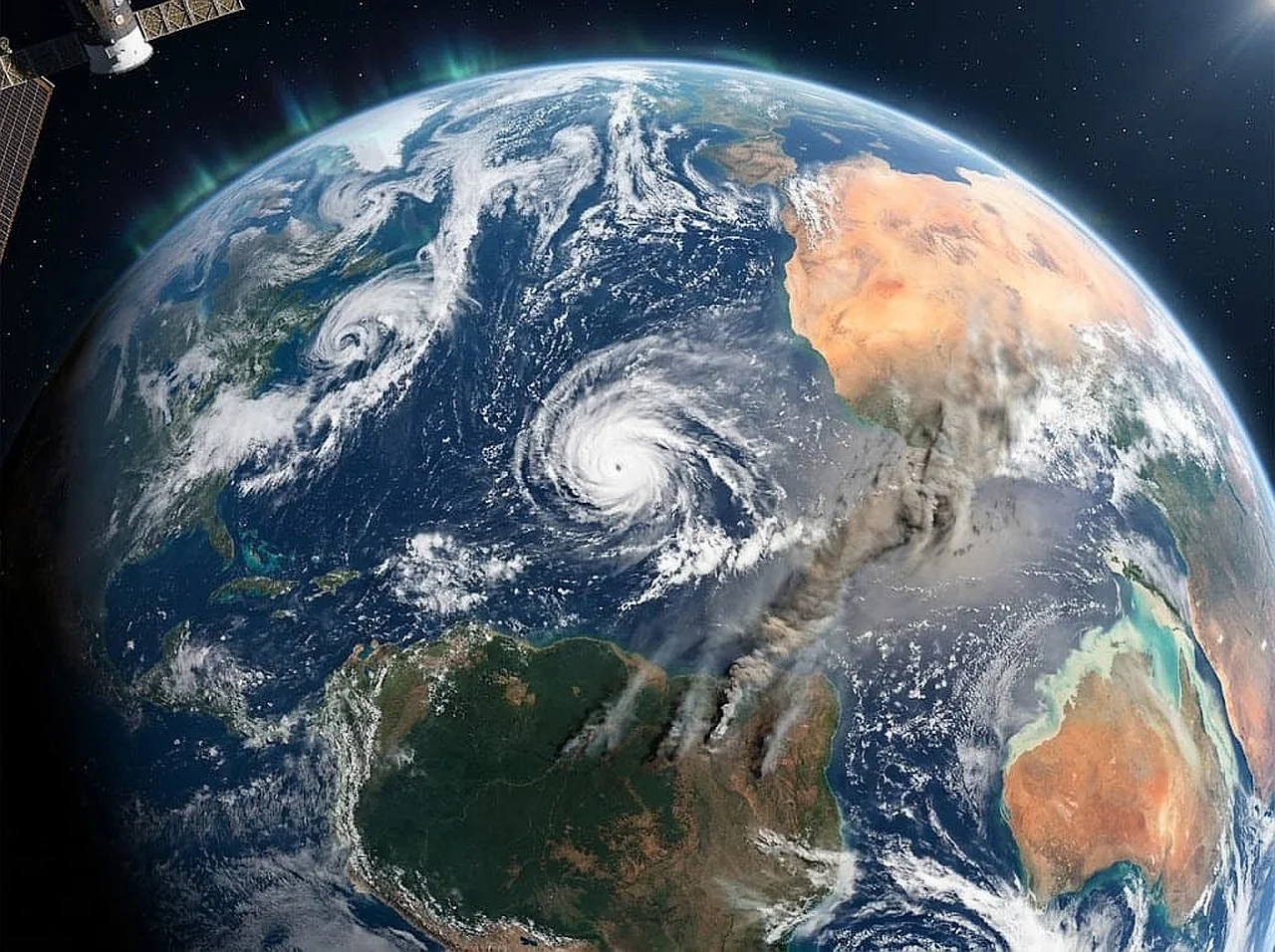
New scientific research conducted by specialists from Oregon State University has confirmed that the health indicators of planet Earth have fallen to a dangerous level. This was reported by Zamin.uz.
Efforts being made globally to reduce the amount of toxic gases emitted into the atmosphere are not yielding the expected results. As a result, climate stability is seriously deteriorating.
Scientists emphasize that if the current economic model remains unchanged, the intensity of natural phenomena and the number of various disasters will increase further in the future. The authors of the study noted that climate changes caused by human activity occupy a very short period in Earth's multi-million-year history.
However, the consequences of this process are more complex and systemic than humanity imagined. Although the concept of the greenhouse effect was known as early as the nineteenth century, it was only in the eighties of the last century that the melting of glaciers and the rise in temperature began to be recognized as a global problem.
In recent years, natural disasters such as floods, forest fires, and anomalous heatwaves have significantly increased worldwide. According to data, the amount of greenhouse gases in the atmosphere has reached its highest point in the history of observations over the last two years.
The Amazon rainforests and coral reefs in the oceans, considered the primary indicators of the planet's health, are currently in a dire state. Deforestation and changes in the composition of ocean water are dealing a crushing blow to the global ecological balance.
If the process of decarbonizing the economy and investing in climate solutions is not accelerated, an irreversible stage for nature may begin. Even the pandemic period, when movement was restricted worldwide, could not significantly lower the level of air pollution.
This demonstrates how deeply rooted the problem is. To improve the situation, scientists propose completely abandoning fossil fuels, supporting nature restoration projects, and fundamentally updating industrial infrastructure.
These conclusions should serve not to panic people, but to correctly assess existing risks and implement systemic changes. If the current way of operating does not change, it is entirely possible that Earth's life-sustaining systems will fail completely.