


The world's largest solar power plant has been commissioned in China
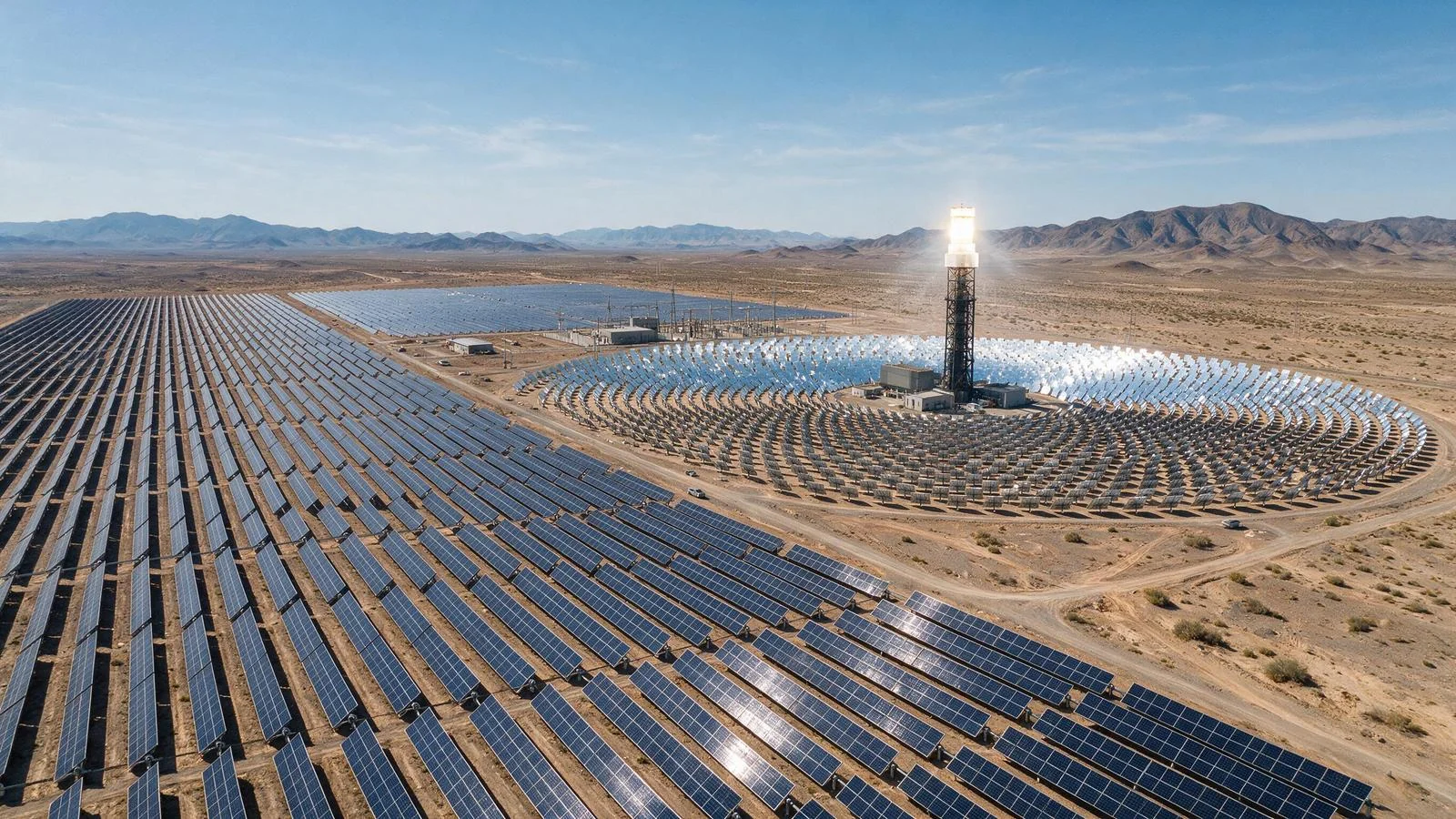
China Three Gorges Corporation has taken a major step in renewable energy by officially launching the world's largest hybrid solar power plant in the Gobi Desert, Zamin.uz reports.
Located near the city of Hami in the Xinjiang Uygur Autonomous Region, this massive facility not only boasts a capacity of one gigawatt but also draws global attention with its unique energy storage technology, which could mark a new era in modern energy systems.
The project combines two methods of electricity generation: traditional solar panels and solar thermal installations. Covering an area of over 1,800 hectares, the plant is estimated to have cost around $400 million.
According to reports, the station has surpassed even major projects in Dubai, becoming a world leader in its category and further strengthening China's position in the green energy sector.
The key technical innovation of the project is a molten salt-based energy storage system. During the day, tens of thousands of special mirrors focus sunlight onto receivers, heating a special heat-transfer fluid to a temperature of 560 degrees Celsius.
The stored heat continues to generate electricity even after sunset. The hot salt heats water, producing steam that drives turbines, ensuring a continuous supply of power.
This technology allows for stable energy delivery for up to eight hours after sunset without the need for conventional batteries. Engineers emphasize that the use of improved linear receivers in the plant increases efficiency by ten percent compared to similar systems.
A single control system continuously optimizes the operation of both the solar panels and the thermal block. Having reached full capacity, the Hami facility is expected to generate more than two terawatt-hours of electricity annually.
According to calculations, this amount is sufficient to provide uninterrupted power to over 830,000 households. For sunny countries like Uzbekistan, such hybrid technologies could become an important model for achieving energy independence in the future.
China shows no intention of slowing down its energy ambitions. In the future, the plant's capacity is planned to be increased to three gigawatts.
Moreover, another large facility is currently under construction nearby, which represents an important step toward solving the main drawback of renewable energy sources—their intermittency.
The ability to generate power even when the sun is not shining allows green energy to compete on equal terms with traditional fuel-based power stations.