


Due to the current El Niño, abnormally high temperatures are being observed on our planet
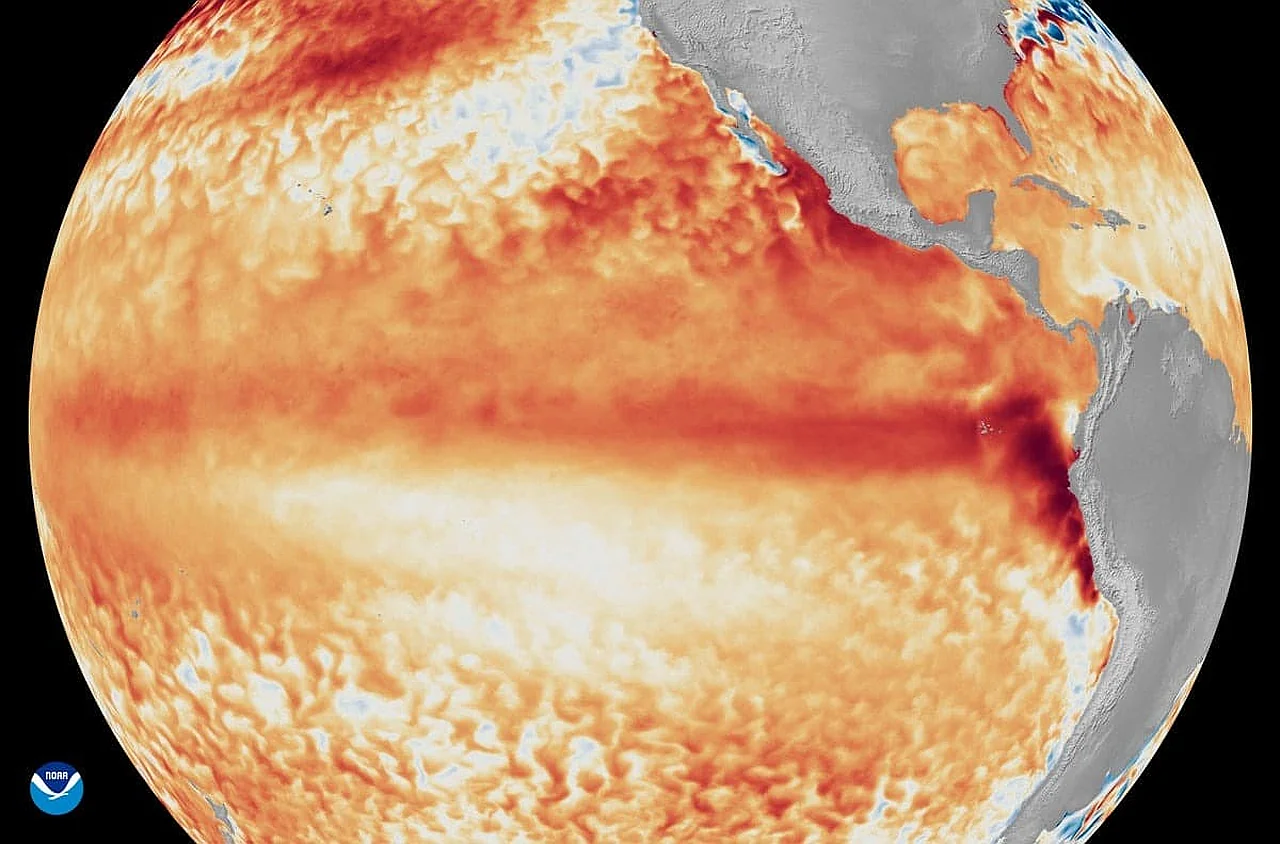
The El Niño phenomenon forming in the equatorial part of the Pacific Ocean may turn out to be much more intense than expected, Earth.uz reported.
According to the latest report released by the National Weather Service of the United States, the probability of this natural process reaching a very strong level is one percent, indicating that abnormal heat and sharp weather changes will continue on our planet in the coming years.
According to specialists’ forecasts, this climatic system will retain its influence with a 70 percent probability until at least the spring of 2027. El Niño is linked to the rise in sea surface temperature in the eastern part of the Pacific Ocean, which completely alters the distribution of heat in the atmosphere.
As a result, air currents change direction on a global scale, causing unexpected natural disasters in various regions. Currently, water temperature in the central and eastern areas of the Pacific Ocean has risen by more than one degree above the climatic norm, and in some places, this indicator is approaching three degrees.
If the temperature continues to rise in this manner, the current process will enter the list of the strongest climatic events observed since the mid-20th century. Such changes could, in turn, lead to the coming years becoming the warmest period in human history.
Due to the disruption of natural balance, the threat of flooding, major forest fires, and crop failure is increasing in countries of Southeast Asia. At the same time, in other parts of the ocean, floods and strong storms are becoming the usual state.
Specialists in ocean and atmospheric research emphasize that this phenomenon is intensifying faster than expected. Such global changes will not pass unnoticed for countries with a continental climate, such as Uzbekistan.
Although El Niño does not directly affect our region, vibrations in the global atmosphere may influence Central Asia as well—leading to unexpectedly warm winters or the prolongation of abnormal heat waves during summer months. This, in turn, requires new approaches and precautionary measures in agriculture and water resource management.
In conclusion, these climatic changes are expected to have a serious impact not only on ecology but also on social and economic spheres.