Japanese Olympians Developed Revolutionary Image Sensors for Smartphones
Japanese scientists have developed a new type of photodetector that could revolutionize digital imaging technology, according to Zamin.uz.
The sensors, created by researchers at Nagoya University, move away from the traditional pixel system and instead capture all colors simultaneously. This breakthrough could eliminate the need for bulky camera modules protruding from smartphones in the future.
Currently, nearly all digital cameras operate using a system known as the Bayer array, where each pixel records only one color—either red, green, or blue.
Special software then processes the data from these individual pixels to reconstruct a full-color image. This approach requires a large number of elements in the sensor matrix, significantly hindering efforts to miniaturize cameras.
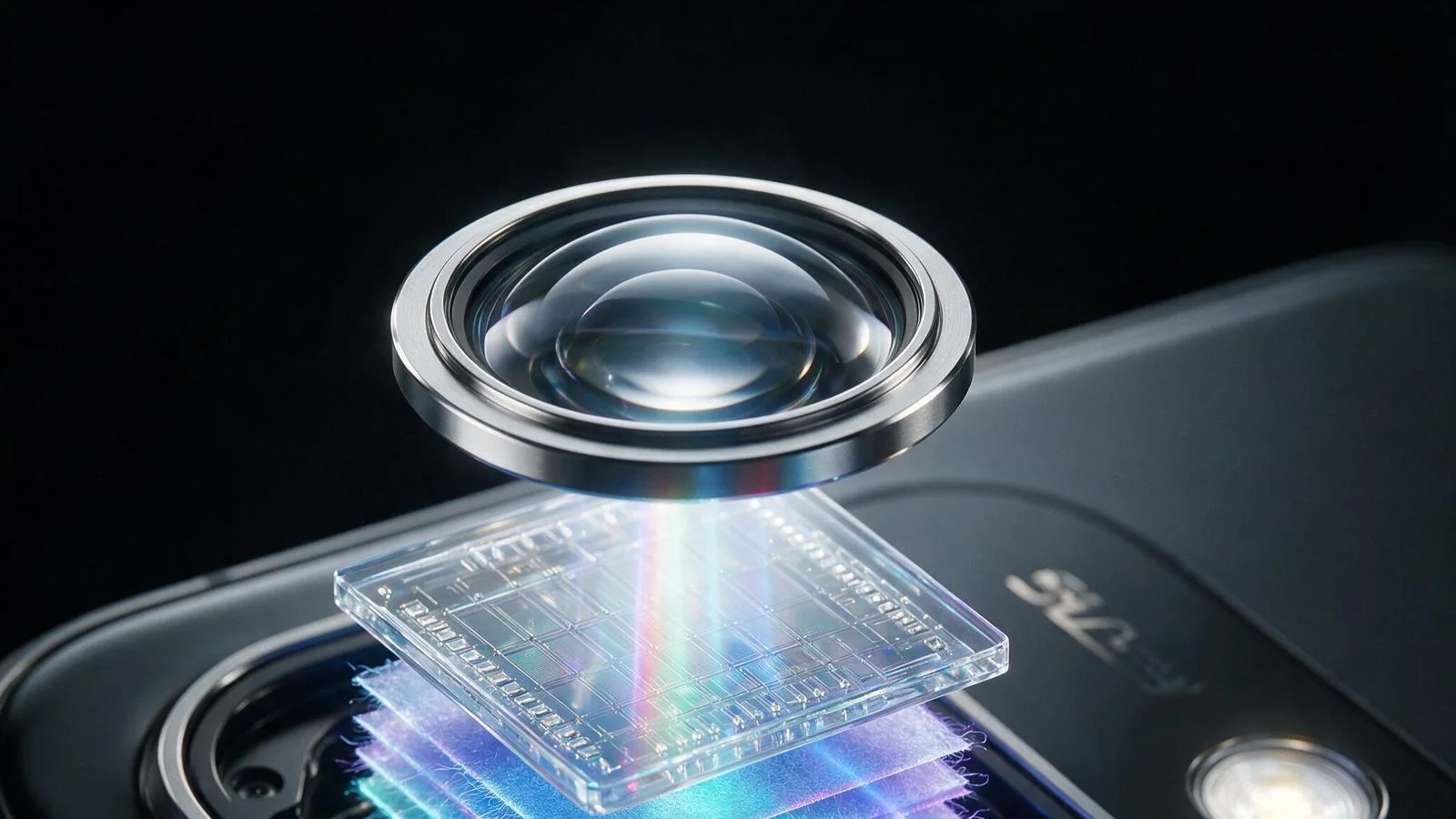
The Japanese engineers propose using transparent nanolayers made from gallium-doped zinc oxide. The unique property of this material is its ability to fully absorb the visible light spectrum.
By stacking several transparent layers, the sensor can precisely separate color components without the need for conventional color filters. According to the researchers' calculations, if each pixel could independently detect all three primary colors, the number of elements in the sensor could be reduced by seventy-five percent without compromising image quality.
One of the key advantages of the new material is its exceptional transparency—each nanolayer allows nearly one hundred percent of light to pass through.
This means that stacking multiple photo-sensitive elements does not degrade image brightness or clarity. Since plain zinc oxide has a weak interaction with light, the scientists successfully altered its electronic structure by adding gallium.
During testing, the new sensor demonstrated astonishing results: its sensitivity was found to be ten to twenty times higher than that of many commercial sensors currently available on the market.
This means the new sensors can capture high-quality, noise-free images even in extremely low-light conditions. The technology’s applications extend far beyond smartphones.
The new detectors are highly resilient, capable of operating stably at temperatures up to four hundred degrees Celsius, in vacuum conditions, and in high humidity.
These characteristics make them ideal for use in automotive electronics, industrial equipment, miniature medical endoscope cameras, and even space systems. Moreover, the fact that these sensors can be manufactured at room temperature helps keep their production cost relatively low.