



How time differs on Mars compared to Earth was studied
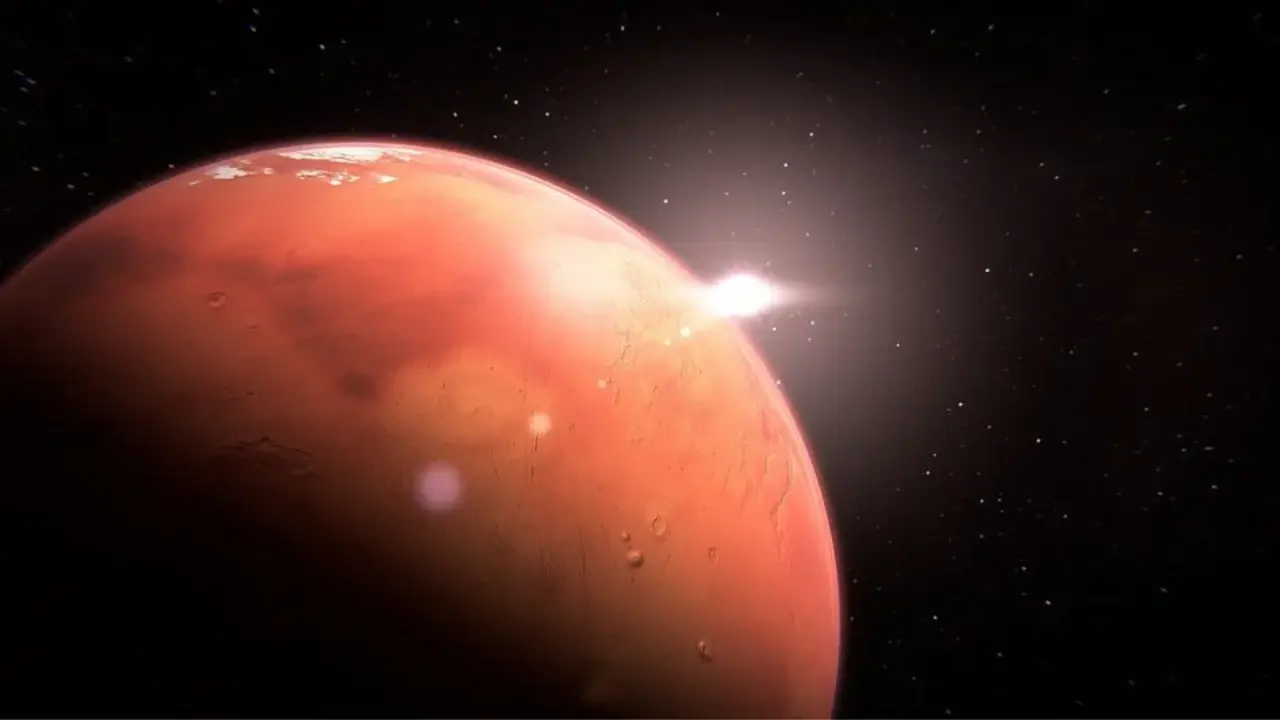
Scientists at the US National Institute of Standards and Technology (NIST) studied how time on Mars differs compared to Earth and published their findings in The Astronomical Journal. This was reported by Zamin.uz.
According to the research, the passage of time on Mars varies throughout the year. It is known that a day on Mars is 40 minutes longer than on Earth, and a year lasts almost twice as long.
This information was previously known to the scientific community, but scientists were more interested in the change and precise rate of a second on Mars. Calculations show that a clock on Mars runs approximately 477 microseconds faster per day than on Earth.
At the same time, due to the planet's elliptical orbit and the Sun's gravitational influence, this figure can vary by up to 226 microseconds throughout the year. Physicist Bijunat Patlana emphasized that a deeper understanding of the passage of time on Mars is important for future research missions.
This data helps synchronize navigation and communication systems on Mars. It also enables the creation of GPS-like systems for other planets in the Solar System in the future.
Currently, the signal transmission time between Earth and Mars varies from 4 to 24 minutes. Precise time synchronization allows for nearly real-time communication between the two planets.
This research is of great importance for making space exploration more efficient.