

Climate characteristics of world cities were analyzed
Major cities around the world develop and live under various climate conditions. This was reported by Zamin.uz.
In some cities, hot and humid weather dominates throughout the year, while in others dry or cold climates prevail. A recently prepared infographic clearly shows these differences, categorizing major cities into four main climate groups based on temperature and precipitation levels.
The infographic analyzes 74 major cities worldwide. Based on data from Climate-Data.org, the average annual temperature and precipitation amount for each city were calculated.
As a result, cities were systematized according to their climate characteristics. The diagram consists of four main groups: dry and hot, humid and hot, dry and cold, as well as humid and cold.
The vertical axis represents the city's average annual temperature, while the horizontal axis shows the annual precipitation volume. This allows a clear view of each city's position in terms of climate.
According to the analysis, the fewest cities fall into the "humid and cold" group. The coldest megapolis in this group is recorded as Reykjavik, the capital of Iceland.
There, temperatures are low, and precipitation is relatively high. In the "dry and cold" group, the lowest average temperature is observed in Moscow.
This climate group also dominates many cities in Europe. These regions are characterized by cold winters and dry summers.
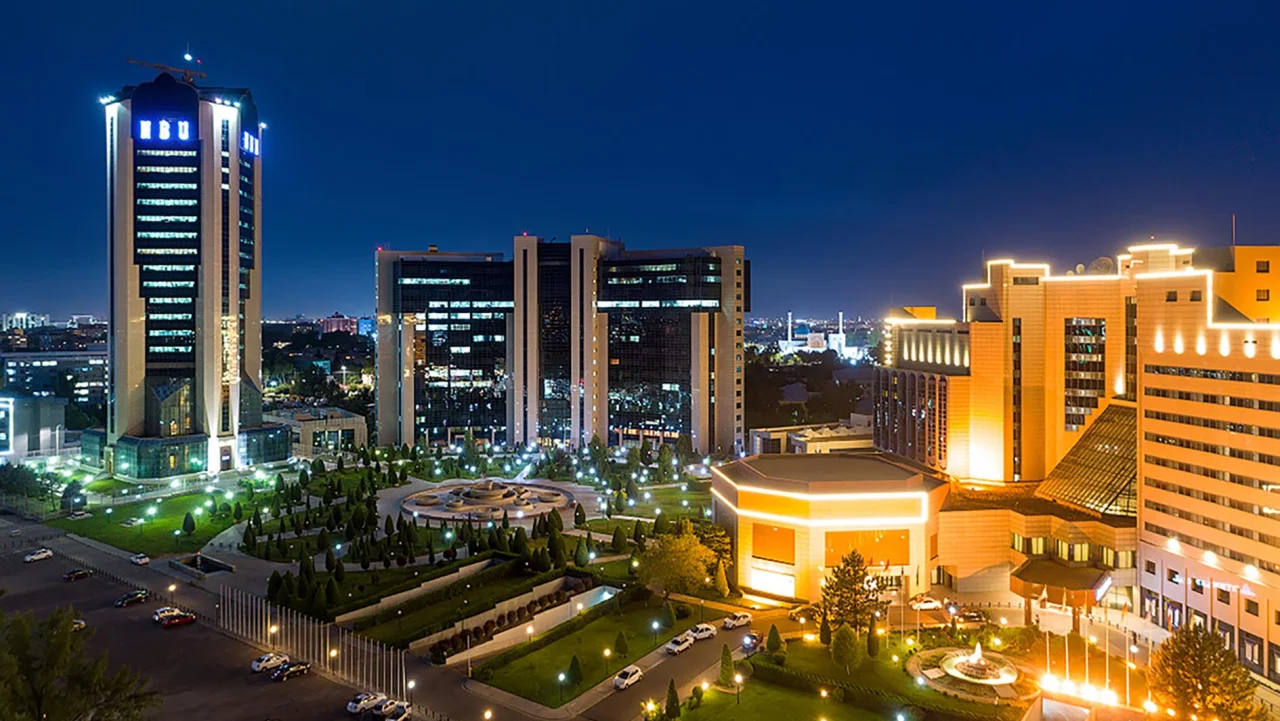
Tashkent city is placed in the "dry and cold" quadrant in the infographic. On the diagram, Tashkent's point is located near the "hot–cold" boundary, in the lower left section.
The average annual temperature of our capital is around 13–14 degrees Celsius, with an annual precipitation amount of 540 millimeters. This indicates that Tashkent's climate has dry continental characteristics.
Summer is hot and low in precipitation, while winter is cool or cold. Most US cities are located in the dry part of the diagram.
They are spread across the cold and hot quadrants. The hottest city in the dry region is shown as Khartoum, the capital of Sudan.
The average annual temperature in this city reaches 30 degrees. This infographic is recognized as an important source for comparing the climate characteristics of cities, understanding global climate differences, and studying the future formation of urban environments.