Pentagon announces military strategy against Iran
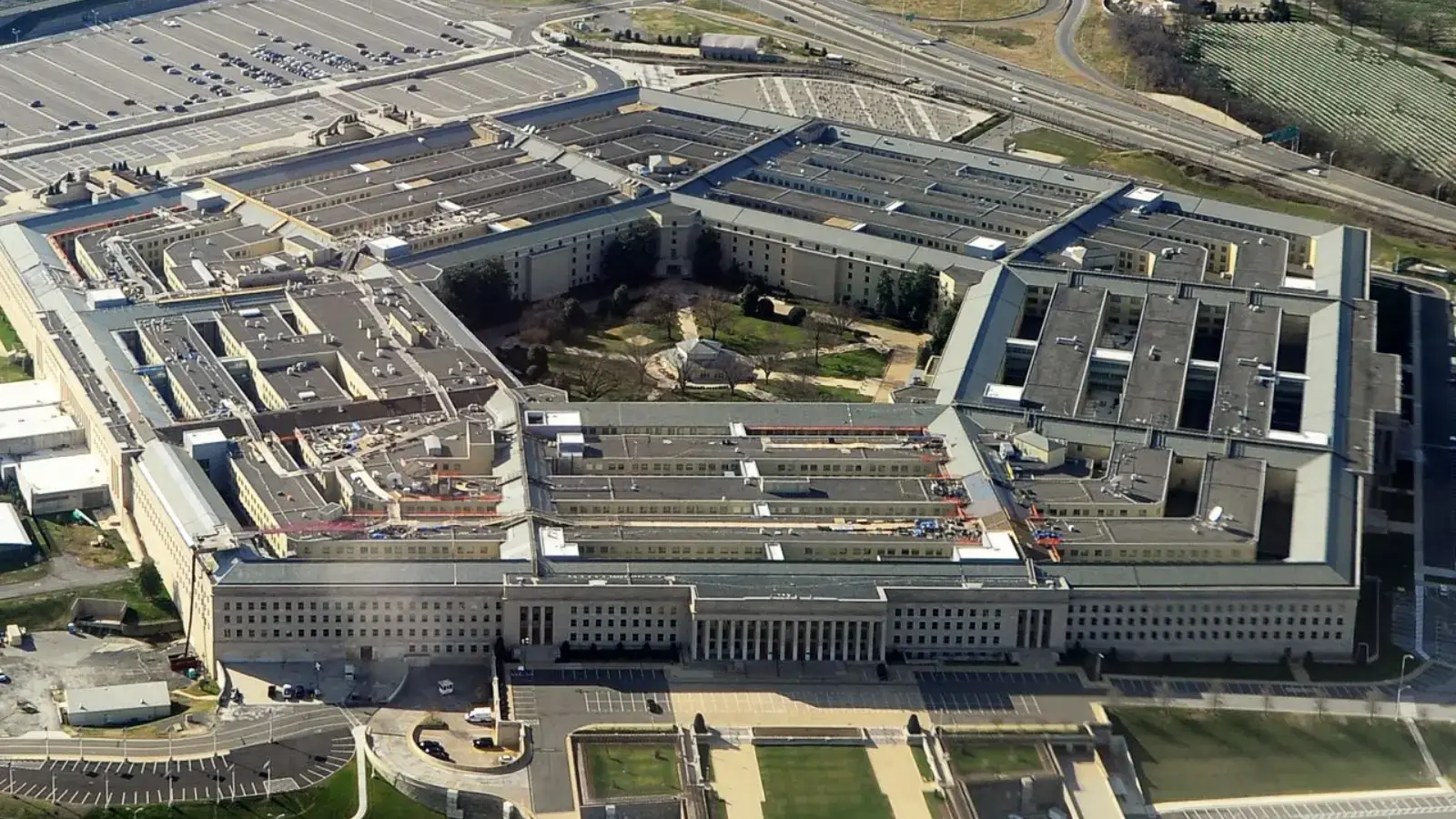
The US Department of Defense, known as the Pentagon, held a press briefing after several months and made important statements regarding the war around Iran. This was reported by Zamin.uz.
At the briefing, US Secretary of Defense Pete Hegseth emphasized that Washington's strikes are not aimed at "regime change." According to him, the main goal of the operation is to disable Iran's missile, naval, and other security infrastructures through precise targeting.
At the same time, he acknowledged a change in leadership in Iran and described it as a "good outcome for the world." Hegseth's speech was not just a simple military report but also a strong political statement.
He called on the Iranian people to take advantage of the current situation and overthrow the ruling regime with their own hands. However, he stressed that the US campaign is not a "state-building" or "democracy-importing" mission like those in Iraq or Afghanistan.
In other words, although Washington officially does not label regime change as its objective, it does not deny the political outcome of weakening or altering the power in Tehran. The Pentagon chief also emphasized that the US did not start the war.
According to his interpretation, the current regime in Iran has waged a one-sided and ruthless struggle against America for 47 years. Hegseth supported this claim with references to the explosions in Beirut, attacks on American ships, killings around embassies, as well as terrorist acts against Americans in Iraq and Afghanistan.
In his view, Washington did not initiate this war but intends to end it during Donald Trump's presidency. Statements by Israeli Prime Minister Benjamin Netanyahu complemented this rhetoric.
He portrayed the war against Iran as a fight to eliminate the "existential threat" to Israel. At the same time, he said this process could lead to a regime change in Iran, but described it not as a direct external force but as a result of internal political shifts.
Netanyahu also emphasized that Iran poses a threat not only to Israel and the US but to the peoples of the entire region and stated that he is acting in coordination with Washington. From the current official statements, it appears that the US and Israel are avoiding publicly calling the war a "regime change operation."
However, there is an important implication between the words of both sides: they view the weakening or change of the current power in Iran not negatively but rather as a desirable political consequence. Therefore, this conflict is now being assessed not only as a military one but also as a war connected with major geopolitical objectives.