




After the Venezuelan reddening of the sky, people were worried.
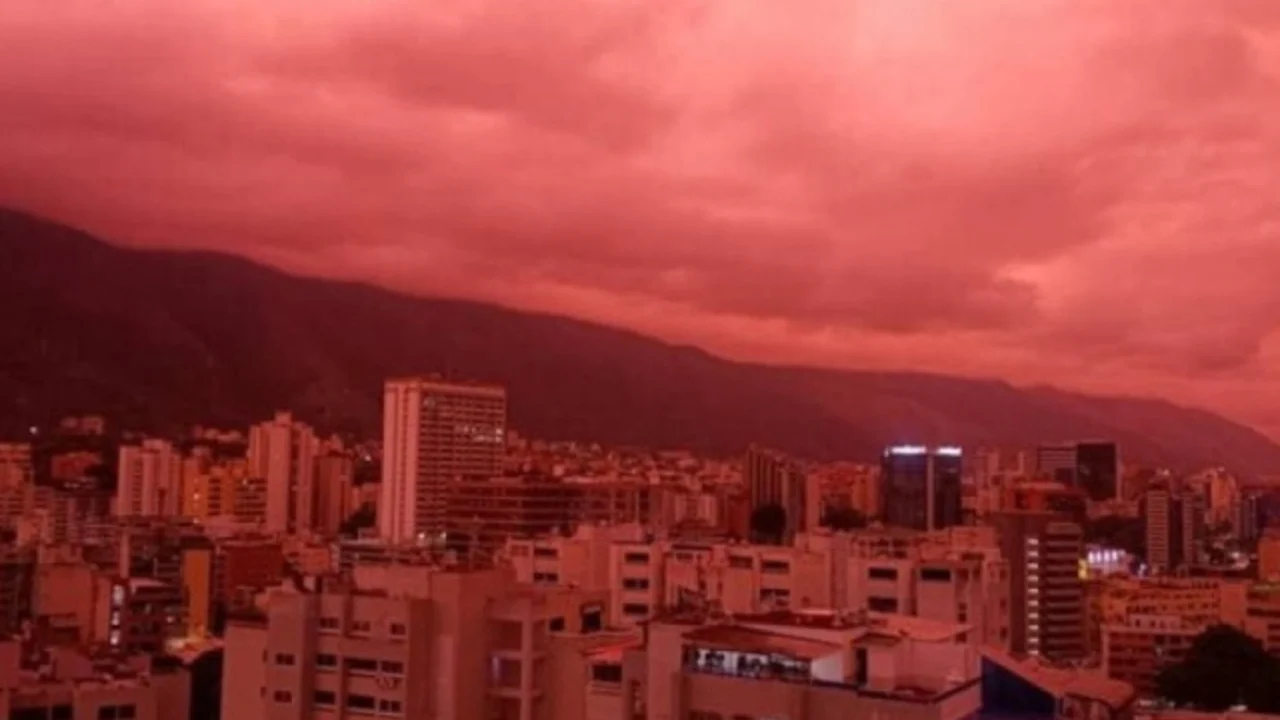
Following a strong earthquake in Venezuela, the sky turned from gray to red, sparking various interpretations and concerns among social media users, Zamin.uz reported.
Many interpreted this unusual sight as a sign of impending disasters. However, specialists in the field provided a scientific explanation to calm public anxiety.
According to information from the VTV state television channel, the change in sky color is not directly linked to geological shifts. It occurs due to the unique scattering of sunlight by dust and sand particles accumulated in the atmosphere.
Scientists refer to this phenomenon as Rayleigh scattering. When the concentration of dust in the atmosphere increases sharply—especially due to strong winds or earthquakes—such optical effects become visible to the naked eye.
The channel noted that such sights often cause fear among people and are mistakenly interpreted as omens of disaster. Nevertheless, scientists emphasize that this is simply an atmospheric phenomenon with no basis for public concern.
Such color displays in nature are often the result of physical processes. Experts also mentioned another rare natural phenomenon known as earthquake lights.
This phenomenon occurs due to intense pressure and friction in quartz-containing rocks within the Earth's crust. During such events, electrical charges may separate, potentially causing brief flashes of light in the sky.
Scientists stress that changes in sky color do not always indicate catastrophe and are often explainable by ordinary physical laws. Therefore, any unusual occurrence should be approached from a scientific perspective.





![Fransiya Usmonova proposed removing [the name] from the sanctions list](/uploads/mini/web-300/04/e8d7de74763e0760c29bdbfd3d91b77a.webp)