




Japanese Olympians discover a new species of sea slug
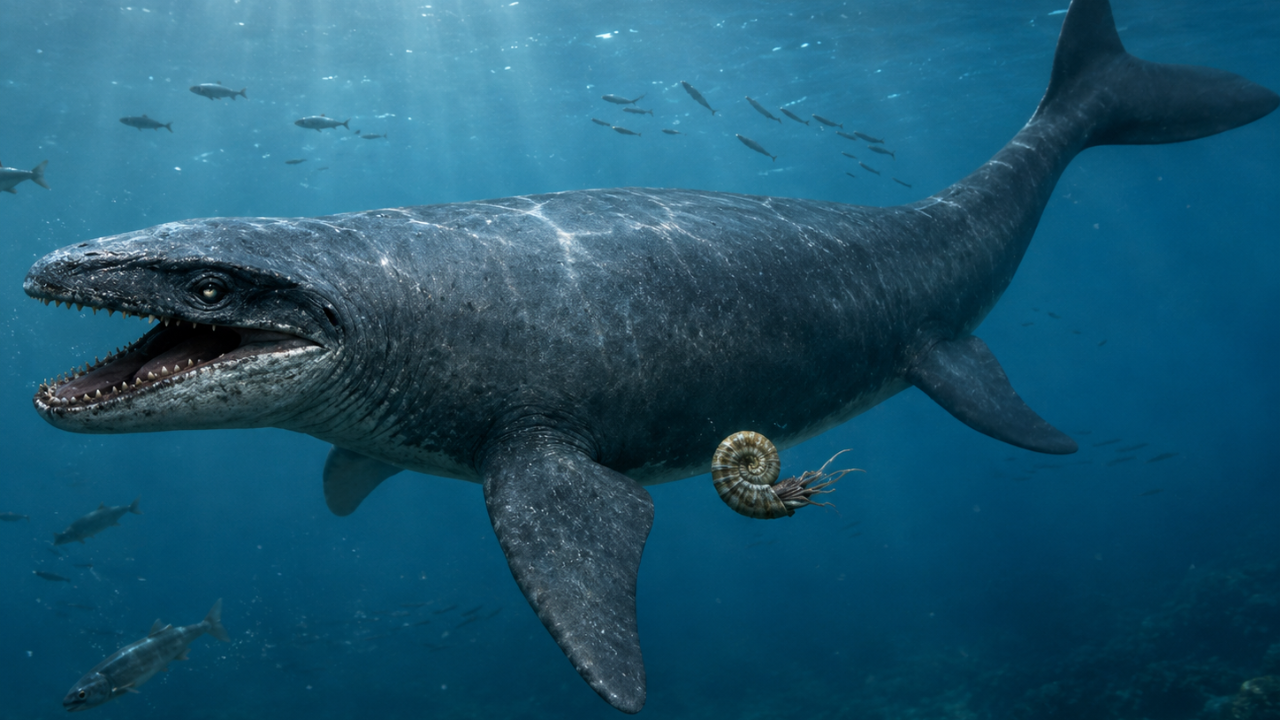
Japanese paleontologists may have discovered a new species of ancient marine reptile by re-examining fossils that had remained a mystery for decades. This was reported by Zamin.uz.
According to the Kyodo news agency, researchers from Okayama University of Science of Science University and several other scientific institutions analyzed fossils discovered in the 1990s using modern techniques.
Previously, these remains were thought to belong to large marine predators that dominated the seas during the Jurassic period, specifically the plesiosaur family. The fossils were originally found between 1990 and 1992 in the city of Katsuyama, Japan.
Since then, they have been stored at the Kiswada Natural History Museum in Osaka Prefecture. However, due to the lack of necessary technical capabilities at the time, a thorough and comprehensive study of the find was not possible.
Only in recent years, thanks to new technologies and scientific advances in paleontology, have specialists been able to carefully extract the bones from the rock layers and conduct detailed examinations. During the research, scientists identified three unique anatomical features in the upper jaw of the animal that had not been observed in any known plesiosaur species.
Furthermore, it was found that this marine reptile, estimated to be about six meters in length, lacked the special blood vessel canals present in its relatives. According to experts, it is precisely these distinctive anatomical traits that indicate the fossil represents a previously unknown species to science.
Currently, scientists plan to conduct further investigations to more precisely determine the evolutionary significance of this unique discovery and its role in the development of ancient marine life.
This news is important not only for Japan but also for the global field of paleontology, as it contributes to our understanding of life on Earth in ancient times.
The results of the study are expected to provide new insights into the distribution and lifestyle of marine habitat in the future.





![Fransiya Usmonova proposed removing [the name] from the sanctions list](/uploads/mini/web-300/04/e8d7de74763e0760c29bdbfd3d91b77a.webp)