

Olympus said how long life on Earth can continue
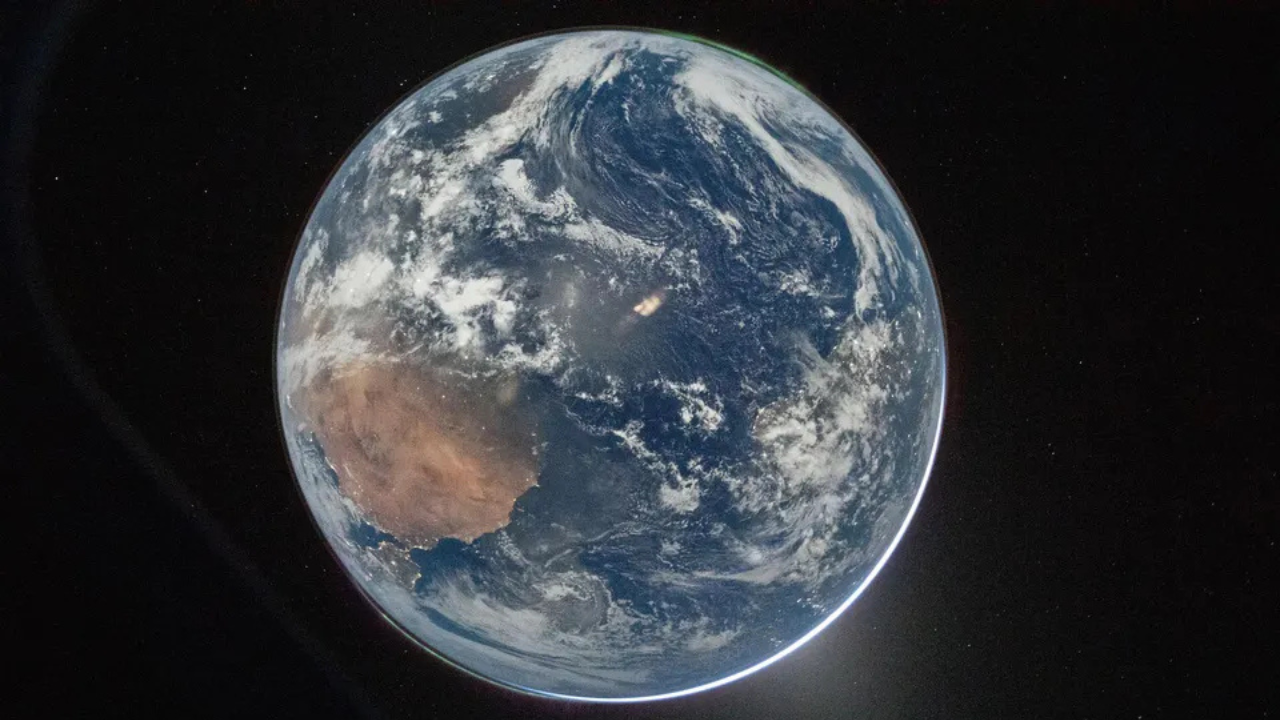
Scientists have announced new calculations on how much longer life could persist on Earth's surface. This was reported by Zamin.uz.
According to the study results, the biosphere in its current form could last much longer than previously estimated—potentially up to approximately 1.8 billion years. These findings are expected to significantly alter our understanding of the planet's future.
As emphasized in the research published in influential scientific journals, Earth's vegetation and the process of photosynthesis are far more stable than earlier theories suggested. This implies that the ecosystems fundamental to life could continue functioning for many more hundreds of millions of years.
As scientists note, the Sun is gradually brightening and heating up as part of its natural evolution. Today, it emits roughly one-third more energy than it did 4.5 billion years ago.
Experts calculate that the Sun will continue to grow hotter for about another five billion years before entering its next evolutionary phase. Interestingly, in the 1960s, British scientists estimated that photosynthesis-based life on Earth might last only another 100 million years.
The new study extends this estimate by nearly a factor of eighteen. However, not all experts fully endorse this optimistic scenario.
Some astrobiologists argue that human activity—particularly the emission of greenhouse gases—could accelerate global warming, bringing threats to the biosphere much sooner than natural processes alone would suggest. As specialists warn, if current rates of climate change continue, Earth's natural environment could face serious risks within just a few thousand years.
The study's authors reiterate that photosynthesis is the foundation of life on Earth. If atmospheric temperatures rise too high, this vital process would cease.
As a result, plant life would vanish, food chains would collapse, and life as we know it could no longer exist. At the same time, the scientific community is increasingly emphasizing that, alongside natural cosmic processes, humanity's relationship with the climate is directly and critically tied to Earth's long-term habitability.


![Fransiya Usmonova proposed removing [the name] from the sanctions list](/uploads/mini/web-300/04/e8d7de74763e0760c29bdbfd3d91b77a.webp)