


Japan allocates six billion dollars for the development of robotics industry
The Japanese government has announced a national program for artificial intelligence and robotics, which had not been previously considered in the country. This was reported by Zamin.uz.
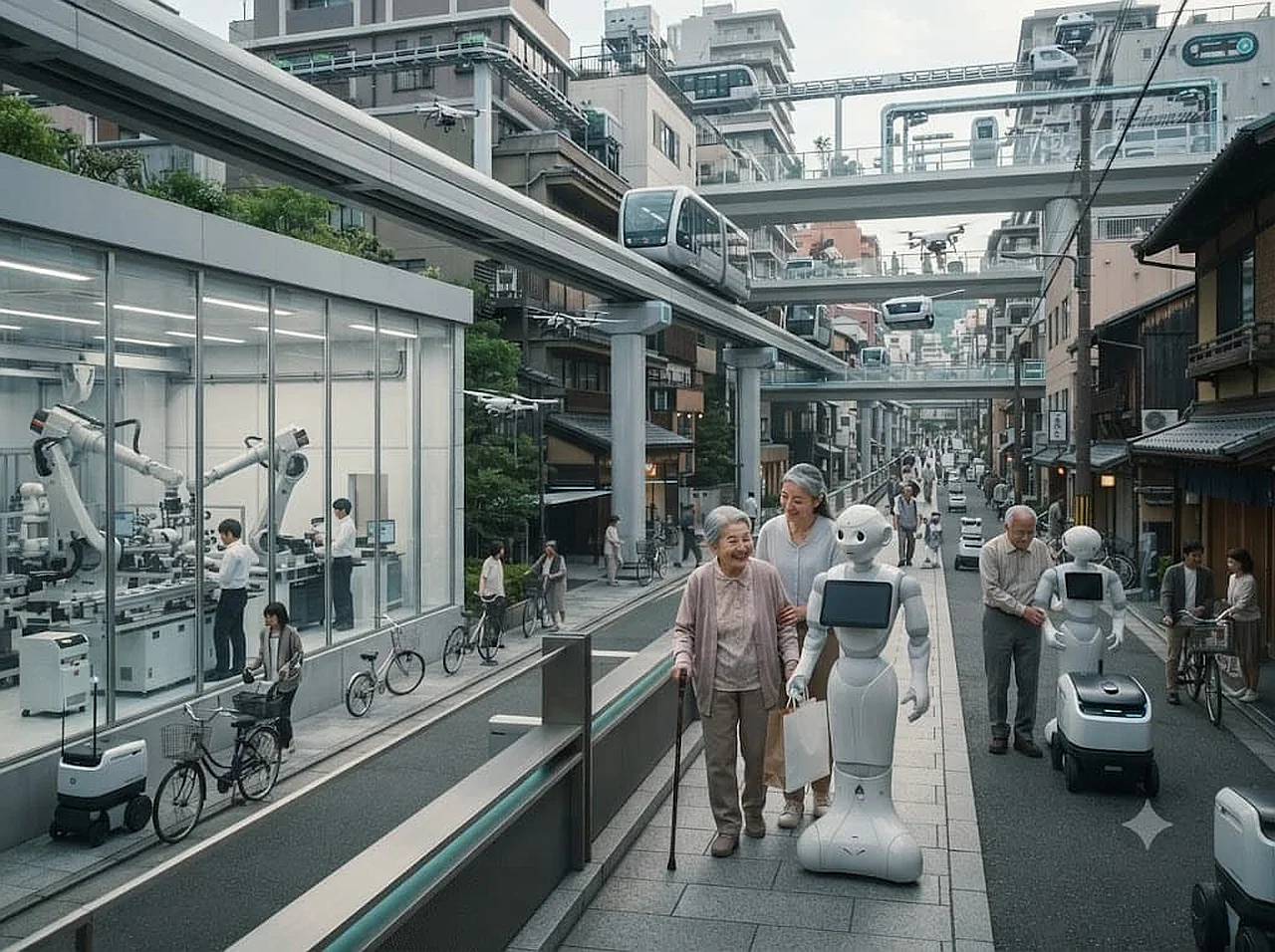
According to the newly adopted strategy, by 2040, Japan plans to implement nearly 10 million intelligent robots into the national economy and everyday life. Through this large-scale project, Japan aims to significantly reduce the technological gap with countries such as the United States and China in strategic technologies.
The initiative will be implemented by a special consortium bringing together major corporations such as SoftBank and Sony. The government plans to allocate approximately 6 billion dollars over the next five years for the development of national artificial intelligence infrastructure and robotics.
This information has been confirmed by international technology publications. The core focus of the program is the concept of embodied artificial intelligence.
These are not merely digital programs or text-based chatbots, but systems capable of autonomous movement and operation in the real world. Within the project, automated devices in factories, driverless transport vehicles, and robots that interact directly with people to perform various services will be developed.
This step is considered part of Japan’s broader technological development strategy. Previously, the country had presented a 14-year plan for the development of 17 key sectors, including hypersonic vehicles, quantum technologies, and fusion energy.
To achieve these goals, a total of 2.3 trillion dollars is expected to be allocated. Japan’s sharp push in this direction is driven by serious demographic challenges within the country.
The rapid aging of the population and the decline in the working-age population have led to labor shortages in industry and service sectors. Automation is regarded as one of the most effective ways to address these issues and ensure economic stability.
For rapidly developing countries like Uzbekistan, Japan’s experience holds significant importance. In the future, full automation of production processes and the integration of artificial intelligence into physical systems will become a key factor in achieving leadership in global economic competition.
However, experts in the field emphasize that there are certain challenges in the full implementation of robots into real-life applications. Currently, embodied AI systems struggle to operate stably in environments that cannot be predicted in advance.
The Japanese government intends to overcome these limitations and create a perfect infrastructure in which robots become an inseparable part of the economy.