



PUNCH mission captured detailed images of the Sun
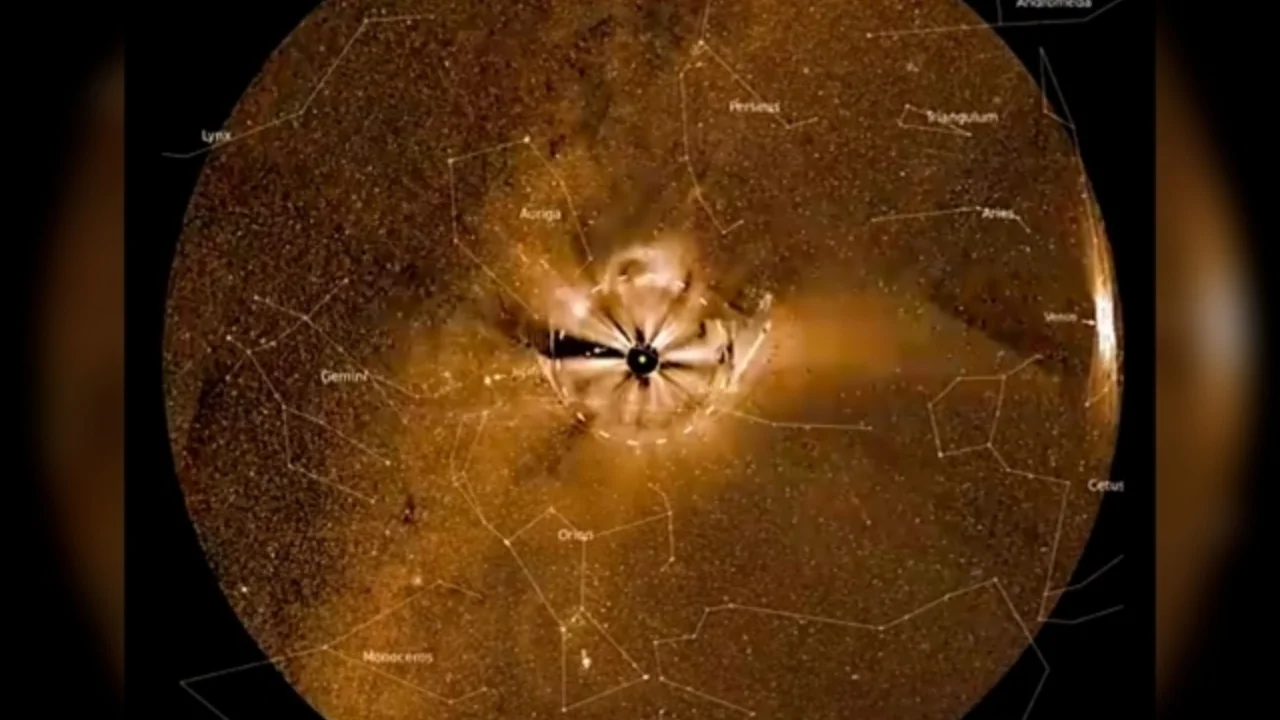
NASA's PUNCH mission has succeeded in capturing the Sun in unprecedented detail. This was reported by Zamin.uz.
According to official information, four small satellites located about 13,000 kilometers apart in space worked together as a "virtual telescope." They enabled capturing the Sun's outer atmosphere — the corona and solar wind — as a whole.
This mission is being carried out under the leadership of the Southwest Research Institute. Although the project has been operational for only one year, significant scientific results are being achieved.
For instance, in November, a powerful solar storm that caused auroras in the United States was closely observed. This data allows for better understanding and forecasting of space weather.
The PUNCH system clearly shows plasma clouds ejected from the Sun — coronal mass ejections and the movement of the solar wind. Additionally, faint and unique comets that other telescopes cannot detect were observed.
For example, an interstellar comet was monitored for nearly 40 days. Experts emphasize that advanced cameras reduce the Sun's light by more than a trillion times, enabling the detection of very subtle processes.
This approach helps to study the near environment of the solar system in greater depth.