Taiwan: The Decisive Point of US and China Competition
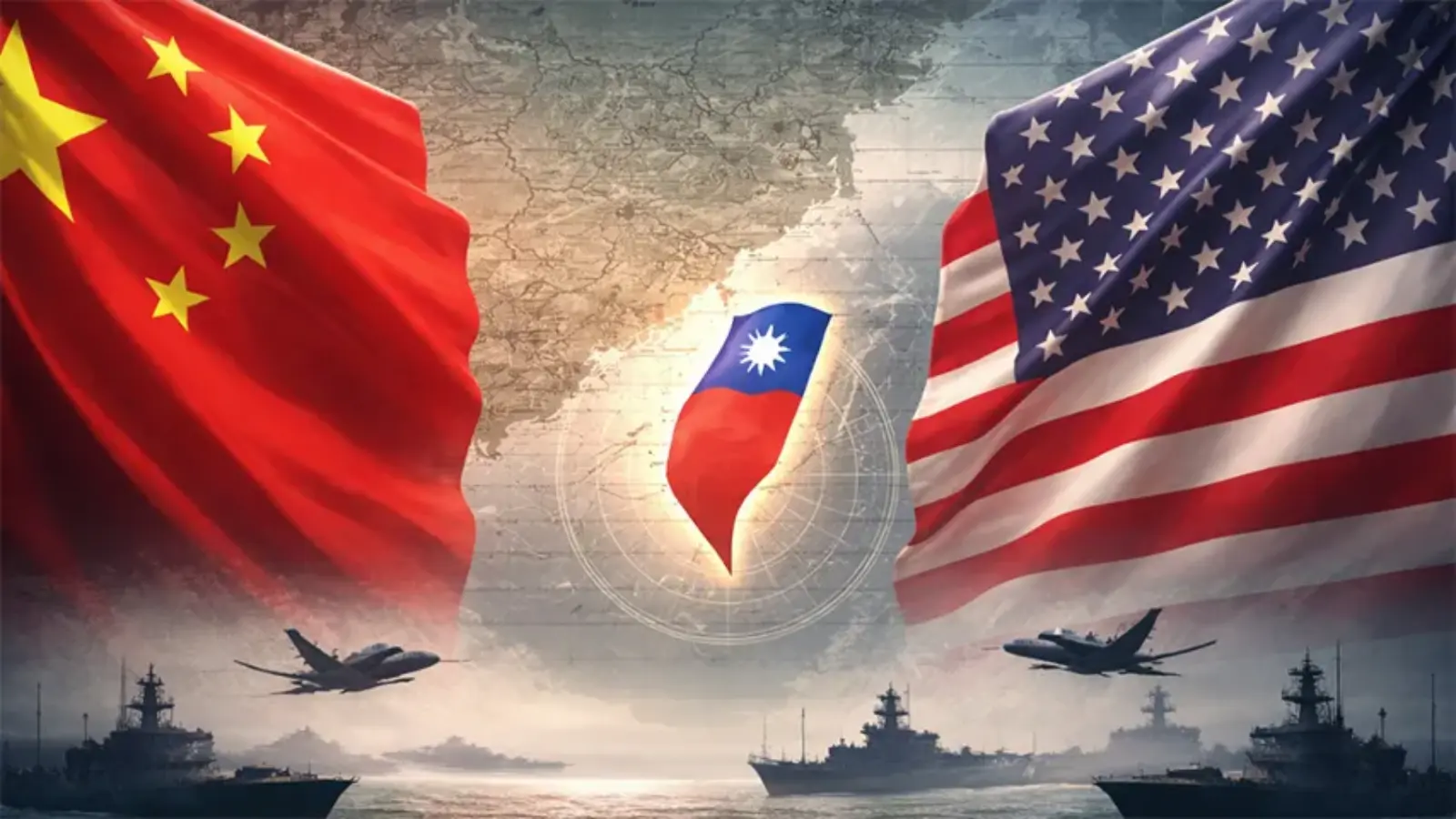
The Taiwan Strait has been one of the most sensitive and important points in global geopolitics for decades. This was reported by Zamin.uz.
It is precisely in this region that the interests of the US and China collide. The question arises: why is Taiwan so crucial in the rivalry between these two countries?
Washington officially adheres to the "One China" principle and recognizes the People's Republic of China as the sole legitimate government. At the same time, the US continues to provide military and political support to Taiwan, strengthening its defense capabilities.
Beijing, on the other hand, considers Taiwan a "rebellious territory" and views any move towards independence as a threat to China's sovereignty. For this reason, any US statement regarding Taiwan is met with strong objections from China.
Recently, this issue has intensified further. The US approved a plan to deliver a large volume of weapons to Taiwan.
In response, China imposed sanctions and conducted large-scale military exercises. This demonstrates that the geopolitical rivalry is based not only on diplomacy but also on the use of force.
The Taiwan Strait is also important from a geoeconomic perspective. Major Chinese ports, including Shanghai and Shenzhen, are located near this area.
The Taiwan Strait is one of the main trade routes connecting Asia with Europe and America. Therefore, control over this region means economic security and strategic advantage for China.
Additionally, Taiwan is considered the center of the global microchip manufacturing industry. Leading Taiwanese companies produce a large share of semiconductors that are in high demand worldwide.
Modern technologies, including artificial intelligence, automotive manufacturing, and military technologies, depend on these microchips. For this reason, controlling Taiwan is of great importance in the technological leadership struggle between the US and China.
Taiwan's democratic system also complicates this issue further. The people of Taiwan do not want to unify with Beijing.
The events in Hong Kong have eroded trust in the "one country, two systems" model. The US views Taiwan as a symbol of democracy.
If Taiwan is lost, it could damage the US's influence in Asia and its standing among its allies. In conclusion, the Taiwan issue is not simply about the fate of an island.
This region is a battleground for sea routes, technologies, ideology, and geopolitical influence. For this reason, any conflict between the US and China is taking a serious turn precisely in this area, and this issue will remain relevant in the coming years.