



Greenland: The Icy Island at the Center of Global Politics
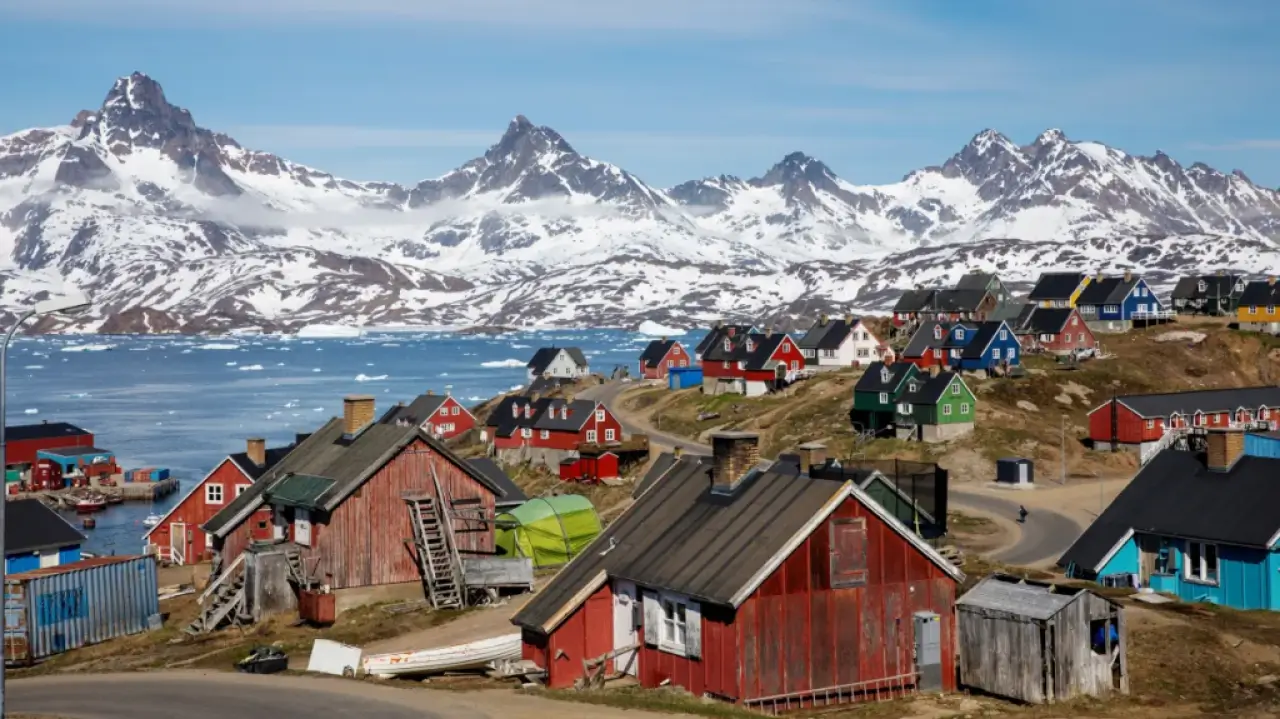
Greenland has long been regarded as a region sidelined in global politics. This was reported by Zamin.uz.
It is a vast icy island located between North America and Europe, primarily functioning as an autonomous territory within the Kingdom of Denmark. Greenland's total area is 2.1 million square kilometers, with a population of fewer than 60,000.
Although 80 percent of the territory is covered by ice, life is mainly concentrated along the coast. Its foreign policy and defense matters are managed by Denmark.
This island is becoming increasingly important in global politics. Due to its geographical location, Greenland allows control over the GIUK (Greenland–Iceland–United Kingdom) corridor.
This corridor holds strategic significance for the United States, having served as a transit area during World War II and as a potential military platform during the Cold War. Today, the US has the Pituffik military base in Greenland, which includes missile defense systems and early warning radars.
The melting of Greenland's ice has opened new sea routes in the Arctic and intensified the competition for natural resources. The activities of Russia and China in the region are causing concern for the US.
Former President Donald Trump described Greenland as a crucial area for US national security and expressed intentions to purchase it. According to Trump, this territory is necessary to strengthen US leadership and limit rival states' influence in the Arctic.
Greenland is rich in natural resources, including rare earth metals. However, the region's infrastructure is underdeveloped, and the climate conditions are harsh.
The Danish government has banned the extraction of certain mineral resources due to environmental concerns. Nevertheless, for Trump, the island's strategic importance outweighs economic gains.
Any military or political pressure regarding Greenland could lead to a serious crisis within NATO. Denmark cannot militarily oppose the US, and European countries are reluctant to enter into open conflict with the US.
This situation may lead to the weakening of international law and an increase in the principle of using force. The conflict around Greenland indicates a transition period to a new political order in the world.
For the US, gaining control over this region is an opportunity to strengthen its influence in the Arctic and control strategic resources. In this sense, Greenland stands at the center of the power game in global politics.