The Provisional Council Started Work in Iran: Power Transition Began
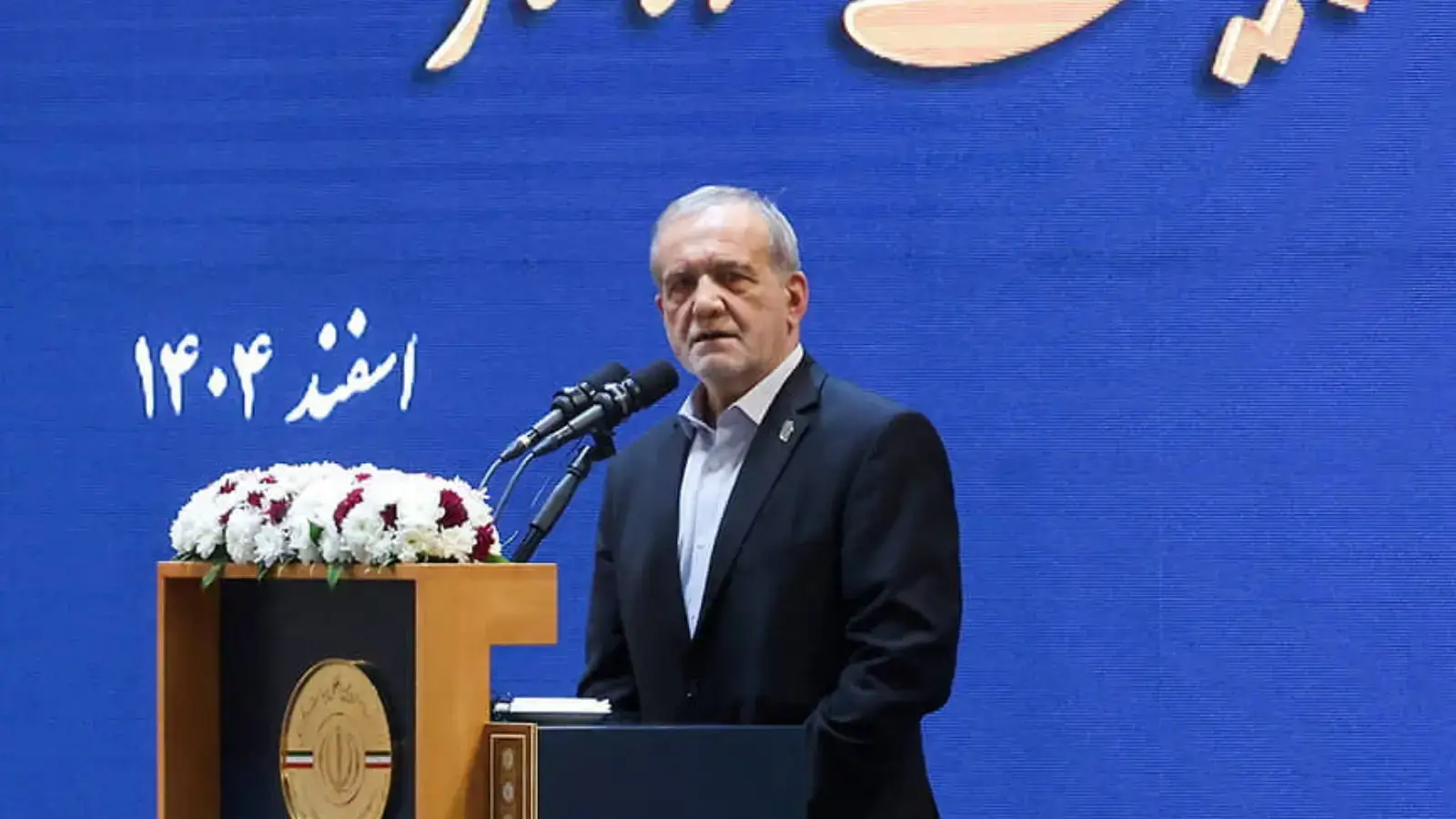
The period of power transition in Iran has officially begun. This was reported by Zamin.uz.
President Masoud Pizishkion addressed the nation through the state television and radio company, announcing that the interim council has started its activities. He emphasized his firm commitment to follow the path of Ali Khamenei.
International sources also confirm that a council temporarily assuming the supreme leader's powers in Iran has been activated. According to the Iranian Constitution, when the position of the supreme leader becomes vacant, a three-member council is formed to temporarily govern the country.
This body includes President Masoud Pizishkion, head of the judiciary Gholamhossein Mohseni Ejei, and representative of the Assembly of Experts Alireza Arafi. Thus, Pizishkion's statement officially confirmed the activation of the constitutional mechanism.
In his address, Pizishkion also stressed another important point: Iran openly declared that it will not leave these attacks unanswered. According to him, the country intends to demoralize its enemies by destroying their bases and capabilities.
This indicates that Iran is leaving open not only a political but also a military response path. The president's earlier statement was also expressed in a strong tone.
It interpreted the killing of Khamenei as "an open war by the American-Zionist alliance against Muslims, especially the world's Shiites." This phrase implies that within Iran, the event is viewed not as the death of a state leader but as a religious-political and civilizational blow.
These statements came against the backdrop of strikes on Iran by Israel and the USA on February 28. During these strikes, Iran's supreme leader Ali Khamenei and President Masoud Pizishkion were also among the targets.
It was reported that Khamenei had died and that this incident caused a power vacuum in Iran. In short, Pizishkion's speech officially reinforced that a new political phase has begun in Iran.
On one hand, the interim council has started its work; on the other hand, the state leadership has adopted a rhetoric of sharp retaliation. The biggest question is whether this transition period will be limited to internal governance or will lead to a larger escalation in the region?