


Tests of new-generation rocket engine successfully completed in the US
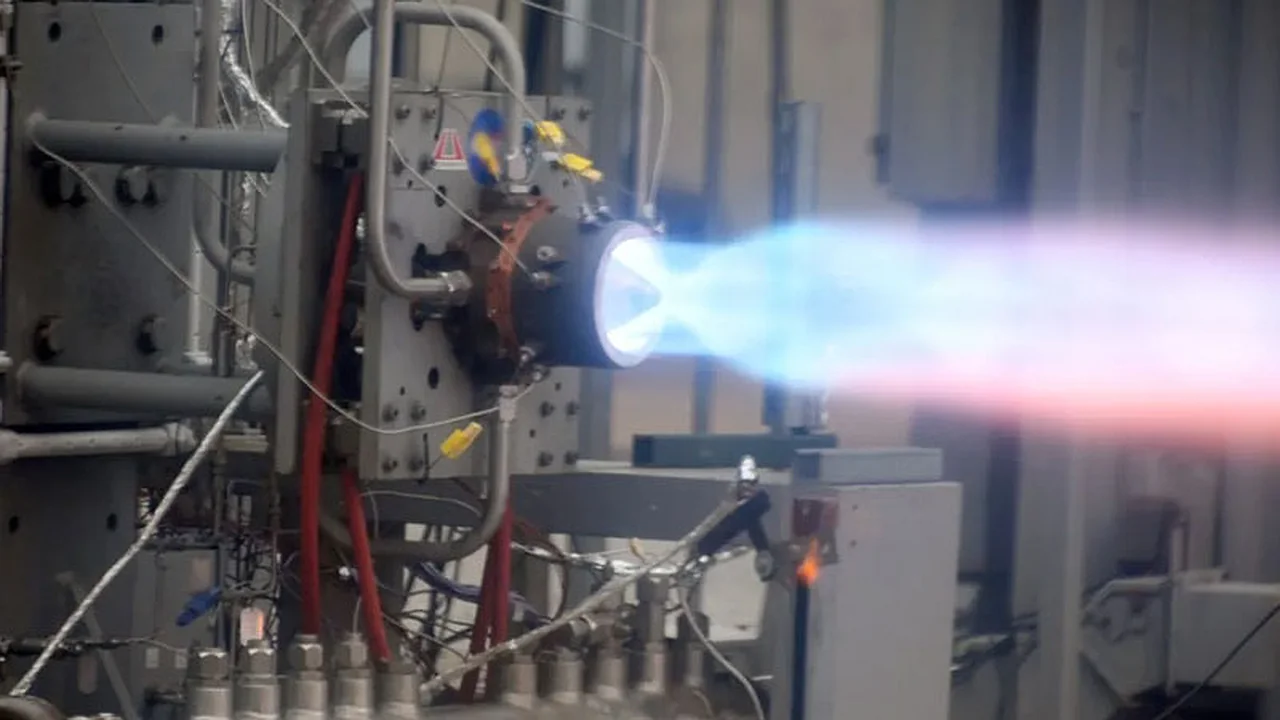
America's Astrobotic company announced the successful completion of tests of a promising rocket engine called Chakram. This was reported by Zamin.uz.
This device belongs to the type of rotating detonation rocket engines, in which the combustion wave moves inside a special chamber at a speed greater than the speed of sound. This technology is expected to open a new page in the modern field of space exploration.
The testing processes were carried out at NASA's Marshall Space Flight Center and became an important stage in the implementation of this project. The rotating detonation engine technology allows for a significant increase in efficiency compared to traditional liquid-fueled engines.
This, in turn, contributes to increasing the rocket's thrust and reducing fuel consumption. During the tests, two different samples operated continuously for a total of 470 seconds.
A record result for devices of this type – 300 seconds of uninterrupted combustion – was recorded. The engines produced a thrust of more than 18 kilonewtons, and at the end of the tests, no serious damage or defects were detected in the construction of the equipment.
According to the project's chief researcher Bryant Avalos, the new engine showed a result much higher than expected and operated stably at all stages. Company representatives particularly noted that one of the highest performance levels in the world was achieved in terms of thrust and duration of operation.
These results will in the future serve to reduce the costs of delivering cargo into space. The Chakram program was implemented in close cooperation with NASA, using modern three-dimensional printing technologies.
This method is aimed at reducing the time for manufacturing complex parts and reducing costs. Also, this technology will be widely adapted in the future for reusable suborbital vehicles and other types of spacecraft.
Such developments will further expand humanity's capabilities in exploring the Moon and other planets.