Intel Introduces New Generation of Processors for Mobile Devices
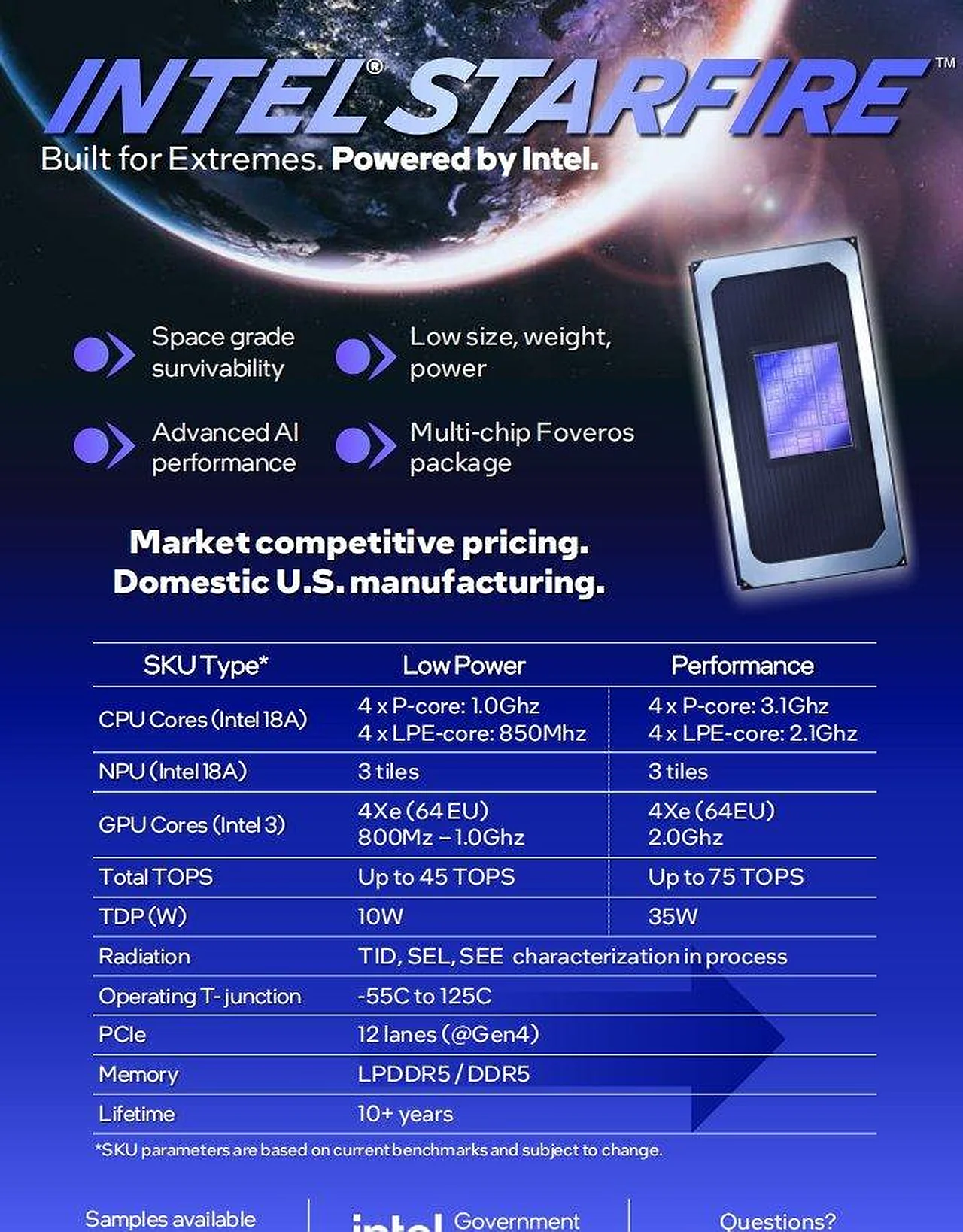
Intel Corporation has officially unveiled central computing devices from the Starfire family, specially developed for space equipment and devices operating in harsh terrestrial conditions. This was reported by Zamin.uz.
This news is expected to cause a major stir in the world of modern technology, as the space industry has traditionally relied on very old chips to ensure reliability. Intel, however, has decided to apply its latest technological achievements to orbital devices.
This is reported by industry publications. The key feature of the new processors is that they are manufactured based on Intel’s most advanced 18A technological process.
According to specialists, although the company has not yet disclosed all technical details, it is estimated that space chips will be similar in design to the upcoming Panther Lake family. This will significantly reduce the gap between space technologies and those in the mainstream consumer market.
The Starfire family is divided into two types: energy-efficient and high-performance models. Both variants share the same structural design, consisting of four powerful cores, four small energy-efficient cores, and a four-core graphics processor.
However, their operating frequencies and power consumption differ. The energy-efficient version consumes 10 watts of power, with both its central and graphics parts operating at frequencies up to one gigahertz.
The block responsible for artificial intelligence tasks has a performance of 45 trillion operations per second. The high-performance version consumes 35 watts, with the processor frequency reaching up to 3.1 gigahertz and the graphics part up to two gigahertz.
The main requirement for space chips has always been durability. Intel Starfire processors can withstand temperature fluctuations from minus 55 to plus 125 degrees Celsius.
Moreover, they are equipped with a special protective layer against intense space radiation, ensuring stable operation during long-duration missions. Company representatives emphasized that the service life of these devices is at least 10 years.
The introduction of such high-tech chips will enable space stations and artificial satellites to make broader use of artificial intelligence capabilities, analyze data directly in orbit, and send ready results to Earth.